Brazilian Amethyst: Why You Should Own One, Not Invest in One | The Ashalon
The Ashalon Brazilian Amethyst
Brazilian Amethyst Is Not a Number on a Spreadsheet
There is something slightly uncomfortable about the way we increasingly talk about beautiful objects. A gemstone is discovered, photographed, weighed, priced, listed online and almost immediately somebody asks the question: “Will it go up in value?” The Ashalon thinks there is another question worth asking first: “Do I actually want to own it?”
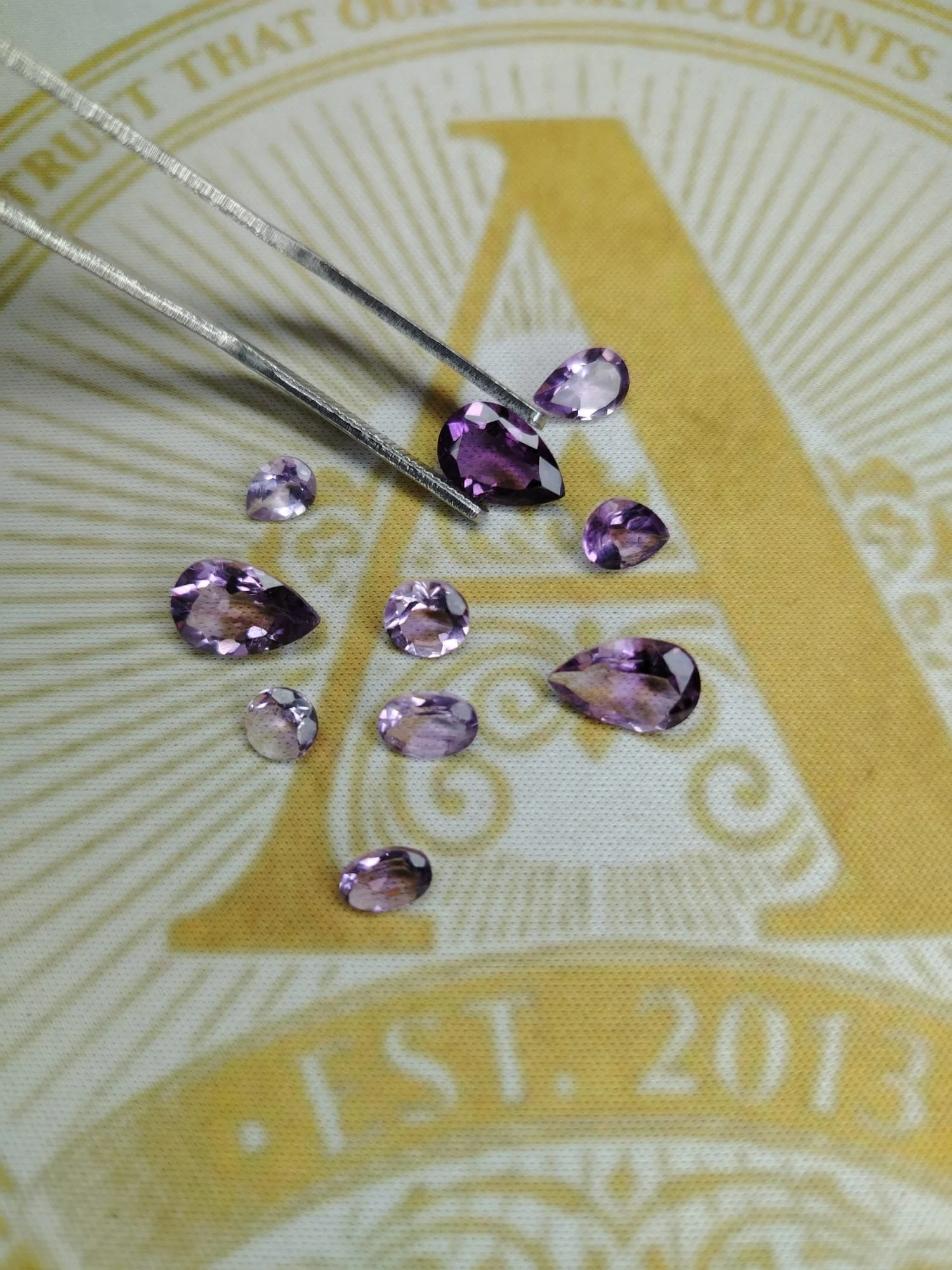
On 30th September, The Ashalon will make a collection of Brazilian amethysts available for sale, giving collectors and gemstone enthusiasts the opportunity to own an individual piece of natural mineral beauty. The stones pictured with this article form a small collection of faceted purple gemstones, each with its own shape, proportions, colour and visual character. The point of this release is not to tell somebody that they have discovered the next great financial asset. Quite the opposite: The Ashalon wants people to buy these amethysts because they love them.
That distinction matters.
The Ashalon is a legacy asset agency built around the idea that physical objects can have a place in our lives beyond their immediate financial value. A gemstone can be beautiful. It can mark a birthday, a relationship, a personal achievement or simply the moment when somebody decided that they wanted to own something created by geological processes rather than manufactured on a production line.
Amethyst is particularly interesting because it sits between the worlds of precious-looking beauty and accessibility. It can look spectacular without requiring the price associated with some of the world's most expensive gemstones. The Gemological Institute of America identifies amethyst as the purple variety of quartz, with a chemical composition of silicon dioxide and a Mohs hardness of 7. (gia)
That makes the Brazilian amethysts arriving at The Ashalon more than purple stones in a box.
They are an invitation to collect.
What Exactly Is Amethyst?
Amethyst is the purple variety of the mineral quartz. Quartz itself is one of the most familiar minerals on Earth, but small differences in chemistry and geological conditions can create dramatically different appearances. Amethyst can range from delicate lilac through violet and into deep purple, with some stones displaying reddish-purple colours that can be particularly attractive. (gia)
The GIA lists amethyst as having a refractive index of approximately 1.544 to 1.553, a specific gravity of around 2.66 and a Mohs hardness of 7. Those numbers might sound technical, but they tell us something useful: amethyst is not merely decorative glass. It is a genuine mineral with identifiable physical properties and enough durability for jewellery and everyday ownership, although it can still show wear over time. (gia)
The colour is one of the most important characteristics when assessing amethyst. According to GIA, the finest colour is generally a strong reddish purple to purple without obvious colour zoning when viewed from above. However, that does not mean every collector should automatically chase the darkest possible stone. Personal taste matters enormously, particularly when the purpose of buying a gemstone is enjoyment rather than speculation. (gia)
That is precisely where The Ashalon takes a different position.
A collector can look at one amethyst and immediately connect with it while ignoring another stone that technically possesses stronger colour. One person might prefer a light lavender gemstone because it looks delicate and elegant. Another might want an intense purple stone that dominates a piece of jewellery. A third person might become fascinated by an unusual cut, an inclusion or an individual characteristic that makes the stone feel different.
There is no spreadsheet capable of completely measuring that experience.
Brazil and the Amethyst Story
Brazil has an important place in the history and production of amethyst. GIA notes that amethyst was historically expensive, comparable in price with ruby and emerald, before large Brazilian deposits were discovered in the nineteenth century. The discovery and availability of Brazilian material dramatically changed the gemstone's accessibility. (gia)
GIA's research has also documented Brazilian amethyst from several important areas, including Rio Grande do Sul, Marabá and Pau d'Arco. Different Brazilian mining regions can have different geological environments, which contributes to variation in the material produced. (gia)
This is part of what makes the phrase Brazilian amethyst interesting to a collector.
It is not simply a marketing colour.
It points towards a country with a substantial history of amethyst production and a geological environment capable of producing enormous quantities of quartz material. Brazilian amethyst can occur in geodes and crystal-lined cavities, sometimes on a spectacular scale. GIA notes that in Brazilian localities, amethyst geodes can become large enough for people to stand inside. (gia)
The geological story therefore begins long before the gemstone reaches a cutter, collector or jewellery box.
The stone has already had a life.
The Beauty of a Cut Brazilian Amethyst
The stones being offered by The Ashalon are presented as individual faceted gemstones. Faceting changes the way light interacts with the material, turning the gemstone from something that might initially appear relatively simple into an object capable of producing flashes of colour and reflection. Cut is not merely about making a gemstone look expensive. It is an exercise in balancing the rough material, the shape of the finished stone, symmetry, proportions and the interaction of light with the facets. GIA specifically notes that amethyst is available in a wide variety of shapes and that cut can have a significant effect on beauty and brilliance. (gia) That means two pieces of amethyst can have similar colour and still look completely different.
One may be oval, another may be pear-shaped, another may be a more unusual free-form or custom cut.
The shapes shown in The Ashalon's collection create exactly this kind of visual variety. Rather than presenting a uniform batch of identical stones, the collection looks like a small gathering of individual objects. That is important to The Ashalon's philosophy because collecting is often about the individual character of an object.
You do not need ten identical things.
Sometimes you need one thing that catches your eye.
Why The Ashalon Says: Own One, Don't Invest in One
This is where The Ashalon wants to be deliberately clear.
Do not buy one of these Brazilian amethysts because somebody told you it is guaranteed to increase in value.
It isn't.
Gemstone prices are affected by many factors, including quality, colour, cut, size, provenance, treatment, market demand and the ability to resell the particular stone. Amethyst is also relatively abundant compared with some other gemstones. GIA explicitly notes that origin alone does not automatically add value to an amethyst; quality remains the central consideration. (gia)
So The Ashalon is not presenting this collection as a guaranteed investment. Instead, we are making a much simpler argument. Own something because you love it. That might sound almost old-fashioned in a world obsessed with returns, yield and resale value. But perhaps that is exactly why it matters. If you buy a gemstone for £X and spend the next five years checking whether somebody else would pay £X plus £50 for it, you have arguably missed the point. You have transformed something beautiful into a financial instrument in your own head.
A collector can approach the same object differently. They can put it in a display caseThey can . have it set into jewellery. They can give it to someone. They can keep it alongside other gemstones. They can catalogue it. They can photograph it.They can learn about where amethyst comes from. They can simply open the box occasionally and look at it.
That is ownership.
The Problem With Flipping Everything
The Ashalon believes there is a growing temptation among modern collectors to turn every object into a potential trade.
Buy it.
Wait.
Monitor the market.
Sell it.
Repeat.
There is nothing inherently wrong with buying and selling collectibles. Trading is an established part of collecting culture, and people can legitimately make money from their knowledge, timing and access to desirable objects.
But if everything becomes an investment, something is lost. A watch becomes a percentage return. A coin becomes a price chart. A gemstone becomes a carat calculation. A family photograph becomes memorabilia. A football shirt becomes merchandise. A game console becomes a future rarity. The object itself can disappear underneath the financial conversation. The Ashalon's philosophy of legacy assets is built around resisting that instinct. Tangible objects can have financial characteristics, but they can also have emotional, historical, aesthetic and cultural value.
Sometimes the correct reason to own something is simply because it makes you happy.
A Gemstone You Can Actually Live With
One of the great advantages of amethyst is that it can occupy an unusual position within a collection. It can be sophisticated enough for jewellery while remaining accessible enough for somebody beginning a gemstone collection. It can also be displayed as part of a mineral collection or kept privately as a personal object.
GIA identifies amethyst as the birthstone for February and also associates it with the sixth and seventeenth wedding anniversaries. (gia) That gives it another layer of meaning for some owners. Imagine somebody born in February purchasing an amethyst for themselves. Imagine a parent buying one for a child. Imagine somebody marking a new job, a business launch, a marriage, a birthday or simply a personal milestone. The gemstone doesn't need to appreciate in price for that story to become valuable.
The story is already the value.
The Ashalon and the Culture of Tangible Ownership
The Brazilian amethyst collection fits naturally into The Ashalon's broader interest in tangible heritage assets.
The Ashalon looks at the physical world differently from the increasingly digital environment around us. Much of modern ownership now happens through accounts, licences, subscriptions, passwords, cloud services and digital records. A gemstone is different. You can hold it. You can put it somewhere safe. You can photograph it. You can pass it to somebody else. You can leave it in an estate. You can write its story down. You can place it alongside other objects that tell the story of your life. This is what makes a gemstone interesting as a legacy asset even when it is not being treated as a financial investment.
The word "legacy" is important.
A legacy does not necessarily mean something worth millions. Your grandmother's necklace may not be worth much at auction. Your father's watch may have limited resale value. Your childhood games console may never become rare but you might still want them. Because they belong to your story. The Ashalon believes gemstones can occupy that same space.
Don't Buy the Stone You Think Someone Else Will Want
There is another principle behind this release.
Buy the stone you want. If you are looking at the collection on 30th September and one gemstone immediately stands out to you, that may be the one you should investigate.
Don't automatically choose the largest. Don't automatically choose the darkest. Don't automatically choose the one you think will have the best resale value. Look at the shapes. Look at the colour, Look at how the facets interact with light & think about what you would actually do with the stone after purchasing it.
Would you wear it?
Would you display it?
Would you keep it in a collection?
Would you eventually have it incorporated into a custom piece of jewellery?
Would you give it to somebody?
Those questions are more important than asking whether an online marketplace will list it for £20 more next year.
The Difference Between Price and Value
Price and value are not the same thing. The price is the amount required to purchase something. Value can be much more complicated. A photograph may cost almost nothing to reproduce, yet be priceless to a family. A letter written by a parent may have no meaningful commercial market but immense emotional significance. A coin may be worth £5 on a dealer's table and mean everything to the person whose grandfather carried it. A gemstone can work in exactly the same way. The financial price establishes what it costs to acquire. The owner's relationship with it determines what it means. The Ashalon believes that collectors should be comfortable with that distinction.
What Makes One Amethyst More Appealing Than Another?
For someone considering purchasing a Brazilian amethyst, there are several characteristics worth examining. Colour is an obvious starting point. Rich purple and reddish-purple colours can be particularly desirable, while lighter shades can have their own aesthetic appeal. GIA identifies strong purple to reddish-purple colour without noticeable zoning as characteristic of fine-quality amethyst. (gia)
Clarity is another consideration. Much faceted amethyst is relatively clean to the naked eye, although inclusions can occur. In some cases, inclusions are not necessarily something a collector should fear; they can contribute to the individuality of a natural gemstone. (gia)
Cut can dramatically influence appearance. A beautifully coloured gemstone with a poor cut may not perform with light as effectively as a well-cut stone. This is one reason The Ashalon encourages people to look at the actual gemstone rather than buying purely from a specification sheet. (gia)
Size is also worth considering, but bigger does not automatically mean better. GIA notes that larger amethysts remain relatively accessible because price per carat does not rise dramatically simply because the stone is larger. (gia)
And finally, there is the most subjective factor of all:
Do you like it?
That one cannot be measured in carats.
A Collection Is Built One Object at a Time
The Ashalon does not believe somebody needs to purchase an enormous gemstone collection immediately.
In fact, there is something satisfying about starting small.
One stone.
Then another.
Perhaps a Brazilian amethyst.
Then a piece of quartz from somewhere else.
Then a sapphire.
Then a historical coin.
Then an old banknote.
Then a piece of jewellery.
Eventually, those objects begin to form something larger.
They become a collection and the collection starts telling a story about the person who built it That is where The Ashalon sees the real opportunity in tangible ownership. Collecting does not have to begin with wealth. It can begin with curiosity.You see something, You learn about it. You decide you want it and you acquire it.
You preserve it and perhaps one day somebody else receives it from you.
Why Brazilian Amethyst Belongs in a Modern Collection
There is also a cultural argument for collecting natural gemstones.
We live in an increasingly digital world where the physical object can sometimes feel secondary. Photographs are stored in clouds. Music exists as streams. Films exist behind subscriptions. Money is increasingly represented electronically. Documents are digital. Even personal identity is increasingly mediated through screens. A gemstone does something completely different, It refuses to become entirely digital You can photograph it, catalogue it and create a digital record of it, but the physical object remains the thing.
That is important, a photograph of a gemstone is not the gemstone, a blockchain record of a gemstone is not the gemstone and a description of a gemstone is not the gemstone. The object itself is the object. The Ashalon's interest in tangible assets starts from that simple idea.
The Ashalon Is Not Promising an Investment
It is worth repeating because responsible collecting requires honesty & The Ashalon is not saying that buying one of these Brazilian amethysts will guarantee a financial return. The gemstone market does not work that way. Amethyst is a relatively accessible gemstone, and GIA specifically explains that country of origin alone does not establish additional value. Quality, including colour and cut, matters considerably. (gia)
There may be circumstances where exceptional gemstones command strong prices, but that should not be confused with a guarantee for every stone sold under a particular geographical label. If your sole objective is financial return, you should conduct proper research, understand the risks and seek independent professional advice where appropriate. But if your objective is to own a beautiful Brazilian amethyst because you genuinely want one?
That is a much simpler proposition.
30th September: The Collection Goes on Sale
On 30th September, The Ashalon's Brazilian amethysts will go on sale.
The release represents something that The Ashalon wants to do more often: place interesting tangible objects into the hands of people who actually appreciate them. The collection shown here provides a visual introduction to the stones. Their faceted surfaces catch the light differently, while the different shapes give the group a distinctly personal character. There is something appealing about seeing several gemstones together and knowing that each one could ultimately end up somewhere completely different. One could become part of a ring.
Another could sit in a collector's cabinet, another could be placed inside a personal jewellery box and another might become a gift.
Another might simply remain exactly as it is, None of those outcomes requires the gemstone to become an investment.
Own the Story
Perhaps the greatest mistake a collector can make is assuming that every object needs to make money.
It doesn't.
Some objects need to make you smile.
Some need to remind you of someone.
Some need to mark a moment.
Some need to satisfy curiosity.
Some need to be beautiful.
Some need to survive long enough for another generation to discover them.
That is the philosophy behind The Ashalon's Brazilian amethyst release.
Own the story, not just the price.
The gemstone is millions of years older than the transaction through which you acquire it. Its existence does not begin when it appears on a website, and its story does not end when you eventually pass it to someone else.
That is precisely why natural gemstones are so fascinating.
They are physical records of geological history.
They are shaped by nature, revealed through mining and transformed through cutting.
Then, eventually, they become part of human history.
From Brazil to Your Collection
The Ashalon believes the future of collecting should not simply be about predicting what will become expensive.
It should also be about deciding what is worth keeping.
That is a different mindset.
It asks us to slow down.
To appreciate craftsmanship.
To understand geological history.
To learn about provenance.
To preserve physical objects.
And, importantly, to enjoy ownership while we are alive rather than treating everything as something that must eventually be sold.
The Brazilian amethyst collection is a small example of that philosophy.
It is beautiful.
It is tangible.
It has a geological story.
It has a connection to Brazil and the long history of amethyst production.
And, perhaps most importantly, it can become your story.
The Ashalon's Invitation to Collect
When the Brazilian amethysts go on sale on 30th September, The Ashalon is not asking everyone to become a gemstone investor. We are asking something much simpler. Look at the stones. Find the one you like. Think about why you like it then decide whether you want to own it. If the answer is yes, that is enough. You don't need to know whether somebody will offer you more money for it in five years. You don't need to build a complicated investment thesis. You don't need to turn your home into a commodities exchange. You can simply become the custodian of a beautiful object and perhaps that is one of the most important lessons The Ashalon wants to promote through tangible collecting. Not everything worth owning needs to make you money. Some things are worth owning because they make your life richer.
Brazilian Amethyst at The Ashalon
The Ashalon's Brazilian amethyst collection will be available from 30th September.
For collectors, jewellery enthusiasts and anyone curious about owning a natural gemstone, this is an opportunity to begin or expand a personal collection with an object that combines geological history, colour, craftsmanship and physical ownership. The Ashalon encourages prospective buyers to consider each gemstone on its own merits and to purchase because they appreciate the stone rather than because they expect a guaranteed financial return because ultimately, a collection is not a portfolio. A collection is a record of what you chose to keep and perhaps one day, somebody else will open that collection and ask:
“Why did you keep this one?”
That is when the gemstone becomes a legacy.
Own One. Love One. Keep One.
The Brazilian Amethyst Collection goes on sale 30th September through The Ashalon.
Discover tangible collecting through The Ashalon — Freedom, Assets and Control.
Visit The Ashalon to explore the collection and discover the Brazilian amethysts available from 30th September.
Important: Gemstones should not be assumed to be investments or guaranteed to appreciate. Buyers should consider quality, treatment, documentation, market conditions and their own collecting objectives before purchasing.
Sources & further reading
The factual gemstone information in this article has been checked against the Gemological Institute of America's research and educational material, including its Amethyst Gem Encyclopedia, Amethyst Buyer's Guide and research concerning Brazilian amethyst deposits. (gia)
Why You Should Think Twice Before Selling Your Padparadscha Quartz
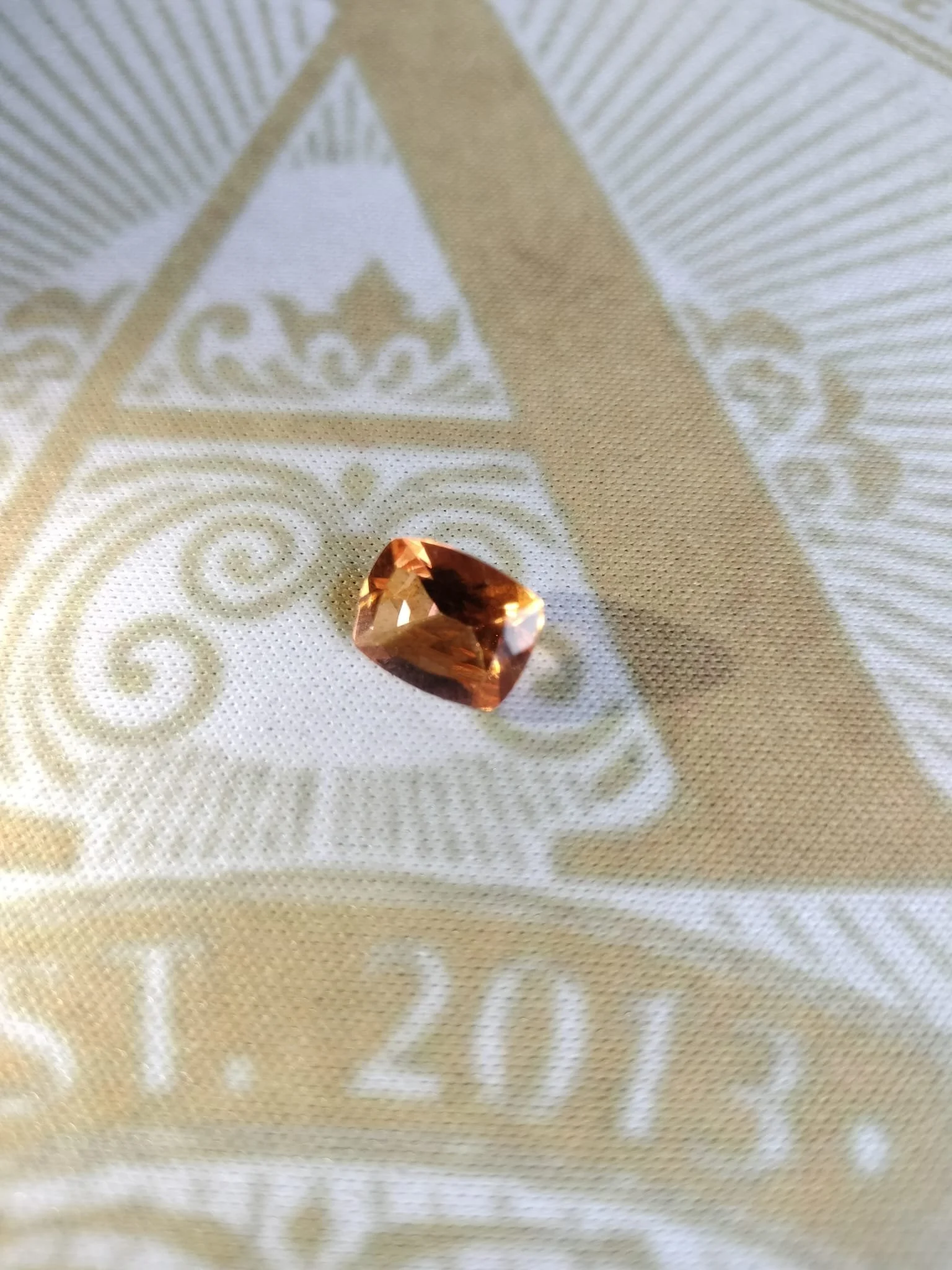
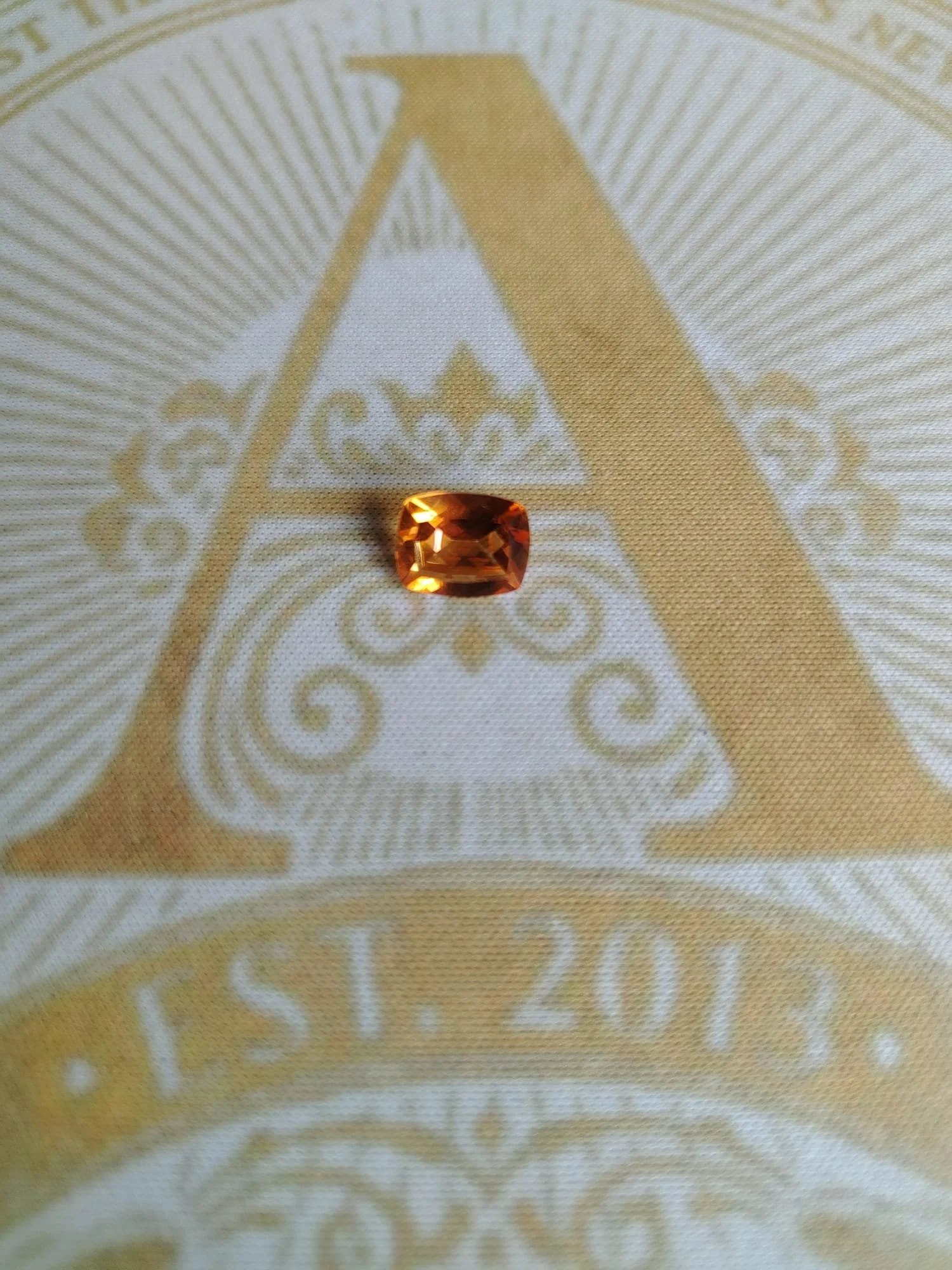
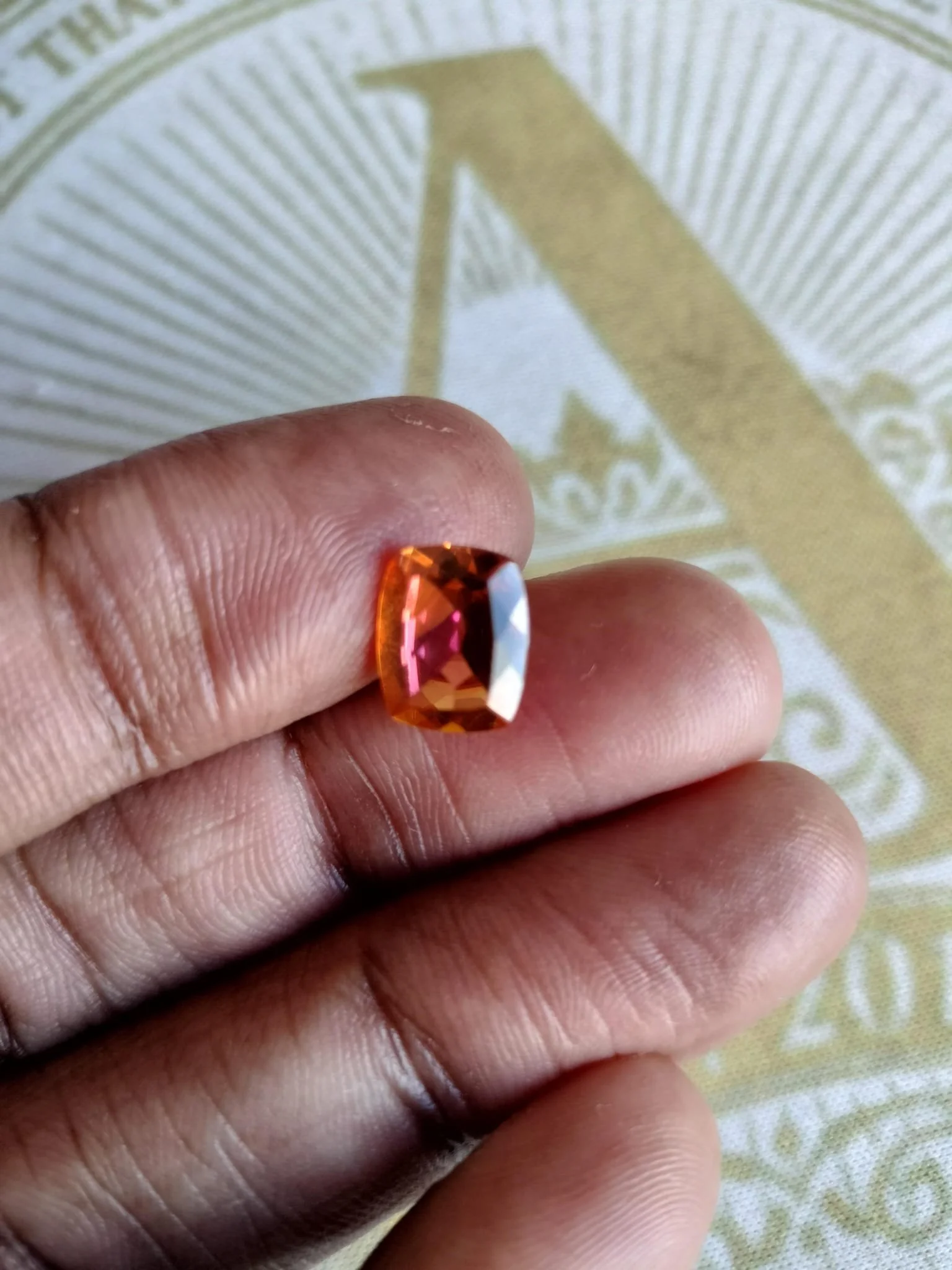
The Parascha Quartz acquired by The Ashalon
Why You Should Think Twice Before Selling Your Padparadscha Quartz
A stone of colour, character and permanence
There are gemstones that impress us with their brilliance, and there are stones that quietly hold our attention. They do not necessarily possess the highest price, the greatest size or the most famous name. Their value lies somewhere more elusive in their colour, their individuality, their origin and, sometimes, in the story that brought them into our hands. Padparadscha is a word surrounded by romance. Traditionally, padparadscha refers to an exceptionally rare pinkish-orange variety of sapphire. The name comes from the Sinhalese language and is associated with the delicate colour of the lotus blossom. The finest examples occupy an enchanting territory between pink and orange neither entirely one nor the other, but a subtle meeting of both. GIA describes this distinctive colour as one of the most rare and collectible expressions of sapphire.
Yet the fascination with this colour extends beyond sapphire itself. A quartz displaying this extraordinary lotus-like palette can possess a character of its own: warm, delicate and almost luminous, with shades reminiscent of a sunset caught inside crystal. And when such a stone originates in Brazil, it carries another layer of interest; a connection to one of the world’s great mineral-producing landscapes. The Brazilian connection Brazil has long held a remarkable place in the world of minerals and crystals. Its geological diversity has produced extraordinary quantities and varieties of quartz, with important deposits historically documented in states including Minas Gerais, Goiás and Bahia. Brazilian quartz has been collected, traded and exported internationally for generations. The story of Brazilian quartz is therefore not simply the story of a mineral. It is a story of geology, landscape and time. Deep beneath the Brazilian earth, mineral-rich fluids moved through fractures and cavities, creating the conditions in which crystals could form. Some deposits produced enormous crystals; others yielded smaller specimens prized for their clarity, colour or unusual internal characteristics. Historical geological studies have documented the extraordinary scale and diversity of Brazil’s quartz deposits.
Every crystal that emerges from such an environment is, in a very literal sense, a product of geological history. And that is one of the first reasons to hesitate before selling one. Not everything valuable has a price
The modern gemstone market naturally encourages us to ask one question:
“What is it worth?”
But collectors eventually learn to ask another:
“What makes it worth keeping?”
These are not the same question. A stone can have a perfectly respectable market value and still be far more valuable to its owner. Equally, a beautiful specimen may not command an extraordinary financial price while remaining irreplaceable as a personal object. This distinction matters particularly with unusual stones. A commercial gemstone is generally evaluated according to familiar criteria — colour, clarity, cut, size, treatment, provenance and market demand. But a collector may see something else: an unusual combination of characteristics that makes a particular specimen memorable.
Your Brazilian padparadscha-coloured quartz may be one of those stones. Its attraction is not simply that it is quartz. It is the particular colour, the origin, the individuality of the crystal and the circumstances in which it came to you. The danger of selling the irreplaceable Money is replaceable. A particular stone is not. If you sell a gemstone because you need the money, the decision may be perfectly rational. But if you are considering selling it simply because you have been offered a price, it is worth pausing.
Ask yourself:
If I sell this stone today, how likely am I to find exactly the same one again?
The answer is usually: very unlikely.
You might find another Brazilian quartz. You might even find another stone with a similar pink-and-orange colour. But the precise combination of colour, shape, inclusions, transparency, size, origin and character will belong to that particular specimen alone. This is one of the great pleasures of collecting. A collection is not simply an accumulation of objects. It is an accumulation of individuality. A stone carries its own history Gemstones have an unusual relationship with time.
A piece of jewellery may have been made decades ago. A mineral specimen may have travelled across continents. A crystal may have remained underground for geological periods before finally being discovered. By the time it reaches a collector, it has already lived several lives. The Brazilian landscape gave it its geological beginning. The person who discovered it gave it another chapter.The person who acquired it gave it another. And eventually, it becomes part of the story of its owner.
That is why certain gemstones become heirlooms. Not because somebody decided they would be valuable in the future, but because somebody decided they were worth keeping. The sentimental value is sometimes the greatest value There is another category of value that no laboratory can measure. Sentiment.
If your stone was given to you as a gift, its significance changes completely. It is no longer simply a Brazilian quartz specimen. It becomes a physical reminder of a person, a moment and a relationship. Years from now, the financial value of the stone may have changed. Markets rise and fall. Fashion changes. Collectors change their preferences.
But the story of receiving it remains. This is perhaps the strongest argument for keeping a special gemstone. You can sell an object. You cannot sell the memory attached to it and buy it back later.
Keep the stone, and let time work on your behalf There is also something quietly satisfying about refusing to sell immediately.
A collector does not always need to know what an object will be worth in ten or twenty years. Sometimes it is enough to know that it is unusual, beautiful and difficult to replace. Keep the stone properly documented. Record its Brazilian provenance if it is known. Photograph it under natural light. Keep any original packaging, invoices, certificates or
information accompanying the specimen. If its identity or characteristics are uncertain, an independent gemological assessment can provide useful documentation. Then put it somewhere safe. Let the stone remain what it is. There is no requirement to turn every beautiful object into a transaction. The Ashalon perspective At The Ashalon, we believe that collecting is not simply about possession. It is about preservation.
The most interesting pieces are often those that invite us to stop and look twice; objects with character, provenance and a story that extends beyond their immediate market value. A Brazilian padparadscha-coloured quartz belongs beautifully within that philosophy. Its appeal lies in its unusual colour, its connection to Brazil s extraordinary mineral heritage and, perhaps most importantly, in the personal meaning that surrounds it. So before accepting an offer, pause. Hold the stone in your hand. Look at its colour. Consider where it came from. Consider how long it existed before it reached you. And consider why you wanted it in the first place. If the answer is simply that somebody offered you money, perhaps it is worth waiting. Because some stones are meant to be traded. Others are meant to be kept. And occasionally, the wisest thing a collector can do is simply close the box, put the stone
back inside and say:
“Not this one.”
The Beauty of Handmade Jewellery: Why Personal Design Matters in a World of Mass Production | The Ashalon
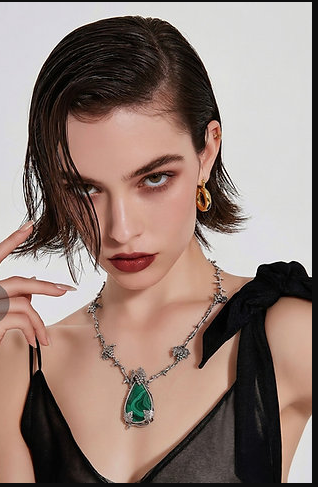
The Grape Vine Chain with Malachite captures the beauty of nature translated into wearable design. Delicate vine-like links draw the eye towards a striking green malachite pendant, creating a piece that feels both organic and sculptural. The deep variations within malachite give the stone its distinctive character, ensuring that no two pieces can present exactly the same natural pattern. For The Ashalon, jewellery such as this represents more than adornment: it is an expression of personal taste, craftsmanship and the relationship between natural materials and human design. The result is a piece with the presence of a statement jewel while retaining the intimate character that makes handmade and individually considered jewellery so compelling.
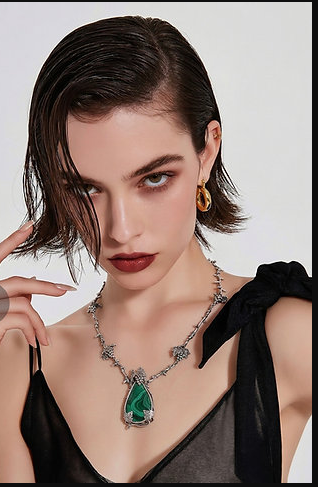
The Grape Vine Sterling silver 925 accompanied malachite
Introduction: Jewellery Should Mean Something
There is a difference between owning jewellery and owning a piece of jewellery that means something to you. The distinction can appear subtle at first, but it becomes increasingly important in a world where almost everything can be reproduced, copied, generated and manufactured at extraordinary speed. The Ashalon believes that tangible objects become more interesting when they carry a human story, and handmade jewellery provides one of the clearest examples of this principle. A ring, pendant or necklace can be beautiful because of its materials, but it can become truly significant because of the person who designed it, the person who made it and the reason it exists.
This is one of the reasons The Ashalon is interested in the work of Alfonso Scoppetta Jewelry, a London-based jewellery business presenting itself as “The jewelry tailor.” Its philosophy centres on personalised jewellery and the idea of expressing emotions through individually considered pieces. The company's website describes its work as high-quality handmade jewellery and offers custom designs alongside collections, repairs, restorations and antique and vintage reproductions. (Alfonso Scoppetta Je)
For The Ashalon, that approach represents something much bigger than a shopping preference. It represents a different relationship with ownership. In an increasingly digital economy, consumers are surrounded by products that can be ordered with a few clicks, delivered rapidly and replaced just as easily. Handmade jewellery pushes against that culture by asking us to slow down and consider what we actually want to own. And that is where personal design becomes powerful. A piece made specifically for you does not have to be the most expensive object in your jewellery box. It does not have to contain the largest gemstone or the highest quantity of precious metal. Its importance can come from the fact that somebody thought about the object before it existed.
That is the beauty of handmade jewellery.
The Ashalon and the Return of the Tangible
The Ashalon has built its philosophy around a simple idea: Freedom, Assets and Control. At the centre of that philosophy is the belief that tangible possessions can have a different relationship with us from purely digital experiences. A physical gemstone can be held. A historical document can be preserved. A coin can be passed from one generation to another. Jewellery can be worn by one person, gifted to another and eventually become part of a family story.
This does not mean that every physical object is automatically valuable.
The Ashalon is not arguing that buying anything tangible makes somebody an investor. That would be an irresponsible way to approach collecting. Instead, the argument is that objects can possess different forms of value, and financial value is only one of them. A handmade ring may have material value because of its gold or silver. It may have artistic value because of its design. It may have craftsmanship value because of the skill required to produce it. It may have sentimental value because it was commissioned for a particular person. It may eventually develop historical value because it survives long after the circumstances in which it was created have disappeared.
That combination is fascinating.
The Ashalon believes this is precisely why collectors should pay attention to craftsmanship rather than simply chasing the next fashionable object.
Alfonso Scoppetta: The Jewellery Tailor
Alfonso Scoppetta Jewelry describes itself as “The jewelry tailor.” The phrase is particularly appropriate because tailoring is fundamentally about creating something around an individual rather than asking an individual to conform to something already produced. (Alfonso Scoppetta Je)
A tailored suit is different from something pulled from a rack, a tailored piece considers the person wearing it and Jewellery can work in exactly the same way.
According to Alfonso Scoppetta Jewelry's website, the business focuses on expressing customers' emotions through personalised jewellery and describes its philosophy as bringing emotions to life rather than simply selling jewellery. (Alfonso Scoppetta Je) That distinction is important because it changes the conversation from merchandise to meaning.
The question becomes less, “What jewellery do you want to buy?”
It becomes, “What do you want your jewellery to represent?”
That could mean a ring connected to a relationship. It could be a pendant inspired by an individual's interests. It could be a piece designed around an existing stone. It could be the transformation of an old family jewel into something that can actually be worn again. Alfonso Scoppetta Jewelry specifically offers services involving jewellery repairs, restoration and alterations, including the reimagining of old jewels into something new. (Alfonso Scoppetta Je) This is particularly interesting from The Ashalon's perspective because it demonstrates that legacy does not necessarily mean leaving an object untouched.
Sometimes preservation means giving an object another life.
The Beauty of Seeing How Something Is Made
One of the most compelling aspects of modern craftsmanship is the opportunity to see the process. For decades, consumers have become increasingly separated from production. We see the finished product, the packaging and the advertising, but rarely the hands responsible for making the object. A handmade jeweller can reverse that relationship. The process becomes part of the story. When you can see a design develop, understand the materials involved and appreciate the work required to produce the finished piece, the object can become more meaningful. The final ring is no longer simply a ring. It is the conclusion of a creative process.
This matters enormously to The Ashalon.
The Ashalon believes that provenance should not only mean a receipt, certificate or ownership record. Provenance can also include the story of creation. Who made it? Why was it made? What inspired it? What materials were used? Who commissioned it? Who eventually owned it? Those questions can become increasingly important as an object ages. The process itself becomes historical evidence.
Alfonso Scoppetta Jewelry's website gives visitors access to different aspects of its work, including handmade collections, custom designs and a workshop section. (Alfonso Scoppetta Je) That visibility helps make the craftsmanship part of the experience rather than hiding it behind the finished object.
For a collector, that is valuable, you are not simply buying the result and you are discovering the journey.
Handmade Jewellery Versus Mass Production
There is nothing inherently wrong with mass-produced jewellery. Mass production has made jewellery accessible to millions of people. It allows designs to be produced consistently, distributed internationally and sold at different price points. There is a place for that market but handmade jewellery offers something different. The difference is not necessarily that handmade is automatically better. Instead, the difference is that handmade production can create a closer relationship between maker, design and wearer. A mass-produced necklace may exist in thousands of examples and a handmade piece may exist in a much smaller number. That scarcity can be attractive, but The Ashalon believes collectors should be careful about reducing handmade jewellery to a scarcity calculation. The purpose of buying something personal should not be to immediately ask how quickly it can be resold.
There is another question worth asking: What does this mean to me? That question is increasingly important in the world of collecting.
“Made Once and Once Only”
There is something almost romantic about the idea of a piece being made once and once only. It creates a mental separation between a piece of jewellery and an ordinary commodity. Instead of imagining a production line, imagine a maker sitting down with a concept, selecting materials and working through the design until the object becomes real. The Ashalon sees this philosophy as particularly relevant to modern collectors.
A one-off piece can become a marker of a moment.
Someone may commission a ring after building a business. Someone else may buy a pendant after travelling somewhere important. Another person may transform an inherited jewel into something completely new. A collector might discover a handmade object that perfectly captures their personality. The value is partly in the fact that it belongs to that particular story. It does not need to be replicated, It does not need to be reproduced for everyone and Its purpose is to exist for someone.
That is a powerful concept in a world increasingly dominated by algorithms and templates.
Personal Design Is Personal History
Jewellery has always had a relationship with memory. Engagement rings commemorate relationships. Wedding bands represent commitments. Family jewellery can carry generations of history. Pendants can commemorate people who have died. Watches can become gifts marking milestones. Even relatively inexpensive pieces can acquire enormous emotional significance. The Ashalon believes this is where the concept of a legacy asset becomes interesting. A legacy asset does not have to be worth thousands of pounds and It can be an object that someone believes is worth preserving. Imagine a mother passing a handmade necklace to her daughter. The necklace may not become dramatically more valuable in financial terms. But the daughter knows that her mother selected it, wore it and eventually decided to pass it down. That history changes the object, It becomes more than jewellery and It becomes evidence of a relationship.
The Jewellery Maker as an Artist
One of the biggest mistakes consumers can make is thinking about jewellery exclusively through its raw materials.
Gold is valuable, Silver is valuable and Gemstones can be valuable.
But the material does not explain the entire object. A gemstone still needs to be cut. A metal still needs to be formed. A setting still needs to be designed. Proportions matter. Texture matters. Balance matters. Wearability matters. The maker becomes part of the equation. This is why The Ashalon believes jewellery makers deserve to be viewed not merely as retailers but as craftspeople and, in many cases, artists.
Alfonso Scoppetta Jewelry's collections demonstrate this range through designs including pendants, rings, coral pieces, Liberty-style jewellery and other handmade designs. The company's online collection includes pieces at a variety of price points, showing that handmade jewellery does not necessarily require entering the world of extremely high-value luxury jewellery. (Alfonso Scoppetta Je)
That is an important point.
Craftsmanship does not have to be inaccessible.
Hatton Garden and the Importance of Place
Location also matters.
Alfonso Scoppetta Jewelry lists its address at 29 Hatton Garden, London EC1N 8DA, with visits available by appointment. (Alfonso Scoppetta Je)
Hatton Garden is not simply another London postcode. It has become internationally associated with the jewellery trade and with generations of jewellery businesses, craftspeople and specialists. The concentration of expertise gives the area a particular cultural importance for anyone interested in jewellery.
For The Ashalon, this reinforces another important principle. Objects have places. A coin can be associated with a particular country, monarch or mint. A gemstone can be connected to a particular geological region. A historical document can be connected to a particular institution. A handmade piece of jewellery can be connected to a particular workshop or jewellery district. That information can become part of provenance and provenance is one of the foundations of collecting.
The Importance of Craftsmanship in a Digital World
The digital transformation of society is not slowing down.
People increasingly communicate digitally. Money increasingly exists electronically. Entertainment is increasingly streamed. Photographs increasingly live on servers rather than in albums. Businesses increasingly operate through digital platforms. That does not make physical objects irrelevant. In fact, it may make them more interesting and when almost everything becomes intangible, the things we can physically hold can acquire a different emotional quality. This is one of The Ashalon's central arguments. The future does not necessarily belong exclusively to digital assets. It may belong to the combination of digital convenience and tangible ownership.
A digital photograph can preserve an image, but a physical photograph can become an heirloom. A digital message can preserve words, but a handwritten letter carries the physical evidence of its creator. A digital certificate can document ownership, but the object itself remains something that can be held.
Jewellery sits firmly within this world. You wear it, you touch it and you see it. It becomes part of your physical identity.
Why The Process Matters to Collectors
Collectors often talk about condition, rarity, provenance and authenticity.
Those things matter.
But the creative process can also be important.
Imagine two pieces that appear visually similar.
One was produced anonymously in enormous quantities.
The other was designed by a named maker, handmade in a workshop and created specifically for one individual.
They may contain similar materials.
Yet the stories are completely different.
The second piece has a documented creative narrative.
That narrative can become increasingly meaningful as time passes.
The Ashalon believes collectors should therefore consider documenting the creation of their personal jewellery. Keep photographs. Keep receipts. Record the maker's name. Preserve the original correspondence. Write down why the piece was commissioned.
These seemingly small details can become important decades later.
A future family member may want to know the story.
Jewellery as a Legacy Asset
The Ashalon's concept of a legacy asset is ultimately about preservation.
The company encourages people to think beyond today's consumption and consider what they want to leave behind. (Alfonso Scoppetta Je)
That does not mean every possession needs to become a museum object.
It means becoming more intentional about ownership.
If you buy a piece of jewellery simply because it is fashionable, there is nothing wrong with that.
But if you buy something because you believe it represents you, the object can have a much longer life.
That is where handmade jewellery becomes particularly compelling.
A personal piece can become associated with an individual.
That individual can become associated with a family.
The family can then associate the object with its history.
Suddenly a piece of jewellery has travelled through generations without needing to be redesigned, remarketed or reinvented.
It simply survived.
Reimagining Old Jewellery
One of the most interesting services offered by Alfonso Scoppetta Jewelry is the ability to reimagine existing jewellery. The company states that it can work with old jewels to create something new, alongside repair, restoration and alteration services. (Alfonso Scoppetta Je)
This is a fascinating alternative to simply throwing something away.
Perhaps the necklace is old-fashioned.
Perhaps the ring no longer fits.
Perhaps the original owner has died.
Perhaps the jewellery has been sitting inside a drawer for twenty years.
Its story does not necessarily have to end there.
A skilled jeweller can potentially give it another chapter.
For The Ashalon, this is almost the definition of tangible legacy.
You do not necessarily preserve history by refusing to change anything.
Sometimes you preserve history by carrying its most important elements forward.
The Difference Between Ownership and Consumption
Modern consumer culture encourages replacement.
The phone is replaced.
The television is replaced.
The clothes are replaced.
The furniture is replaced.
The software is updated.
The next product arrives.
Jewellery can operate differently.
A well-made piece can remain relevant for decades.
Its owner changes.
Its environment changes.
Its fashion context changes.
But the physical object remains.
This gives jewellery an unusual relationship with time.
The Ashalon believes this is one of the reasons people should reconsider how they think about their possessions.
Ownership can be an active choice.
Instead of asking, “What can I buy?”
Ask:
“What would I still want to own twenty years from now?”
That is a much harder question.
It is also a much more interesting one.
Do Not Buy Jewellery Just Because It Might Become Valuable
There is an important warning here.
The Ashalon does not believe people should purchase handmade jewellery solely because they expect it to appreciate financially.
That is speculation.
The market for jewellery can be unpredictable. Materials, design trends, maker reputation, provenance, condition and demand can all influence resale value.
A piece being handmade does not guarantee financial appreciation.
A unique design does not automatically become an investment.
Scarcity alone does not create a market.
The smarter approach is to buy something because you actually want to own it.
If it later becomes more valuable, that is an additional benefit.
But the original reason for ownership should be stronger than the hope of flipping it.
This is especially important in the modern collecting culture where social media can turn almost anything into an apparent investment opportunity.
The Ashalon would rather see someone buy one beautiful object they genuinely love than ten objects they never wanted simply because somebody told them they might increase in value.
The Emotional Economics of Jewellery
There is an interesting contradiction in collecting.
Collectors often want objective information.
What is it worth?
How rare is it?
Who made it?
What is the provenance?
What is the condition?
But the reason they collect is often deeply subjective.
They simply love it.
That tension is not a weakness.
It is part of what makes collecting fascinating.
A coin can have a market price and sentimental value.
A gemstone can have a wholesale value and emotional significance.
A watch can have a resale price and represent a major achievement.
A handmade ring can have precious-metal value and represent a relationship.
The Ashalon believes the strongest collections often contain both sides.
They have objects with measurable characteristics and stories that cannot easily be measured.
Why Personal Design Could Become More Important
As technology makes customisation easier, consumers may increasingly expect products to reflect their identities.
But there is a difference between selecting a colour from a dropdown menu and actually commissioning something with a human maker.
Personal design is about conversation.
It is about interpretation.
You explain what you want.
The designer listens.
Ideas change.
The proportions change.
The materials change.
The final object emerges.
That process is inherently human.
Alfonso Scoppetta Jewelry positions its custom design offering around creating jewellery for individual customers, alongside its existing collections. (Alfonso Scoppetta Je)
For The Ashalon, that model represents an important future for jewellery.
Not necessarily more jewellery.
Better reasons for owning jewellery.
The One-Off Philosophy
There is something particularly compelling about a piece that feels impossible to replace.
If something is mass produced, losing it can be frustrating.
If something was created specifically for you, losing it can feel completely different.
The object has an identity.
It has a story.
It has a maker.
It has a reason for existing.
That is why the idea of creating something once and once only has such emotional power.
It tells the owner that this object does not need to compete with thousands of identical examples.
It is allowed to simply be itself.
The Ashalon believes this philosophy is particularly relevant to collectors who are becoming tired of the constant pressure to acquire the next object, the next trend and the next potential investment.
Sometimes the greatest luxury is knowing that you do not need another version.
You have yours.
From Jewellery to Personal Museum
This concept connects directly to The Ashalon's wider interest in museum collections.
A museum is not simply a room full of expensive objects.
A meaningful collection tells a story.
The same principle applies to an individual's home.
A jewellery box can become a miniature archive.
A watch can represent a career milestone.
A coin can represent a fascination with history.
A gemstone can represent a journey.
A necklace can represent a family member.
A handmade piece can represent a particular moment in someone's life.
Over time, those objects become a personal museum.
The monetary value might be modest.
The historical and emotional value might be enormous.
That is the kind of collecting culture The Ashalon wants to encourage.
The Ashalon's View: Buy for the Story First
If there is one lesson The Ashalon takes from the work of Alfonso Scoppetta, it is that jewellery should not be reduced to a commodity.
Buy something because you love it.
Buy something because it represents you.
Buy something because the maker's work speaks to you.
Buy something because you want to remember a particular moment.
Buy something because you can imagine somebody in your family wearing it twenty years from now.
And if you happen to discover that the piece becomes financially valuable later, enjoy that too.
But do not make resale the entire purpose.
The world does not need every possession turned into a spreadsheet.
Some things are meant to be enjoyed.
The Future of Handmade Jewellery
The future of jewellery is unlikely to be exclusively handmade or exclusively mass produced.
Both models will continue to exist.
But there may be increasing appreciation for the things that cannot be perfectly replicated.
Human imperfection.
Craftsmanship.
Individual design.
Provenance.
Story.
Personality.
Those characteristics are increasingly difficult to reproduce at scale.
Technology can generate images of jewellery in seconds.
Manufacturing technology can reproduce designs with extraordinary precision.
Artificial intelligence can suggest aesthetics.
But there remains something fundamentally different about sitting down with a human maker and saying:
“I want something that is mine.”
That sentence is where personal design begins.
Why Alfonso Scoppetta Matters to The Ashalon
The Ashalon's interest in Alfonso Scoppetta Jewelry is therefore not simply about a particular jeweller or a particular collection.
It is about the philosophy behind handmade ownership.
Alfonso Scoppetta Jewelry presents a model built around handmade jewellery, personalisation, custom design, restoration and the reimagining of existing pieces. Its website also identifies its London location in Hatton Garden, a district strongly associated with jewellery craftsmanship and trade. (Alfonso Scoppetta Je)
That combination makes the work particularly relevant to The Ashalon's philosophy of tangible heritage.
A piece of jewellery does not need to sit inside a museum to become part of history.
It can begin in a workshop.
It can be worn to dinner.
It can travel across countries.
It can sit inside a jewellery box.
It can be photographed.
It can be handed down.
And eventually, somebody might ask:
“Where did this come from?”
That is when the story begins.
Conclusion: Make Something Worth Keeping
The modern world has made buying incredibly easy.
The harder task is deciding what is actually worth keeping.
That is where handmade jewellery offers an alternative.
A handmade piece asks us to slow down. It encourages us to think about design, craftsmanship and individuality. It creates a relationship between maker and owner that can be difficult to reproduce through anonymous mass production.
For The Ashalon, that relationship is central to the future of tangible ownership.
The company's philosophy of Freedom, Assets and Control is ultimately about encouraging people to think differently about what they own. (Alfonso Scoppetta Je) Jewellery fits naturally into that philosophy because it can combine material, artistic, emotional and historical value within one physical object.
Alfonso Scoppetta's approach demonstrates how personal jewellery can become more than decoration. Through handmade work, custom design, restoration and reproduction, an existing object can be preserved, transformed or given a completely new identity. (Alfonso Scoppetta Je)
And perhaps that is the real beauty of handmade jewellery.
It does not need to be made for everybody.
It needs to be made for you.
The idea of creating a piece once and once only captures something that modern consumer culture sometimes forgets: not everything needs to be reproduced. Some objects are special precisely because they are individual.
One maker, One design, One story, One owner and, potentially, one legacy.
The Ashalon believes that the future of collecting will not simply be about acquiring more things. It will be about becoming more selective about the things we choose to preserve. A handmade piece of jewellery can be one of those things. Not because somebody promises that it will make you rich, not because an algorithm says it is trending and not because you can immediately flip it but because you looked at it and thought: “That belongs to me.” And decades later, somebody else may look at it and say:
“That belonged to them.”
That is when jewellery becomes history. That is when craftsmanship becomes legacy and that is where The Ashalon sees the real value of tangible ownership.
Source / Reference
This article is based primarily on Alfonso Scoppetta Jewelry's official website, including its descriptions of handmade jewellery, personalised design, custom designs, restoration, repairs, antique and vintage reproductions, collections and Hatton Garden location. (Alfonso Scoppetta Je)
Official website: Alfonso Scoppetta Jewelry
Should You Buy a Signed Fernando Alonso Aston Martin F1 Hat? The Ashalon’s Case for Collecting What You Love
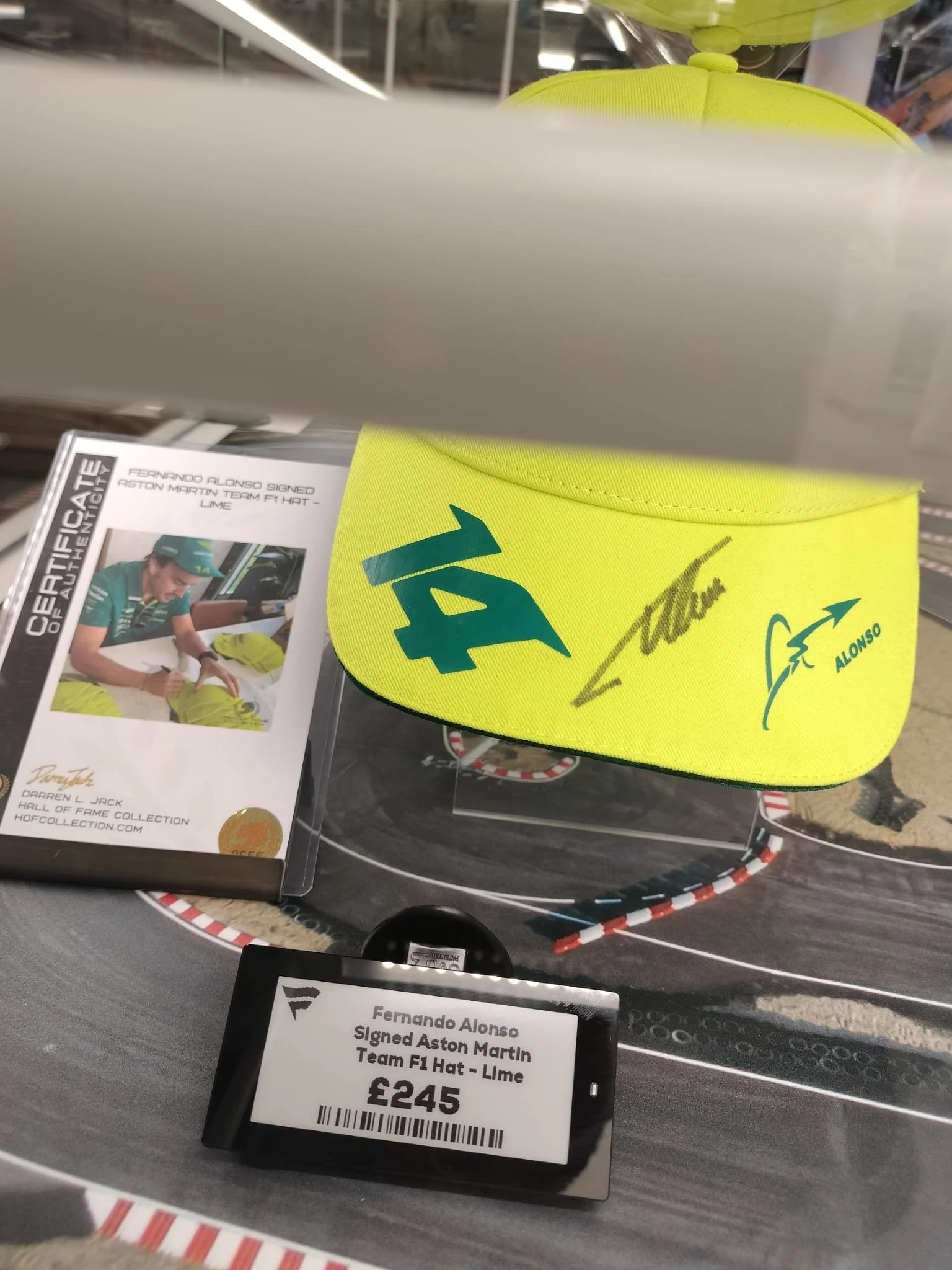
The Ashalon examines a signed Fernando Alonso Aston Martin Formula One team hat offered at Fanatics, asking whether a piece of motorsport memorabilia should be viewed purely as an investment—or simply enjoyed as something worth owning. With authenticated signatures, Formula One provenance and a connection to one of the sport’s most recognisable drivers, the piece demonstrates why collecting is about more than future resale value. For The Ashalon, the strongest reason to buy is not necessarily to flip it, but to own a piece of motorsport history that means something to you.
Should You Buy a Signed Fernando Alonso Aston Martin F1 Hat? The Ashalon’s Case for Collecting What You Love
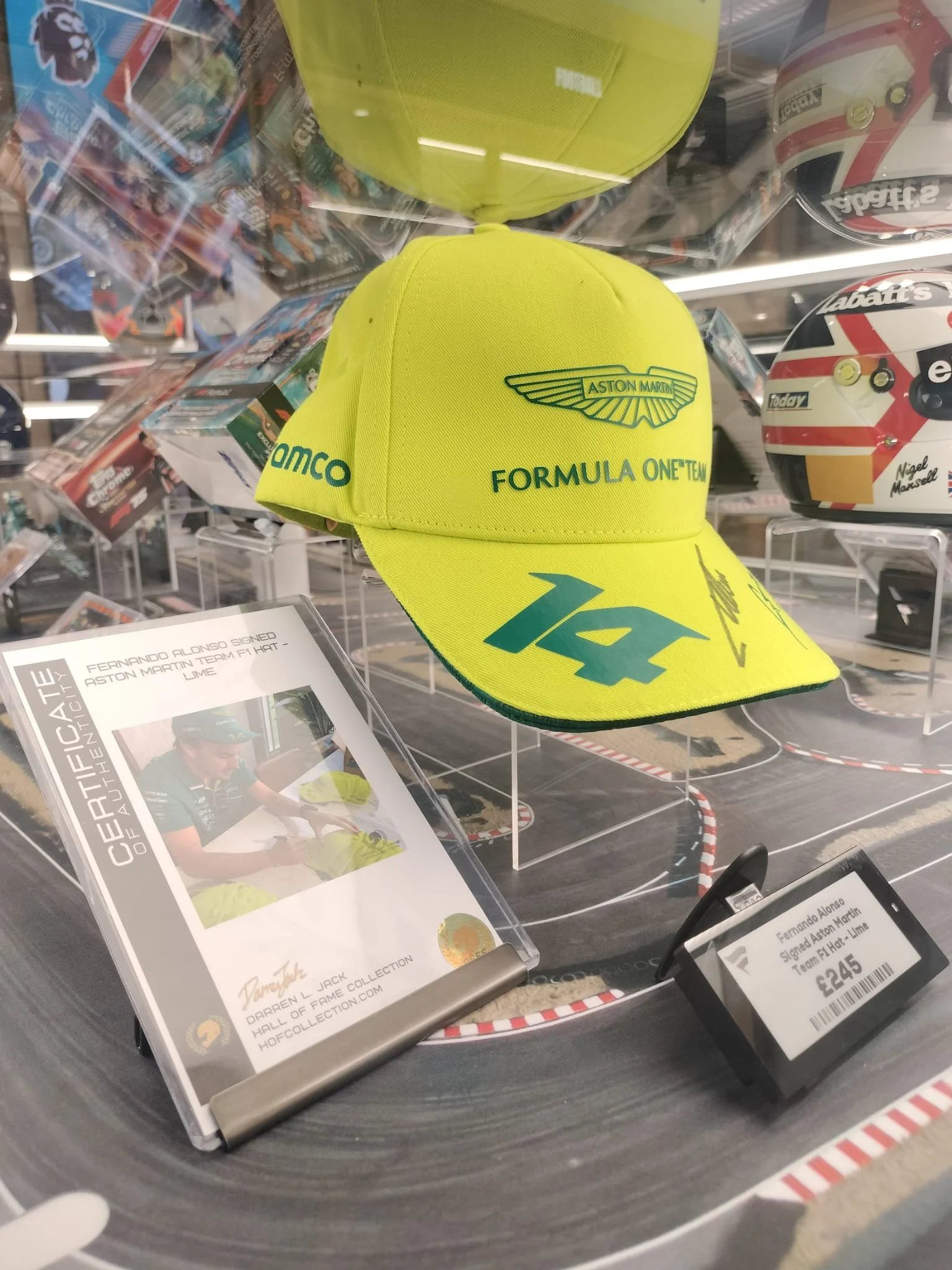
The Ashalon asks a simple question: would you buy it if you never sold it?
There is something increasingly strange about the way people talk about collecting. A watch is immediately discussed in terms of resale value. A rare coin becomes an investment vehicle. A gemstone becomes an asset class. A signed football shirt is judged by auction prices. Even a Formula 1 hat can become a conversation about appreciation, scarcity and whether the next collector will pay more than you did.
The Ashalon believes there is another question that should come first: do you actually love the object?
That question sits at the heart of a signed Fernando Alonso Aston Martin Formula 1 hat currently associated with the Hall of Fame Collection and photographed at a displayed price of £245. The item is a lime-coloured Aston Martin F1 team hat signed by Fernando Alonso, accompanied by certification of authenticity. Hall of Fame Collection currently lists the same titled item, “Fernando Alonso Signed Aston Martin Team F1 Hat - Lime,” for US$300, describing it as an official Aston Martin driver cap hand-signed by the two-time Formula 1 World Champion and supplied with a Certificate of Authenticity. (Hall of Fame Collection)
For The Ashalon, this is exactly the kind of object that creates an interesting debate about collecting versus investing.
Is £245 cheap?
Is £245 expensive?
Could the hat be worth more in ten years?
Could it be worth less?
Nobody can honestly guarantee those answers.
But there is one answer that a collector can control: whether the object means something to them.
And that may be more important than the eventual resale price.
The object itself: a piece of Formula 1 memorabilia
The photographed item is visually striking.
The bright lime Aston Martin colour immediately connects it to the team's modern identity, while the autograph transforms what would otherwise be ordinary team merchandise into a piece of signed sporting memorabilia. The cap is accompanied by a certificate describing it as a Fernando Alonso signed Aston Martin Team F1 Hat, with the displayed price shown as £245. That distinction matters. There is an enormous difference between buying an ordinary Formula 1 hat and buying an authenticated signed piece of Formula 1 memorabilia. Fanatics currently sells ordinary Fernando Alonso Aston Martin merchandise, including an official Fernando Alonso Aston Martin F1 adjustable driver hat, showing how widely available standard Alonso-branded apparel can be. (Fanatics) The signed hat occupies a different category. It contains an additional layer of human association. The value is not simply in the fabric, stitching, logo or colour. It is in the connection between the physical object and the person whose signature appears upon it. That is the beginning of the collector's story.
Why Fernando Alonso matters to collectors
Fernando Alonso is not simply another name printed on Formula 1 merchandise. He is a two-time Formula 1 World Champion and remains one of the most recognisable drivers of his generation. Formula 1 continues to describe him as a two-time World Champion, and his career has extended across multiple major eras of the sport. (Formula 1® - The Official F1® Website) His association with Aston Martin also gives this particular piece a specific historical context. Alonso joined Aston Martin during the modern era of the team's development, and in 2026 he remains part of the Aston Martin Formula 1 story. Formula 1 reported in June 2026 that Alonso scored Aston Martin's first point of the 2026 season in Monaco, while later reporting highlighted questions surrounding his future beyond 2026. (Formula 1® - The Official F1® Website) That uncertainty is interesting from a collecting perspective. A signed object does not merely represent a driver.
It can represent a period.
A collector buying an Alonso Aston Martin hat today is not simply buying an autograph. They are buying an object associated with a particular chapter of Alonso's career and Aston Martin's Formula 1 journey. That is precisely why tangible memorabilia can become interesting historical objects.
The difference between an investment and a collectible
This is where The Ashalon would make an important distinction, An investment is generally purchased with the expectation that it will produce a financial return.A collectible can have financial value, but its emotional, cultural or historical value may be equally important.The two categories overlap.They are not identical.A collector can therefore make a terrible financial investment and still make an excellent collecting decision.Imagine buying the Alonso hat for £245. Ten years later, perhaps the market value is £150.
Financially, that would not be a successful investment.
But imagine that during those ten years the collector watched hundreds of Formula 1 races while the hat sat in their home office. Imagine that they attended a Grand Prix wearing it. Imagine that their children grew up seeing it displayed. Imagine that Fernando Alonso eventually retired and the hat became one of the objects that reminded the family of the era in which they followed Formula 1 together.
Has the object really lost £95 of value?
Financially, perhaps.Personally, perhaps not. This is the philosophy The Ashalon wants collectors to consider.
Not everything needs to be flipped.
The danger of turning everything into an investment
The modern collectibles market increasingly encourages people to ask one question:
"What can I sell this for?"
The Ashalon believes that question can destroy the joy of collecting. If every object is purchased only because somebody believes it will increase in value, collecting becomes a form of speculation. The collector stops asking whether they like the object. They start asking whether another person will like it more. That distinction is enormous. A person might purchase a signed Fernando Alonso hat because they have followed Alonso since his Renault years, watched his battles with Michael Schumacher, followed his Ferrari period, admired his return to Formula 1 and now want something connected to his Aston Martin chapter.
That is collecting.
Another person might purchase the exact same hat because they believe Alonso will retire, his autograph will become more desirable and the hat will supposedly double in price. That is speculation. Neither approach is inherently wrong. But The Ashalon believes the first is healthier.
What makes the £245 price interesting?
The photographed price of £245 deserves examination. The question is not simply whether £245 is "cheap."
The correct question is:
£245 compared with what?
Hall of Fame Collection currently lists the same named Fernando Alonso Signed Aston Martin Team F1 Hat - Lime at US$300. The seller describes the item as an official Aston Martin driver cap signed by Alonso and states that it comes with a Certificate of Authenticity. (Hall of Fame Collection) That provides useful market context. It does not prove that £245 is an investment bargain. It does, however, suggest that the displayed £245 price should not automatically be viewed as unreasonable simply because the item is a hat. The market is pricing the object as signed motorsport memorabilia rather than ordinary apparel.
That distinction is crucial.
A normal Aston Martin F1 hat can be purchased for a comparatively modest amount. Fanatics currently lists a standard Fernando Alonso Aston Martin F1 driver adjustable hat at US$54.50, illustrating the premium created by the autograph and associated authentication. (Fanatics)
The collector is therefore paying for something beyond the hat. They are paying for association, authenticity and story.
Authentication is one of the most important considerations
This is where the collector should slow down. A signature by itself is not enough. The market for signed sports memorabilia depends heavily upon authenticity and provenance. Hall of Fame Collection states that its products come with Certificates of Authenticity and presents authenticity as one of its core services. (Hall of Fame Collection) That does not mean a collector should blindly buy anything bearing a certificate.
A sensible collector should still preserve:
The original receipt
The Certificate of Authenticity
Product descriptions
Photographs
Packaging
Any identifying numbers or labels
Purchase date
Seller information
Provenance information
Photographs of the signature
Photographs of the complete object
The certificate should remain with the object. If the hat eventually becomes part of a museum collection, estate collection or family archive, that documentation can become almost as important as the physical hat itself. This is exactly where The Ashalon's philosophy of tangible assets plus documentation becomes relevant.
A hat can become a historical object
Calling a hat a historical object may initially sound excessive but history is full of objects that were once ordinary.
A letter was once simply a letter. A photograph was once simply a photograph.A watch was once something somebody wore.A football shirt was once simply sportswear. A concert ticket was once something that allowed somebody through a door.Time changes the meaning of objects.The same principle applies to Formula 1 memorabilia. A hat associated with a major driver during a particular era can potentially become a physical reminder of that era.The important word is potentially. Not every hat will become rare. Not every autograph will appreciate. Not every Formula 1 collectible will become valuable but that uncertainty is precisely why collectors should buy things they genuinely want.
The Ashalon's argument: buy the memory, not the future price
This is perhaps the central argument of the entire article.
Buy the memory.
If you are a Fernando Alonso fan, and you have £245 available for a collectible, you might look at this hat and immediately remember why you started watching Formula 1.
Maybe it was Alonso's Renault years.
Maybe it was the Ferrari era.
Maybe you discovered him through Drive to Survive.
Maybe you watched his Aston Martin comeback.
Maybe you simply admire his longevity.
Whatever the reason, that emotional connection is yours.
Nobody can take it away.
And unlike a digital image stored on a phone, the physical hat occupies space in your world.
You can display it.
You can touch it.
You can photograph it.
You can take it to an event.
You can eventually pass it to someone else.
That is tangible collecting.
The investment case is much weaker
If someone asked The Ashalon:
"Should I buy this purely as an investment?"
The answer would be considerably more cautious.
No.
Not purely for that reason.
There are too many variables.
The future value of signed sports memorabilia depends upon supply, demand, the driver's legacy, authentication, condition, market sentiment, collector demographics and the availability of comparable pieces.
Fernando Alonso's eventual retirement could change interest in his memorabilia.
His future achievements could change it.
The growth or contraction of Formula 1's global audience could change it.
The popularity of Aston Martin could change it.
The market for signed memorabilia itself could change.
There is no guaranteed trajectory.
Even the same seller's current catalogue demonstrates the enormous range of Formula 1 memorabilia values. Hall of Fame Collection lists signed Alonso hats around the $300 level while much more substantial objects, such as signed helmets and race-used memorabilia, command dramatically higher prices. (Hall of Fame Collection)
That tells us something important.
Not all memorabilia is equal.
A hat should not be evaluated as though it were a race-used helmet.
Why the hat could still be an excellent collectible
The fact that the investment case is uncertain does not make the object unattractive.
Quite the opposite.
For the right collector, it could be an excellent purchase.
There are several reasons.
First, it is associated with a globally recognised Formula 1 driver.
Second, it carries Aston Martin branding, linking it to a major automotive marque.
Third, it is signed.
Fourth, it comes with certification from the seller.
Fifth, it is relatively easy to display.
Sixth, it does not require a huge amount of physical space.
Seventh, it can be enjoyed rather than stored in a vault.
That last point matters.
A collectible that you can actually enjoy is fundamentally different from an asset that exists only inside a spreadsheet.
The case for buying as a fan
The Ashalon would therefore make a surprisingly simple recommendation.
If you are an Alonso fan and you have the disposable money, buy it because you want it.
Do not buy it because somebody on social media told you it will be worth £1,000.
Do not buy it because you believe retirement automatically makes every autograph valuable.
Do not buy it because you think Formula 1 memorabilia is guaranteed to rise.
Buy it because you want Fernando Alonso's signature on an Aston Martin F1 hat in your collection.
That is a much stronger reason.
And if the item eventually increases in value, that becomes a bonus.
Stop flipping everything
There is a broader collecting philosophy behind this.
The modern internet has made it incredibly easy to flip things.
Buy.
List.
Sell.
Repeat.
The collector can become trapped in an endless cycle of searching for the next arbitrage opportunity.
There is nothing inherently wrong with trading collectibles.
The Ashalon itself operates within the world of tangible assets.
But there is something valuable about keeping things.
A collection is created through accumulation.
A museum is created through preservation.
An estate is created through time.
If everything is sold the moment its price rises, nothing remains.
That is why The Ashalon believes people should sometimes resist the temptation to sell.
Keep the things that matter.
The museum principle
This philosophy is particularly relevant to The Ashalon's Museum Collection.
A museum collection is not simply a pile of objects.
It is a record of decisions.
Someone decided that a particular object was worth preserving.
Someone documented it.
Someone stored it.
Someone protected it.
And eventually, someone else may inherit it.
The Alonso hat fits naturally into this broader philosophy.
It could become part of a collection documenting modern Formula 1 culture.
Not because it is necessarily the most expensive object.
Not because it is necessarily rarest.
But because it represents a moment in sporting history.
The Ashalon Museum concept is therefore not simply about accumulating expensive objects.
It is about building a physical archive.
What happens if Fernando Alonso retires?
This is where the speculative argument becomes interesting without becoming a prediction.
Alonso is already a two-time World Champion.
He has raced for some of the most recognisable teams in Formula 1.
His career has crossed generations of the sport.
And in 2026, Formula 1 reporting has focused on his future as his contract situation develops. (Formula 1® - The Official F1® Website)
Eventually, every driver becomes a former driver.
That transition can change collecting behaviour.
Fans who watched a driver compete every weekend suddenly begin looking backwards.
The helmet becomes historical.
The race suit becomes historical.
The photographs become historical.
The signed merchandise becomes historical.
But again, this does not mean the value automatically increases.
That distinction must remain clear.
A collector can reasonably believe retirement may strengthen interest without pretending that appreciation is guaranteed.
The Aston Martin connection may become increasingly interesting
There is another element that makes the hat worth considering.
It is not simply an Alonso hat.
It is an Alonso Aston Martin hat.
That gives it a dual identity.
It belongs to the story of Fernando Alonso.
It also belongs to the story of Aston Martin's Formula 1 programme.
That creates an interesting collecting intersection between motorsport, automotive history and celebrity memorabilia.
A collector interested in Alonso might want it.
An Aston Martin collector might want it.
A Formula 1 memorabilia collector might want it.
A signed sports memorabilia collector might want it.
That doesn't guarantee scarcity, but it creates several potential collecting audiences.
And that is one of the characteristics The Ashalon looks for when considering tangible heritage assets.
The collector should think about condition
There is another practical consideration.
If you buy the hat, do not treat it like an ordinary hat.
If the autograph is the primary reason for purchasing the item, excessive wear can damage the presentation and potentially affect collector interest.
Keep it away from direct sunlight.
Avoid unnecessary handling.
Keep the certification with it.
Do not casually wear it to every Grand Prix.
That may sound almost contradictory.
You buy something because you love it, but then you are told not to use it.
The answer is to find a balance.
The collector might display it inside a UV-protected case, for example, while preserving the original certificate and packaging separately.
The objective is not to turn the object into something sterile.
It is to make sure that your enjoyment today does not destroy its condition tomorrow.
Don't forget the story
Perhaps the most valuable thing you can add to the hat is something that costs almost nothing.
Write down why you bought it.
Put the date in your collection records.
Record where you purchased it.
Record the price.
Record the seller.
Record the certificate details.
Then write a paragraph explaining why Fernando Alonso mattered to you.
That document could eventually become part of the asset.
Imagine someone opening the collection twenty years from now.
They see the signed lime Aston Martin hat.
Next to it is a note:
"I bought this because I followed Alonso throughout his Formula 1 career and wanted something from his Aston Martin era."
Suddenly the object has become more than merchandise.
It has become family history.
That is what The Ashalon means by a legacy asset.
£245 for a memory?
There is an argument that £245 is too much for a hat.
There is also an argument that £245 is very little for a signed piece of Formula 1 history.
Both arguments can be made.
But they miss the point.
The correct price for an object depends partly on the person buying it.
If someone has no interest in Formula 1, £245 may be absurd.
If someone has followed Alonso for twenty years, owns an Aston Martin collection and has wanted an authenticated Alonso autograph for years, £245 may feel completely reasonable.
Collecting is personal.
The market can establish a price.
But only the collector can establish meaning.
What The Ashalon would do
If The Ashalon were evaluating the hat as part of a collection, it would not classify it as a guaranteed financial investment.
It would classify it as signed motorsport memorabilia with potential long-term collectible and historical interest.
That is a much more honest description.
The Ashalon would also want the provenance preserved.
The certificate would be archived.
The original purchase information would be recorded.
The object would be photographed.
Its condition would be documented.
And the hat would be stored appropriately.
If the collector genuinely loved Fernando Alonso and could comfortably afford £245 without compromising essential finances, The Ashalon would have no problem with the purchase.
In fact, The Ashalon would encourage the collector to consider keeping it.
Collecting should not become a second job
There is a psychological trap in modern collecting.
Once you start thinking about resale values, every object becomes a potential transaction.
You buy a watch and immediately check Chrono24.
You buy a coin and immediately check auction results.
You buy a card and immediately search completed sales.
You buy a signed hat and immediately ask whether it could appreciate.
At some point, the collection stops being yours.
It becomes an inventory.
The Ashalon believes that distinction matters.
A collection should contain objects that tell you something about yourself.
Your interests.
Your memories.
Your family.
Your history.
Your ambitions.
Your experiences.
If you eventually sell something, that is perfectly legitimate.
But you should not have to sell everything.
The real value of tangible assets
This is one of the central philosophies behind The Ashalon.
We are moving through an increasingly digital world.
Photos live in clouds.
Tickets live inside apps.
Music exists on streaming platforms.
Games can exist entirely as downloads.
Financial assets can exist as database entries.
Identity can increasingly exist digitally.
That makes physical objects interesting.
A signed hat is physical.
You can hold it.
You can display it.
You can preserve it.
You can pass it down.
It occupies physical space in the world.
The autograph is physically present.
The fabric is physically present.
The certificate is physically present.
The memory is attached to something tangible.
That is powerful.
The Ashalon does not believe everything needs to appreciate
This point deserves repeating.
A collectible does not have to become more expensive to become more valuable to you.
A childhood toy can become priceless because of memory.
A parent's watch can become priceless because of inheritance.
A photograph can become priceless because of the person in it.
A football shirt can become priceless because of the match associated with it.
A signed Formula 1 hat can become priceless because it reminds you of the driver you followed for decades.
Financial value and personal value are different measurements.
The best collections understand both.
So, should you buy the Fernando Alonso hat?
The Ashalon's answer is:
Buy it if you are buying Fernando Alonso.
Not literally the person.
The story.
The career.
The Aston Martin chapter.
The Formula 1 memories.
The era.
The autograph.
The object.
The experience of owning something tangible connected to a sport you love.
Do not buy it if you are only buying £245 today in the hope of selling it for £500 tomorrow.
That is speculation, not collecting.
There is nothing wrong with speculation when done responsibly, but it should be recognised for what it is.
If the hat increases in value, excellent.
If it remains around £245, you still have something you love.
If its financial value falls, you have hopefully still enjoyed owning it.
That is a much healthier relationship with collecting.
From merchandise to legacy asset
This is where the hat becomes particularly interesting to The Ashalon.
Today, it is a signed Formula 1 cap.
Tomorrow, it could be part of somebody's personal collection.
Years from now, it could be part of a family archive.
Eventually, it could become a historical artefact representing a specific period of Fernando Alonso's career and Aston Martin's Formula 1 journey.
None of that is guaranteed.
But that is how collections are created.
Someone has to make the first decision to preserve something.
The collector who buys the hat today becomes part of that process.
The collector's life should not be a spreadsheet
The Ashalon believes there is a simple philosophy worth remembering:
You cannot take your collection with you forever, but you can leave it behind.
That changes the way we should think about ownership.
The point is not necessarily to own the maximum amount.
The point is to own things that matter.
A signed Fernando Alonso Aston Martin F1 hat might never become a six-figure piece.
It does not need to.
It can simply be a brilliant piece of Formula 1 memorabilia sitting in a collector's home.
It can remind somebody of races watched late at night.
It can remind somebody of the first time they visited a Grand Prix.
It can become something their child associates with their parent's passion for Formula 1.
And one day, that child may inherit the hat.
At that moment, its real value becomes obvious.
The Ashalon's final verdict
At £245, the photographed Fernando Alonso Aston Martin signed hat is not something The Ashalon would describe as a guaranteed investment.
There is no responsible way to make that promise.
The item is also not particularly interesting simply because it is a hat.
Its appeal comes from the combination of Fernando Alonso, Aston Martin, Formula 1, the autograph, authentication and the story attached to the object. Hall of Fame Collection's current listing gives the item a US$300 reference price and states that it comes with a Certificate of Authenticity, while its broader catalogue demonstrates that signed Alonso memorabilia spans a wide range of formats and prices. (Hall of Fame Collection)
But The Ashalon would make the case for buying it anyway—if you are a genuine fan.
Buy it because you have followed Alonso.
Buy it because you love Aston Martin.
Buy it because Formula 1 means something to you.
Buy it because you want one physical object from this era of the sport.
Buy it because you want to start a collection.
Buy it because you want something that your children might one day ask you about.
But do not buy it simply because you think somebody else will pay more.
Collecting should be about ownership before speculation.
That is the philosophy The Ashalon applies to tangible heritage assets.
The best collectible is not necessarily the one with the highest price tag.
Sometimes it is the object you would refuse to sell.
The Ashalon: Collect What Matters
The Ashalon believes that the future of collecting will not simply be about finding objects that increase in financial value.
It will be about finding objects that retain meaning.
A gemstone.
A historical document.
A coin.
A watch.
A photograph.
A game console.
A family heirloom.
Or a signed Formula 1 hat.
These objects can become part of a personal museum of life and perhaps that is the real lesson of the Fernando Alonso hat.
Don't spend your entire life flipping everything you own.
Sometimes, buy something because you love it.
Keep it.
Protect it.
Document it.
Tell its story.
Then, years from now, you may discover that you did not merely buy a collectible and you preserved a piece of your own history. That is the kind of ownership The Ashalon wants to encourage: Freedom. Assets. Control. And sometimes, the smartest thing a collector can do with an object they genuinely love is simply keep it.
References
Hall of Fame Collection, Fernando Alonso Signed Aston Martin Team F1 Hat - Lime — current product listing and authentication information. (Hall of Fame Collection)
Hall of Fame Collection, Aston Martin Collection — current selection of Alonso/Aston Martin signed memorabilia and comparative pricing. (Hall of Fame Collection)
Fanatics, Fernando Alonso Aston Martin merchandise — current official merchandise listings, including the standard Alonso Aston Martin F1 adjustable hat. (Fanatics)
Formula 1, How Aston Martin's 'aggressive and ambitious' strategy earned them a first point of 2026 — Alonso's 2026 Aston Martin context. (Formula 1® - The Official F1® Website)
Formula 1, There are more things on the table – Fernando Alonso insists Aston Martin's Hungary upgrade will not decide his future — Alonso's 2026 contract/future context. (Formula 1® - The Official F1® Website)
Formula 1, 2026 F1 Driver Numbers — confirmation of Alonso's status as a two-time World Champion and his #14 racing number. (Formula 1® - The Official F1® Website)
The Ashalon Acquires Authentic Titanic Coal for Its Museum Collection and Estate
The Ashalon Acquires Authentic Titanic Coal for Its Museum Collection and Estate
The Ashalon is proud to announce the acquisition of an authentic piece of Titanic coal, adding another historically significant artefact to The Ashalon Museum Collection and the wider The Ashalon Estate. While physically small, this remarkable object represents one of the most recognisable events in modern history and reflects The Ashalon's philosophy of preserving tangible heritage for future generations.
As The Ashalon continues building its Museum Collection, every acquisition is chosen with purpose. Rather than focusing solely on financial value, The Ashalon seeks artefacts that preserve stories, craftsmanship, engineering achievements and moments that shaped history. Titanic coal is one such object. It connects directly to the world's most famous ocean liner and reminds collectors that even ordinary materials can become extraordinary through their historical context.
The acquisition forms another milestone in The Ashalon's long-term ambition to develop a transparent and educational private museum collection centred around legacy assets.
Why Titanic Coal Matters
When many people think of RMS Titanic, they imagine the ship itself, its luxurious interiors and the tragic events of April 1912. Few immediately consider the coal that powered the vessel during its maiden voyage. Yet without coal, Titanic would never have sailed.
Coal fuelled Titanic's enormous steam boilers, generating the energy required to drive the ship's engines across the Atlantic Ocean. Every journey depended upon thousands of tonnes of coal being loaded into the bunkers before departure. The coal itself therefore became an essential part of Titanic's engineering story.
The Ashalon believes that objects connected to famous historical events often derive their significance not from appearance alone but from the stories they represent. This small fragment of coal symbolises the industrial age, maritime innovation and one of history's most enduring lessons about ambition, technology and human vulnerability.
Building The Ashalon Museum Collection
The acquisition of Titanic coal reflects the broader vision behind The Ashalon Museum Collection.
Rather than specialising in only one collecting discipline, The Ashalon aims to preserve a diverse range of tangible heritage assets. These include gemstones, numismatic items, historical documents, memorabilia and artefacts associated with important moments in history.
Each acquisition contributes to a wider narrative about civilisation, craftsmanship and human achievement. Some items represent natural history, while others preserve economic history, technological progress or cultural development.
Titanic coal occupies a unique place within this philosophy because it combines industrial history with one of the world's most recognised historical events.
The Importance of Provenance
One of the defining characteristics of valuable historical artefacts is provenance.
Collectors seek confidence that an item genuinely originates from the event or object it claims to represent. In the case of Titanic artefacts, provenance is particularly important because public interest has led to many reproductions and souvenirs over the decades.
The Ashalon places significant emphasis on documenting acquisitions and preserving any accompanying packaging, certificates or historical information wherever possible. Even presentation boxes and accompanying documentation become part of an object's collecting history.
Maintaining provenance not only protects future value but also helps future generations understand why an object deserves preservation.
The Story Behind Titanic Coal
Following the sinking of RMS Titanic on 15 April 1912, the wreck rested undisturbed on the seabed for more than seventy years before its discovery in 1985.
Subsequent recovery expeditions brought a limited number of artefacts to the surface under controlled conditions, including pieces of coal that had spilled from the ship's bunkers. These fragments became some of the most accessible authentic artefacts available to collectors because they were relatively abundant compared with unique objects recovered from the wreck.
Although a piece of coal may appear simple, it possesses remarkable historical significance because it physically travelled aboard Titanic during her final voyage.
For many collectors, that connection alone makes Titanic coal one of the most fascinating maritime artefacts available.
The Ashalon's Philosophy on Tangible Heritage
The Ashalon believes that society is entering a period where physical ownership will become increasingly meaningful.
As entertainment, communication, banking and even identity become increasingly digital, genuine historical artefacts provide something digital assets cannot fully replicate.
They possess physical permanence.
They occupy real space.
They carry genuine age.
They survive generations.
Titanic coal exemplifies these characteristics. It is not merely an object representing history; it is a surviving fragment of history itself.
More Than a Collectible
Many collectors purchase historical artefacts because of investment potential.
The Ashalon recognises that rarity and demand can influence market values over time. However, financial appreciation is never the sole reason behind acquisitions.
The organisation instead focuses upon educational value, historical importance and cultural significance.
A visitor viewing Titanic coal immediately begins asking questions.
How was Titanic powered?
Where was the coal stored?
How did the ship operate?
Why has this small fragment survived?
These questions transform a simple object into an educational experience.
Preserving Stories for Future Generations
The Ashalon Estate is being developed with a long-term vision extending beyond today's collectors.
Future generations deserve opportunities to experience authentic historical objects rather than relying exclusively upon digital images or reproductions.
The organisation therefore sees itself as a steward rather than merely an owner.
Stewardship means protecting objects, documenting them carefully and ensuring that the stories surrounding each acquisition remain available for decades to come.
Titanic coal now becomes part of that mission.
Transparency Through Collection Reporting
The Ashalon has committed to regularly publishing updates regarding its Museum Collection.
This transparency distinguishes the organisation from many private collectors who choose not to disclose the growth of their collections.
By sharing acquisitions, estimated collection values and collecting philosophy, The Ashalon hopes to encourage greater public appreciation for heritage preservation.
The acquisition of Titanic coal therefore becomes another publicly documented milestone in the continuing development of The Ashalon Museum Collection.
A Reminder That History Can Be Held
Perhaps the most remarkable aspect of Titanic coal is its size.
It fits comfortably inside a presentation box.
It weighs only a small amount.
Yet its historical significance extends across more than a century.
The Ashalon believes this demonstrates an important principle of collecting: significance is not measured by physical size.
History can exist within the smallest artefacts.
Sometimes a fragment tells a larger story than an entire building.
The Future of The Ashalon Museum Collection
The acquisition of Titanic coal marks another chapter in The Ashalon's journey to build a respected collection of tangible heritage assets.
Future acquisitions will continue expanding across gemstones, numismatics, historical documents, engineering artefacts and objects connected to defining moments in history.
Every acquisition will support The Ashalon's mission of preserving legacy, educating future generations and demonstrating the enduring value of physical ownership in an increasingly digital world.
The organisation believes that museum collections should inspire curiosity, encourage research and remind people that history is something to experience—not simply to read about.
Titanic coal now proudly takes its place within that vision.
Conclusion
The acquisition of authentic Titanic coal represents far more than the addition of another historical object to The Ashalon's holdings. It symbolises The Ashalon's commitment to safeguarding pieces of the past and sharing their stories with future generations. As The Ashalon Museum Collection continues to expand, each carefully chosen artefact strengthens its role as a steward of tangible heritage, preserving objects that connect people with history in a direct and meaningful way.
Whether it is a gemstone formed millions of years ago, a rare coin that once circulated through history, or a fragment of coal that powered one of the world's most famous ships, The Ashalon believes every authentic object has a story worth protecting. By continuing to build its Museum Collection with transparency, research and respect for provenance, The Ashalon is creating a lasting legacy that celebrates craftsmanship, history and the enduring importance of physical ownership.
Reference
RMS Titanic Inc. – Information on recovered Titanic artefacts and preservation efforts.
National Oceanic and Atmospheric Administration (NOAA) – Historical information on the discovery and exploration of the RMS Titanic wreck.
Encyclopaedia Britannica – Titanic history and maritime background.
The Ashalon Museum Collection Surpasses £24,508 as Collection Continues to Grow
Transparency Is Becoming Part of The Ashalon's Identity
The Ashalon is proud to announce that The Ashalon Museum Collection has officially reached a total collection value of £24,508, marking another milestone in the organisation's long-term ambition to build one of the United Kingdom's most distinctive private collections of tangible heritage assets.
Rather than keeping the collection entirely behind closed doors, The Ashalon has chosen to publish its progress and provide greater transparency about the assets it acquires. The organisation believes that sharing the growth of its collection allows supporters, collectors and future clients to better understand how a legacy collection develops over time. Every acquisition represents another step towards preserving physical history in an increasingly digital world. While the collection remains privately held, its development is intended to be visible to the public through regular updates.
A Collection Built One Asset at a Time
Unlike institutions that acquire thousands of objects at once through donations or government funding, The Ashalon has been assembled gradually through careful research, sourcing and personal investment.
Each acquisition is considered on its own merits. Some objects are selected because of their historical significance. Others are chosen for their rarity, craftsmanship or cultural importance. Together they form a collection designed to represent different forms of tangible heritage, including gemstones, numismatics, historical documents and artefacts. The Ashalon believes that patient collecting often creates stronger collections than rapid accumulation.
More Than Monetary Value
Although the current valuation of £24,508 represents an important financial milestone, The Ashalon believes that many items possess value that extends beyond market price.
Historical objects carry stories.
Gemstones represent remarkable natural processes that took millions of years to form.
Coins connect modern collectors to earlier economies and societies.
Documents preserve moments that might otherwise disappear from public memory.
For The Ashalon, these qualities are equally important when deciding what belongs in the Museum Collection.
Preserving Heritage in a Digital Age
Modern life increasingly revolves around digital ownership. Family photographs remain on smartphones, documents are stored in cloud services and entertainment is consumed through subscriptions rather than physical media.
The Ashalon believes that physical collections will become increasingly significant as society continues this transition. Tangible objects offer permanence that digital files alone cannot always provide. They can be displayed, inherited, researched and appreciated across generations without depending entirely on changing software platforms or online services. This philosophy continues to shape every acquisition made by The Ashalon.
A Growing Collection
The Museum Collection currently spans several collecting disciplines, including gemstones, numismatics and historical artefacts.
Among the acquisitions are rare gemstones selected for their geological interest, collectible coins representing different periods of monetary history and artefacts that reflect social and cultural developments. Each object is catalogued as part of the wider Museum Collection, helping to build a structured archive for future research and public engagement. As the collection expands, The Ashalon intends to continue improving its documentation and presentation.
Why Publish the Collection's Value?
Many private collectors choose not to disclose the value of their collections.
The Ashalon has taken a different approach.
Publishing the overall valuation demonstrates accountability, shows measurable progress and allows supporters to follow the organisation's journey over time. The valuation also illustrates that significant collections are often built gradually rather than overnight. Transparency forms part of The Ashalon's broader commitment to educating the public about collecting and heritage preservation.
Looking Beyond Today
The current valuation is not viewed as a finish line.
Instead, it represents an early chapter in a much longer journey.
The Ashalon has previously outlined ambitions to continue expanding its collections across gemstones, numismatics and historical artefacts while pursuing new research initiatives and educational projects. The organisation also intends to develop its Museum Collection into an important resource for showcasing tangible heritage and encouraging public appreciation of physical collecting.
Learning from Museums
Many of the world's leading museums have spent centuries building their collections through purchases, donations and research. Institutions such as the Ashmolean Museum and the V&A continue to expand and catalogue hundreds of thousands of objects, demonstrating that meaningful collections evolve over long periods rather than appearing overnight.
The Ashalon recognises that its Museum Collection is at a much earlier stage of development. However, the same principles remain relevant: careful acquisition, accurate documentation, responsible stewardship and a commitment to preserving objects for future generations.
The Road Ahead
As The Ashalon Museum Collection grows beyond £24,508, the organisation plans to continue sharing major milestones with the public.
Future updates are expected to include new acquisitions, collection statistics, educational articles and greater insight into the stories behind individual objects. The long-term objective is not simply to build a valuable collection but to create one that informs, inspires and preserves history for future generations.
Every asset acquired adds another piece to that story.
About The Ashalon
The Ashalon is a London-based legacy asset agency specialising in gemstones, numismatics, historical documents and tangible heritage assets. Through collecting, research and education, The Ashalon promotes the preservation of physical history and encourages long-term stewardship of meaningful tangible assets.
Freedom. Assets. Control.
London's Summer of Legacy Assets: Grail, Gold and Gemstones
There are weeks when London quietly reminds the world why it has been the marketplace for enduring wealth for the better part of three centuries. This is one of them. In the space of a few days, the capital has played host to the sale of a 700-year-old Arthurian manuscript, the unveiling of a national coin programme built around royal centenaries and recycled gold, and the start of a trade agreement set to reshape how coloured gemstones move into the UK. Three different asset classes. One city. One underlying story: history, once acquired, does not depreciate the way headlines do.
Here is what actually happened this week — and why each thread matters to anyone thinking about tangible, legacy-grade assets.
The Grail Comes to Auction
On 8 July, Christie's London sold the Clermont-Tonnerre Grail, a illuminated manuscript of the Old French Lancelot-Grail cycle dating to around 1290–1310, at its Valuable Books and Manuscripts sale. The volume — also known as the Lebaudy Manuscript — had remained in unbroken private ownership for roughly 700 years, passing through the hands of a 15th-century Metz alderman, a French jousting knight, the comte de Clermont-Tonnerre himself, the famously insatiable Victorian collector Sir Thomas Phillipps, and finally the French industrialist Jean Lebaudy.
What makes it exceptional isn't just age. Of roughly 200 surviving copies of the Vulgate Cycle worldwide, only seven are complete, and just three whole examples remain in private hands — this is the oldest of those three. Its 126 miniature illuminations, attributed to the anonymous "Master of the Liège Apocalypse," depict scenes from the Merlin and Holy Grail narratives in burnished gold leaf, including Merlin's shapeshifting into a stag. Christie's carried a pre-sale estimate of £1.5–2 million, and scholars including Cambridge's Irene Fabry-Tehranchi had publicly hoped the manuscript would land in institutional hands where it could be studied rather than disappear again into private ownership.
Whatever its final result, the sale is a useful reminder of what separates a document from a mere object: unbroken provenance, narrative significance, and physical survival across seven centuries of fire, war and neglect. That combination is vanishingly rare — and it is precisely what collectors of historical documents are really paying for.
Gold, Centenaries and the Royal Mint's Long Game
While Christie's was courting manuscript collectors, the Royal Mint has spent 2026 building a numismatic programme around a very British instinct: marking the passage of time in metal. The year's commemorative slate includes a £5 crown honouring what would have been Queen Elizabeth II's 100th birthday, a £2 coin for the 200th anniversary of the Zoological Society of London, and a Great Engravers reissue believed to reference the elusive crown of William IV — a monarch for whom, notably, no coronation crown was ever struck for circulation, making any homage to it a rarity by design.
Perhaps more significant for the trade than any single design is the Mint's sustainability pivot: in 2026, a limited run of Annual Sets is being struck using recycled gold, reclaimed from old jewellery and coinage through a partnership with Sempsa, as part of a stated commitment to produce all gold commemorative coins from recycled sources by the end of the year. It's a small operational change with a larger implication — the provenance of the metal itself is becoming as much a talking point as the design stamped into it.
For collectors, the lesson from this year's programme is a familiar one dressed in new packaging: mintage size and genuine scarcity — not just the emotional pull of an anniversary — remain what determines whether a commemorative coin becomes a long-term holding or a novelty that sits at face value forever.
The India–UK Trade Deal and the Coloured Gemstone Market
The most consequential development for gemstone buyers this week isn't a single auction lot — it's policy. The India–UK Comprehensive Economic and Trade Agreement (CETA) comes into force on 15 July 2026, granting near-zero duty access for approximately 99% of Indian exports into the UK, including diamond jewellery, coloured gemstone jewellery, silver jewellery and lab-grown diamond jewellery. India's Gem and Jewellery Export Promotion Council estimates the UK-bound trade could more than triple from current levels, moving from roughly £600 million to £2 billion (USD 2.5 billion) over the coming years, with bilateral trade in the sector overall pushing toward USD 7 billion.
This lands against a backdrop already tilting toward coloured stones. Christie's own 2026 Luxury Trends Report flagged emeralds, rubies and sapphires as the primary drivers of increased bidding activity last year, with Paraiba tourmalines seeing what the house called "record-setting interest," and natural pearls enjoying a broader global resurgence — even as demand for white diamonds levelled off.
Put simply: the supply chain for coloured gemstones entering the UK is about to get cheaper and more direct, right as collector appetite for those same stones is accelerating. For anyone building a gemstone position with a long horizon, that combination — improving access, rising demand — is worth watching closely over the second half of 2026.
Three Assets, One London Story
A medieval manuscript, a national coin programme, and a trade agreement rewriting how gemstones enter Britain don't, on the surface, have much in common. But look again and they're the same story told three ways: London remains the place where tangible history gets priced, provenanced, and passed on. A grail manuscript that outlasted seven centuries of owners. A currency system still choosing to memorialise its monarchs in gold. A market opening up just as the world's appetite for colour, rather than carat count, is growing.
None of these are get-rich-quick stories. They are, each in their own way, arguments for patience — the same argument The Ashalon exists to make.
References
Artnet News, "One of the Rarest King Arthur Manuscripts Could Fetch Millions at Auction" — https://news.artnet.com/art-world/king-arthur-clermont-tonnerre-grail-auction-2776505
Medievalists.net, "The Holy Grail of Arthurian Manuscripts is for auction at Christie's" — https://www.medievalists.net/2026/06/holy-grail-of-arthurian-manuscripts/
Fine Books Magazine, "£1.5m Estimate for 14th Century Illuminated Grail Manuscript at Auction" — https://www.finebooksmagazine.com/fine-books-news/ps15m-estimate-13th-century-illuminated-grail-manuscript-auction
The Art Newspaper (via USA Art News), "Arthurian manuscript could make magic at Christie's London" — https://usaartnews.com/news/arthurian-manuscript-could-make-magic-at-christies-london-the-art-newspaper-international-art-news-and-events
The Royal Mint, "First Coins of 2026 Revealed by The Royal Mint" — https://www.royalmint.com/aboutus/press-centre/first-coins-of-2026-revealed-by-the-royal-mint/
MyCoinage, "2026 Royal Mint Releases: Every New UK Coin" — https://mycoinage.co.uk/guides/2026-royal-mint-releases
The Britannia Coin Company, "2026 UK Coins: Upcoming Releases Confirmed" — https://britanniacoincompany.com/blog/2026-uk-coins/
Heera Zhaveraat, "GJEPC - London Buyer-Seller Meet opens new trade opportunities" — https://heerazhaveraat.com/gjepc-london-buyer-seller-meet-opens-new-trade-opportunities/
Rapaport, "Auction Bidders Swerve to Gemstones, Diamonds Stable" — https://rapaport.com/news/auction-bidders-swerve-to-gemstones-diamonds-stable/
Editorial Note: This article contains analysis and opinions from The Ashalon based on publicly available information. Where factual claims or recent events are discussed, they are attributed to the original reporting or source material.
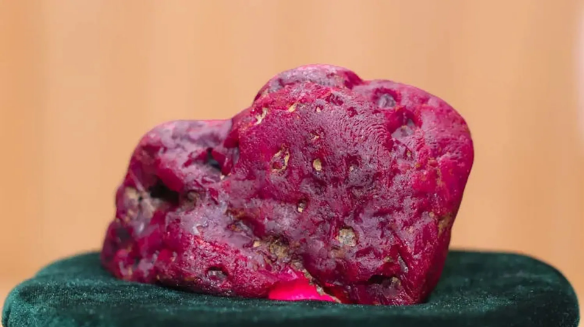
The Ashalon: What the 11,000-Carat Ruby Discovery Means for the Future of Gem Collecting
The Ashalon take on An extraordinary 11,000-carat ruby has captured the attention of gemologists and collectors around the world. The Ashalon examines why discoveries of this scale matter, how giant rubies influence the gemstone market, and why history, rarity and provenance remain the foundations of exceptional gemstone collecting.
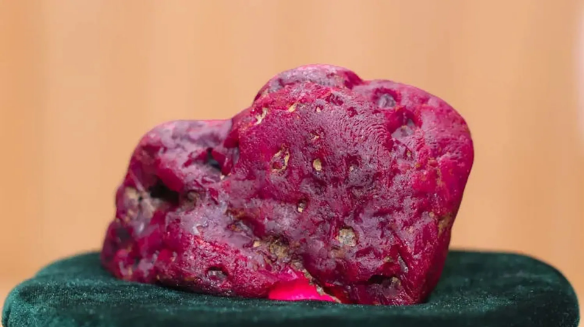
11,000 Carat Ruby found in Myanmar, now the second-largest ruby ever found in by weight.
Every so often, a gemstone emerges that reminds the world why geology continues to surprise humanity. These discoveries are exceptionally rare, not simply because of their size, but because they represent millions of years of natural history condensed into a single object. When news broke of an extraordinary 11,000-carat ruby discovered in Myanmar's legendary Mogok region, gemologists, auction houses and collectors immediately recognised that this was far more than another mining story. It was a reminder that the Earth still has the ability to produce wonders that challenge our understanding of rarity. Reports indicate the ruby weighs approximately 2.2 kilograms and is among the largest rubies ever documented from Myanmar.
At The Ashalon, discoveries like this are important because they reinforce one of our central beliefs: tangible heritage assets continue to hold cultural significance in an increasingly digital world. Whether a gemstone ultimately enters a museum, a scientific institution or a private collection, its value extends well beyond commerce. It becomes part of human history. It inspires research, conversation and appreciation for the natural processes that created it.
Why the World Pays Attention to Giant Gemstones
Most rubies purchased for jewellery weigh less than two carats. Stones exceeding five carats with exceptional colour and clarity are already considered extremely rare. When discoveries are measured not in carats but in thousands of carats, they belong to an entirely different category of geological importance. Fine gem-quality ruby material represents only a tiny fraction of mined rough, making exceptional discoveries genuinely uncommon.
Large crystals provide scientists with opportunities to study mineral formation, crystal growth and geological environments over immense periods of time. They also excite collectors because they demonstrate the extraordinary diversity of nature. A gemstone of this scale is unlikely ever to be cut entirely into jewellery. Instead, its importance lies in its existence as a complete specimen.
Mogok: The Valley That Built Ruby History
Myanmar's Mogok Valley has long occupied a special place within gemology. For centuries it has produced some of the world's most celebrated rubies, renowned for their rich colour and exceptional quality. The region has supplied royal collections, museums and some of history's finest jewellery houses.
The newly reported 11,000-carat ruby continues that remarkable legacy. Although not the largest ruby ever found in Myanmar by weight, specialists have noted that its reported colour and overall quality may make it one of the most significant discoveries in recent decades.
For collectors, provenance matters. A gemstone's origin becomes part of its story, and Mogok remains one of the most respected geographical names in the coloured gemstone world.
Size Alone Does Not Determine Value
One of the biggest misconceptions among new collectors is that larger automatically means more valuable.
Gemology is far more nuanced.
Professionals evaluate rubies using multiple characteristics, including colour, clarity, transparency, treatment, origin and cutting potential. A smaller ruby with exceptional colour may command a higher price per carat than a much larger stone of lower quality. Industry experts consistently note that fine-quality rubies above three to five carats become dramatically rarer, which is why outstanding examples achieve exceptional prices.
This is an important lesson for anyone entering gemstone collecting.
The Ashalon encourages collectors to study quality before size.
Why Discoveries Like This Matter
Spectacular gemstone discoveries often create renewed public interest in collecting.
When a giant ruby captures international headlines, people naturally begin asking questions:
What makes a ruby valuable?
How are gemstones formed?
Why are some mines famous?
What creates different colours?
How rare are untreated stones?
These questions encourage education, and education strengthens collecting.
The Ashalon believes that every major gemstone discovery helps introduce new audiences to the fascinating world of mineralogy and tangible heritage assets.
The Science Behind Ruby
Ruby belongs to the mineral species corundum, one of the hardest naturally occurring minerals on Earth. Its famous red colour is produced by trace amounts of chromium replacing aluminium within the crystal structure during formation.
Over millions of years, immense heat and pressure transform ordinary minerals into extraordinary crystals. Every natural ruby therefore represents an almost unimaginable geological timeline.
Collectors are not simply purchasing colour.
They are preserving a natural process that unfolded long before human civilisation existed.
Why Museums and Private Collections Both Matter
When exceptional gemstones are discovered, discussion often turns towards where they should ultimately reside.
Museums offer educational value by allowing the public to experience remarkable specimens firsthand.
Private collectors frequently contribute through conservation, research and long-term preservation.
Historically, both institutions have played important roles in protecting significant gemstones.
The Ashalon believes these roles are complementary rather than competitive.
A responsibly preserved gemstone benefits future generations regardless of whether it is displayed publicly or maintained within a carefully documented private collection.
The Emotional Power of Natural Gemstones
Digital technology has transformed many aspects of modern life.
Music streams from cloud services.
Books exist on tablets.
Games increasingly exist only as downloadable licences.
Yet gemstones remain refreshingly unchanged.
A ruby discovered today is appreciated for exactly the same reasons as one admired hundreds of years ago.
Its beauty depends upon nature rather than software.
Its rarity cannot be manufactured.
Its history exists independently of technology.
For The Ashalon, this enduring quality explains why gemstones continue to fascinate collectors across generations.
Lessons for New Collectors
The discovery of an extraordinary ruby should inspire curiosity rather than unrealistic expectations.
Not every ruby becomes museum-worthy.
Not every large crystal becomes exceptionally valuable.
Successful collecting begins with knowledge.
The Ashalon encourages collectors to learn about origin, treatment, certification and quality before making purchasing decisions.
Building a thoughtful collection almost always proves more rewarding than simply pursuing size.
The Role of Provenance
One reason remarkable gemstones attract attention is their documented history.
Knowing where a gemstone originated, how it was recovered and how ownership has passed between custodians enhances both historical understanding and collector confidence.
This principle extends across every category The Ashalon specialises in.
Whether preserving gemstones, historical documents or numismatics, provenance remains one of the most important elements of responsible collecting.
History should travel alongside the object.
Why The Ashalon Watches Discoveries Like This
The Ashalon was founded to celebrate tangible heritage.
Stories like the 11,000-carat ruby reinforce why that mission remains relevant.
Every extraordinary discovery reminds us that nature continues producing objects worthy of preservation.
Some will become museum exhibits.
Some will become scientific specimens.
Some may enter private collections.
All contribute to humanity's shared appreciation of geological history.
For collectors, these moments serve as inspiration to look beyond short-term trends and focus instead on objects with lasting cultural significance.
Looking Ahead
No one can predict precisely how the gem market will evolve over the coming decades.
Demand will fluctuate.
Mining conditions will change.
New discoveries will emerge.
Yet one constant is likely to remain.
Natural gemstones continue to captivate because they cannot be replicated by history alone. Every ruby carries a unique geological story that stretches back millions of years.
That enduring connection between nature, history and craftsmanship is why The Ashalon believes gemstones will remain among the world's most fascinating tangible heritage assets.
Conclusion
The reported discovery of the 11,000-carat ruby is significant not simply because of its immense size, but because it reminds collectors why natural gemstones continue to inspire awe. It highlights the importance of geology, provenance, rarity and scientific study while encouraging a new generation to appreciate coloured gemstones beyond their commercial value.
At The Ashalon, we see discoveries like this as milestones in the continuing story of human fascination with the natural world. Whether a collector owns a one-carat ruby or simply enjoys learning about remarkable finds, every journey begins with curiosity. That curiosity, supported by education and responsible collecting, is what ultimately preserves the world's tangible heritage.
Freedom. Assets. Control.
The Ashalon's Perspective: Can NFTs Enhance Numismatics Without Replacing Physical Ownership?
The Future of Coin Collecting Should Build on History, Not Replace It
The numismatic world has never stood still. From hammered coins to machine-struck currency, from printed auction catalogues to online bidding platforms, collectors have consistently embraced innovation where it genuinely improves accessibility and scholarship. Technology has transformed how collectors research provenance, compare auction results and participate in international sales without leaving their homes. These developments have strengthened the hobby while leaving the physical coin at the centre of the collecting experience.
Recently, major auction houses have begun exploring blockchain technology and NFTs alongside traditional numismatics. This reflects a broader trend within the collectibles industry as organisations consider how digital technologies might complement physical assets. At The Ashalon, we welcome thoughtful innovation. However, we also believe innovation should enhance collecting—not redefine what collectors value most.
As a London-based legacy asset agency specialising in rare gemstones, numismatics, historical documents and tangible heritage assets, The Ashalon believes the future of collecting will continue to be built upon physical ownership, historical authenticity and provenance. Digital technologies may have a supporting role, but they should never become the centrepiece of numismatics.
The Ashalon and the Philosophy of Tangible Ownership
The Ashalon was founded on a simple principle: history deserves to remain tangible.
Whether holding a Roman coin struck nearly two thousand years ago, examining a Victorian banknote or studying a handwritten historical document, collectors experience something that cannot be replicated digitally. Physical objects possess craftsmanship, weight, texture and historical continuity. Every scratch, tone and imperfection tells part of the object's journey through history.
This philosophy sits at the heart of The Ashalon.
In an increasingly digital society where photographs, music, books and games are migrating to cloud-based platforms, physical heritage assets become increasingly significant because they represent ownership in its purest form.
Digital Innovation Has Its Place
The Ashalon is not opposed to technological progress.
Digital auction platforms have expanded access to collecting.
Online catalogues have democratized research.
High-resolution imaging has improved authentication.
Artificial intelligence is beginning to assist in attribution and historical analysis.
Blockchain technology itself may also prove valuable in certain circumstances.
For example, digital certificates could improve provenance records, ownership histories and collection management. These applications could reduce fraud while making important information more accessible to collectors around the world.
Technology should serve the object.
The object should not serve the technology.
My Own Journey Through Digital Collectibles
Like many technology enthusiasts, I explored blockchain-based digital collectibles and NFTs during their emergence.
As the NFT market matured, I built a collection through Crypto.com that included officially licensed projects from brands such as Aston Martin and the UFC. At the time, many believed NFTs represented a revolutionary new form of ownership that would reshape collecting forever.
The excitement was undeniable.
Major brands entered the market.
Celebrities promoted projects.
Prices surged.
Entire communities formed around digital ownership.
Looking back, I appreciate why the technology attracted so much attention.
However, my own experience ultimately reinforced something different.
Digital ownership never gave me the same satisfaction as holding a physical object.
A gemstone can be examined under light.
A historic coin can be studied from every angle.
A centuries-old document carries the marks of time itself.
Those experiences cannot be downloaded.
They cannot be displayed through a wallet address.
They cannot fully replicate the emotional connection created by tangible ownership.
That is a personal conclusion based on my own collecting journey, and it remains one of the reasons The Ashalon continues focusing on physical heritage assets.
Numismatics Already Has a Meaning for "Minting"
Language matters.
Within numismatics, the word minting has carried a well-understood meaning for centuries.
A mint physically manufactures currency or medals using dies, presses and carefully controlled production processes. Every collector understands what a mint represents because it forms part of the historical identity of the object itself.
The blockchain community later adopted the word "minting" to describe the creation of digital tokens.
While understandable within that technical context, The Ashalon believes using the same term across both worlds can sometimes create confusion, particularly for newcomers entering the hobby.
When numismatists discuss a coin's mint, they refer to its physical place of manufacture.
When NFT communities discuss minting, they refer to creating a digital token.
Although both involve creation, they represent fundamentally different concepts.
Recognising that distinction helps preserve clarity within the collecting community.
The Coin Is the Heritage Asset
Collectors rarely pursue coins simply because they are rare.
They collect them because they represent history.
A coin may commemorate a monarch.
It may mark a revolution.
It may have circulated through an empire.
It may have survived centuries beneath the earth before entering a modern collection.
Its story exists independently of any digital record.
The blockchain cannot create that history.
It can only record information about it.
The Ashalon believes this distinction is essential.
Technology can document provenance.
It cannot manufacture heritage.
Where Hybrid Technology Could Add Value
This does not mean blockchain has no future within numismatics.
Quite the opposite.
The Ashalon believes hybrid approaches deserve serious consideration where they solve genuine problems.
For example, blockchain-based ownership records could strengthen provenance for high-value collections.
Digital certificates may reduce document forgery.
Secure ownership histories could simplify insurance and estate planning.
Auction records could become more transparent.
These are practical applications that complement collecting rather than compete with it.
Importantly, however, they remain secondary to the physical object itself.
Collectors should continue buying the coin—not the blockchain record attached to it.
Lessons from Previous Technology Cycles
Collecting has witnessed many technological revolutions.
Printed catalogues gave way to online databases.
Telephone bidding became internet bidding.
Digital photography replaced printed auction plates.
Each innovation improved efficiency while leaving the collectible unchanged.
NFTs introduced a different proposition.
Instead of supporting the collectible, they often became the collectible.
For some categories this may prove successful.
For others, particularly numismatics, The Ashalon believes the physical object should remain the primary focus.
History demonstrates that technologies evolve rapidly.
Physical heritage, by contrast, often survives for centuries.
Why The Ashalon Continues Investing in Tangible Heritage
The Ashalon's collection spans gemstones, numismatics, historical documents and culturally significant artefacts because these objects preserve something beyond financial value.
They preserve civilisation.
They preserve craftsmanship.
They preserve memory.
Every acquisition tells a story that existed long before today's technology and will continue long after today's software becomes obsolete.
Digital tools will undoubtedly become increasingly important for managing collections.
Yet the reason people collect remains remarkably consistent.
Collectors want to hold history.
The Future of Numismatics
The next generation of collectors will almost certainly combine physical and digital experiences.
Artificial intelligence will assist research.
Digital archives will become richer.
Virtual exhibitions will grow.
Blockchain may improve provenance.
These developments should be welcomed where they genuinely benefit collectors.
However, The Ashalon believes the heart of numismatics will remain unchanged.
Collectors will continue seeking authenticity.
Collectors will continue studying history.
Collectors will continue appreciating craftsmanship.
Collectors will continue valuing provenance.
Those qualities cannot be tokenised.
They already exist within the physical object itself.
Conclusion
The collectibles industry should continue experimenting with new technologies.
Innovation has always helped collectors discover, research and preserve important artefacts.
However, innovation should strengthen the relationship between collectors and physical heritage—not replace it.
The Ashalon believes blockchain can complement numismatics through improved provenance, authentication and record-keeping. We are less convinced that digital tokens should become the primary focus of coin collecting.
The true value of numismatics has never rested in a database.
It rests in history.
It rests in craftsmanship.
It rests in rarity.
It rests in provenance.
Most importantly, it rests in the ability to hold a piece of history in your own hands.
That is why The Ashalon continues to champion tangible heritage assets in an increasingly digital world.
About The Ashalon
The Ashalon is a London-based legacy asset agency specialising in rare gemstones, numismatics, historical documents and tangible heritage assets. Founded by Henry McDonald, The Ashalon focuses on preserving ownership, culture and tangible wealth in an increasingly digital world.
Blending London lifestyle, collecting culture and modern legacy building, The Ashalon sources meaningful assets and experiences designed to connect history, identity and long-term value.
Freedom. Assets. Control.
The Ashalon: Why Collectibles Will Become the Ultimate Form of Home Expression by 2033
As our lives become increasingly digital, our homes may become one of the last places where individuality is expressed through tangible objects. The Ashalon explores why collectibles, gemstones, numismatics and historical artefacts could play a growing role in shaping personal identity by 2033. Rather than making predictions, this article examines how physical collections can preserve stories, celebrate family history and create homes filled with meaning.
A Home in the Digital Age
Walk into a modern home today and you will probably find smart speakers, streaming devices, cloud-connected televisions and wireless technology quietly working in the background. Music collections have become playlists. Family photo albums have become folders on mobile phones. Libraries have become subscriptions. Even conversations increasingly happen through digital screens rather than around physical tables.
Technology has delivered remarkable convenience, but it has also made many homes feel increasingly similar. A television mounted on the wall looks much the same whether it sits in London, Tokyo or New York. Furniture trends spread globally through social media, while minimalist interiors often remove the personal objects that once reflected a family's history. As digital lifestyles become the norm, The Ashalon believes physical collections may become one of the strongest ways people express who they are within their homes.
The Ashalon is a London-based legacy asset agency specialising in rare gemstones, numismatics, historical documents and tangible heritage assets. At the heart of The Ashalon's philosophy is a simple idea: meaningful physical objects connect us to our past while helping define our future. Looking ahead to 2033, The Ashalon sees the possibility that carefully curated collections will become an increasingly important part of home design and personal identity.
The Digital Transformation Is Changing Our Relationship with Ownership
The past twenty years have fundamentally changed how people own things. Music has moved from CDs to streaming platforms. Films have shifted from DVDs to online subscriptions. Books are increasingly purchased digitally. Video games are following the same path as publishers embrace downloadable libraries.
For many products, consumers no longer own physical objects; they simply license access. This transformation has made entertainment more convenient but has also reduced the number of meaningful physical possessions in everyday life. The Ashalon believes this creates an interesting contrast. The more our daily experiences become digital, the more significant genuinely tangible objects may feel.
That does not mean digital technology is undesirable. Rather, it suggests physical possessions may acquire a new emotional role. Instead of existing simply for practical use, they become symbols of memory, achievement and identity.
Homes Have Always Reflected Identity
Throughout history, homes have communicated stories about the people who lived within them. Portraits, books, heirlooms, antique clocks, medals, maps and family photographs all revealed something about personal interests and family history.
These objects often sparked conversations. Visitors would ask where an item came from or why it mattered. A gemstone purchased during overseas travel or a historic coin inherited from a grandparent became part of the family's narrative.
The Ashalon believes this tradition will continue, although the types of objects people collect may evolve. Future homes could increasingly feature carefully curated collections that blend history with modern lifestyles.
Collectibles May Become the New Interior Design
Interior design has traditionally focused on colours, furniture and architecture. Increasingly, however, designers are recognising that meaningful objects bring warmth and personality into living spaces.
Imagine entering a home where a display cabinet contains:
A natural sapphire from Sri Lanka
A Roman coin
A Victorian banknote
A signed sporting programme
A first-edition video game
A family military medal
A historical document
Each object becomes more than decoration. It becomes a conversation piece and a reflection of the owner's interests.
The Ashalon believes that by 2033, curated collections may become an increasingly popular way for people to personalise otherwise technology-filled homes.
Why Tangible Objects Feel Different
Psychologists have long explored how physical objects contribute to memory and emotional attachment. Handling an item engages our senses in ways that digital media cannot. Weight, texture, craftsmanship and even signs of age create a connection that extends beyond information displayed on a screen.
A gemstone is not simply appreciated for its appearance. It is admired for the geological processes that formed it millions of years ago. A handwritten historical document carries the marks of its author. A vintage coin reflects the economic and political environment of its era.
The Ashalon views these qualities as part of what makes tangible heritage assets enduringly meaningful.
The Rise of Personal Museums
Museums preserve objects because they help societies understand their history. Increasingly, individuals are creating smaller collections within their own homes that reflect personal experiences rather than national narratives.
These "personal museums" might include travel souvenirs, family heirlooms, collectibles, historical documents or carefully chosen gemstones. They provide continuity between generations and encourage conversations about where families have come from.
The Ashalon believes many households may adopt this mindset over the coming decade, creating spaces that celebrate family identity alongside modern living.
Why The Ashalon Focuses on Tangible Heritage Assets
The Ashalon's mission extends beyond collecting valuable objects. It seeks to preserve stories.
Whether sourcing rare gemstones, numismatics or historical documents, The Ashalon encourages thoughtful collecting rather than accumulation for its own sake. Every acquisition should have historical, cultural or personal significance.
A carefully assembled collection reflects curiosity, learning and appreciation for history. It becomes something that can be shared with children and grandchildren, helping preserve memories that might otherwise disappear.
Collecting Across Generations
Many people remember relatives who kept family photographs, medals or handwritten recipes. These objects often become more meaningful over time because they connect younger generations to people they may never have met.
As society becomes increasingly digital, preserving physical items may help families maintain those connections. The Ashalon encourages people to think not only about what they inherit, but also about what they choose to leave behind.
Collections need not be expensive. Their greatest value often lies in the stories they preserve.
Looking Towards 2033
No one can know exactly how homes will look in 2033. Digital technology will undoubtedly continue to transform daily life, bringing new conveniences and new ways of interacting with the world.
The Ashalon believes one possible outcome is that tangible collections become even more valued as expressions of individuality. As homes fill with increasingly similar technology, carefully chosen physical objects may become what truly distinguishes one household from another.
Whether through gemstones, historical documents, numismatics, vintage games or family heirlooms, people may increasingly seek objects that carry history rather than simply functionality.
Conclusion
The Ashalon does not view collecting as a hobby alone. It sees collecting as a way of preserving culture, identity and memory.
In an age where so much of life exists on servers and in cloud storage, physical objects remind us that history can still be held in our hands. They invite conversation, encourage learning and connect generations through shared stories.
By 2033, homes may become places where technology handles everyday life while carefully curated collections express who we are. If that future unfolds, collectibles will not simply decorate our living spaces—they will help define them.
That vision sits at the heart of The Ashalon's philosophy: preserving tangible heritage in an increasingly digital world.
Freedom. Assets. Control.

Sony's Move Towards Digital-Only Gaming: Why The Ashalon Believes Physical Game Discs Could Become Tomorrow's Collectibles
Sony's decision to end physical PlayStation game releases marks a major shift in gaming history. As the industry embraces digital distribution, The Ashalon examines what this transition could mean for collectors, physical ownership and the long-term preservation of gaming culture. Could today's PlayStation game discs become tomorrow's sought-after collectibles? Discover why The Ashalon believes tangible media continues to hold cultural and historical value in an increasingly digital world, and why preserving physical games may become more important than ever.
As Sony Announces the End of Physical PlayStation Games, What Happens to the Discs Already on Our Shelves?
The gaming industry is entering one of its biggest transitions since the introduction of online gaming. Sony has announced that from January 2028, all new PlayStation games will be released digitally, bringing an end to the production of physical discs for new titles. Existing physical releases will continue to be supported, but future PlayStation games will no longer arrive in traditional boxed format. Sony says the decision reflects changing consumer preferences, with digital purchases now accounting for the vast majority of PlayStation game sales.
For many gamers this represents convenience. Digital downloads remove the need to visit a shop, allow instant access and eliminate manufacturing costs. Yet for collectors, historians and organisations like The Ashalon, the announcement represents something much larger. It marks the closing chapter of an era in which millions of physical games became part of gaming history.
The End of an Era
For more than forty years, physical media has defined video game ownership. From cartridges on the Nintendo Entertainment System to compact discs on the original PlayStation and Blu-ray discs on modern consoles, collecting games has been as much about preserving history as it has been about playing them.
A physical game is more than software. It includes artwork, manuals, packaging, regional variations and manufacturing details that reflect the culture of its time. Collectors often value complete boxed editions because they capture an entire moment in gaming history.
Sony's announcement suggests that future generations may experience games very differently. Instead of shelves filled with physical collections, libraries will increasingly exist as digital licences connected to online accounts.
Ownership Looks Different in a Digital World
Digital distribution offers many advantages, but it also changes the relationship between consumers and the products they buy. Physical discs can often be collected, displayed, resold or gifted. Digital purchases are generally tied to platform accounts and licensing agreements rather than to a physical object.
For collectors, this distinction matters. Physical media creates scarcity because the number of manufactured copies is finite. Once production stops, surviving copies become the only examples available on the secondary market.
That does not guarantee higher values, but it does create conditions where particularly desirable editions may become more sought after over time.
Why The Ashalon Is Watching This Closely
The Ashalon specialises in tangible heritage assets. Our philosophy is built around preserving physical objects that tell stories about the people and cultures that created them.
This philosophy already extends to gemstones, numismatics, historical documents and banknotes. We believe gaming deserves similar consideration.
A sealed PlayStation game from the 1990s or 2000s is more than entertainment. It is a cultural artefact representing the evolution of technology, design and storytelling. As physical production ends, those artefacts become part of gaming history.
Could Physical Games Become More Collectable?
The Ashalon believes that some physical PlayStation games could become increasingly desirable among collectors in the years ahead, particularly rare editions, limited releases and well-preserved sealed copies. This is an opinion rather than a certainty, and collectability depends on many factors including demand, rarity, condition and historical significance.
Similar patterns have been seen in other collecting categories. Vinyl records regained popularity despite the rise of streaming. Printed books continue to attract collectors despite e-books. Physical Pokémon cards remain highly collectible even though digital versions exist.
Gaming may follow a comparable path, where digital distribution dominates everyday use while physical editions become prized by enthusiasts.
Preservation Matters
Museums and preservation groups have expressed concern about the long-term preservation of digital-only games. Physical discs provide one way of documenting gaming history, even though many modern titles still rely on updates and online services. Preservation experts argue that ensuring future generations can study and experience games will require continued effort as the industry becomes increasingly digital.
For organisations focused on history, the challenge is not simply saving software. It is preserving the artwork, packaging, manuals and cultural context that surrounded these releases.
The Ashalon's Perspective
At The Ashalon we believe tangible objects connect generations in ways that purely digital files often cannot.
Whether it is a gemstone formed millions of years ago, a wartime document, a historic banknote or a physical video game, each object carries a story.
The transition towards digital gaming does not diminish the importance of physical collections. Instead, it may increase appreciation for them as complete physical editions become part of gaming history.
Rather than seeing physical games as obsolete, we see them as cultural artefacts worthy of preservation.
Looking Ahead
Sony's announcement reflects broader changes across entertainment and technology. Digital delivery will almost certainly continue to grow because it offers convenience and efficiency for both companies and consumers.
At the same time, collectors have repeatedly demonstrated that physical ownership retains enduring appeal. History shows that when production ends, surviving objects often become more meaningful—not simply because they are scarce, but because they represent a chapter that can never be recreated.
The Ashalon will continue watching this transition closely as part of our wider mission to preserve tangible heritage assets for future generations.
About The Ashalon
The Ashalon is a London-based legacy asset agency specialising in rare gemstones, numismatics, historical documents and tangible heritage assets.
Through The Ashalon Estate, educational articles and curated acquisitions, we encourage collectors to preserve history through meaningful physical ownership in an increasingly digital world.
Explore More
Visit TheAshalon.co.uk to discover our latest articles, acquisitions and insights into gemstones, numismatics, historical documents and tangible heritage assets.
Freedom. Assets. Control.
Why The Ashalon Is Pursuing the Black Star Sapphire
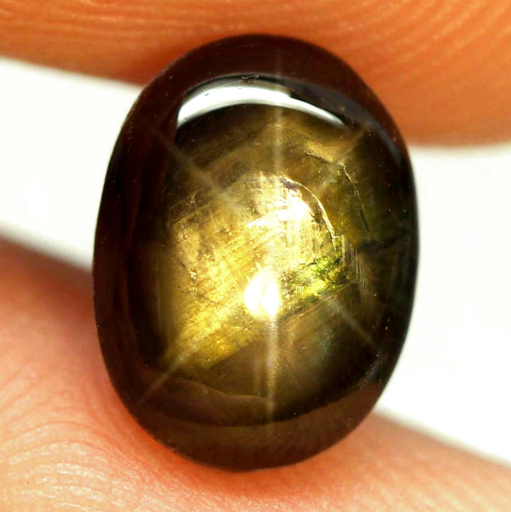
The celestial gemstone that combines rarity, durability and one of nature's most extraordinary optical phenomena.
In a world where gemstones are often judged solely by colour and clarity, a select few stand apart because of the natural phenomena they display. The Black Star Sapphire is one of those exceptional stones. Rather than sparkling through brilliance alone, it captures attention through a luminous six-rayed star that appears to glide across its surface as light moves. It is a gemstone that rewards observation, patience and appreciation of nature's geological artistry.
For The Ashalon, the pursuit of a Black Star Sapphire is about far more than acquiring another gemstone. It represents our philosophy of collecting objects with enduring historical, geological and educational significance. As The Ashalon Estate grows, we continue searching for gemstones that tell remarkable stories—and few tell a more fascinating story than the Black Star Sapphire.
What Is a Black Star Sapphire?
A Black Star Sapphire is a variety of the mineral corundum, the same mineral family that produces blue sapphires and rubies. While most people associate sapphires with royal blue colours, sapphires naturally occur in almost every colour, including black, yellow, green, pink, orange and colourless.
What makes the Black Star Sapphire unique is not simply its dark appearance but the optical phenomenon known as asterism. Tiny needle-like inclusions of the mineral rutile align within the crystal during its formation. When the gemstone is cut into a smooth cabochon rather than a faceted shape, these microscopic inclusions reflect light to produce a moving star across the surface.
This natural effect transforms an otherwise dark stone into something dynamic and almost otherworldly.
Nature's Own Optical Illusion
The six-rayed star seen in most Black Star Sapphires is entirely natural. As the light source moves—or as the gemstone itself is rotated—the star appears to float gracefully across the surface.
This is one of the reasons collectors value star sapphires so highly. Unlike many gemstones whose appearance remains static, the Black Star Sapphire constantly changes depending on lighting conditions.
Exceptional specimens display:
A sharp, well-defined six-ray star
Excellent movement across the dome
Strong contrast against the dark body colour
High polish
Minimal fractures visible to the naked eye
The finest stones almost appear alive.
One of the Hardest Gemstones on Earth
Corundum ranks 9 on the Mohs Hardness Scale, making it the second hardest naturally occurring gemstone after diamond.
This remarkable durability means Black Star Sapphires resist scratching exceptionally well and can survive generations when properly cared for.
For collectors focused on legacy, this matters.
The Ashalon believes assets should be capable of lasting not just decades but centuries. A gemstone formed millions of years ago should still be admired by future generations hundreds of years from now.
Where Are Black Star Sapphires Found?
Black Star Sapphires are mined in several regions around the world, including:
Australia
Thailand
Sri Lanka
India
Madagascar
Tanzania
Cambodia
Each locality produces slightly different material, with variations in colour, star definition and transparency.
Sri Lanka remains particularly significant within the sapphire industry because of its long history of gemstone mining stretching back over 2,000 years. Australia is also renowned for producing darker star sapphires with excellent durability.
Why Are Star Sapphires Cut Differently?
Unlike most gemstones, Black Star Sapphires are almost never faceted.
Instead, they are polished into a rounded cabochon shape.
This dome allows the aligned rutile needles to reflect light correctly, creating the famous moving star.
If the same rough crystal were faceted, the star would disappear entirely.
The cut is therefore not simply aesthetic—it is essential to revealing the gemstone's natural phenomenon.
The Geological Journey
Every Black Star Sapphire began its journey hundreds of millions of years ago.
Corundum forms under extreme temperatures and pressures deep within the Earth's crust. During crystallisation, microscopic rutile needles develop inside the crystal structure.
Over geological time, tectonic activity pushes these crystals towards the Earth's surface, where erosion eventually deposits them into river gravels and alluvial deposits.
Miners recover the rough crystals before expert gem cutters orientate the stone precisely to maximise the visibility of the star.
The process is one of nature's longest collaborations between geology and craftsmanship.
Rarity and Value
Not every dark sapphire becomes a star sapphire.
For a gemstone to display a strong star, several geological conditions must align perfectly:
Correct rutile orientation
Appropriate concentration of inclusions
Suitable crystal formation
Proper cutting orientation
High-quality polishing
As a result, fine Black Star Sapphires displaying sharp stars remain relatively uncommon compared with ordinary black sapphires.
Collectors generally assess value based upon:
Strength of the star
Symmetry
Sharpness
Body colour
Transparency
Size
Overall condition
Large stones exhibiting exceptional asterism become increasingly scarce.
Black Star Sapphires in History
Star sapphires have fascinated humanity for centuries.
Throughout history they have been associated with protection, wisdom and guidance because the moving star was believed to represent celestial navigation.
Many cultures regarded star gemstones as symbols of hope during uncertain times.
Although modern gemology explains the scientific origin of the phenomenon, the sense of wonder remains unchanged.
Even today, watching a star glide across a gemstone under a single beam of light feels almost magical.
Why The Ashalon Is Pursuing One
The Ashalon Estate has never been about acquiring the most expensive objects.
Instead, we seek objects that combine:
Geological significance
Historical importance
Educational value
Long-term preservation
Exceptional craftsmanship
The Black Star Sapphire satisfies every one of these principles.
It represents millions of years of geological history preserved inside a single gemstone.
Its star reminds us that nature often creates beauty through imperfection rather than perfection. Without the microscopic rutile inclusions, the famous star would never exist.
That philosophy resonates strongly with The Ashalon.
A Gemstone That Reflects Our Philosophy
The Ashalon believes that meaningful collections are built patiently.
Rather than chasing trends, we pursue assets that can educate, inspire and endure.
Whether we are acquiring historical banknotes, rare military documents, antique medals or remarkable gemstones, every acquisition serves one purpose:
to preserve tangible history for future generations.
A Black Star Sapphire would represent another important milestone within The Ashalon Estate and further strengthen our commitment to building one of the world's most respected collections of tangible heritage assets.
Looking Ahead
The search continues.
Like many of the finest pieces within The Ashalon Estate, the right Black Star Sapphire will not be chosen simply because it is available. It will be selected because it meets the standards we believe future generations deserve.
Great collections are never built overnight.
They are built one meaningful acquisition at a time.
Discover The Ashalon Estate
The Ashalon is a London-based legacy asset agency specialising in rare gemstones, numismatics, historical documents and tangible heritage assets.
Our mission is to preserve ownership, culture and tangible wealth in an increasingly digital world through carefully curated acquisitions that connect history, identity and long-term value.
Explore our growing collection, follow our latest acquisitions and discover the stories behind each remarkable asset by visiting TheAshalon.co.uk.
Freedom. Assets. Control.
What Are The Ashalon's Ambitions?
Building one of the world's great collections of gemstones, numismatics and historical heritage assets.
Every organisation begins with a vision before it builds a reputation. The Ashalon is no different. Founded in London, The Ashalon was created with the ambition of preserving tangible heritage assets for future generations while inspiring others to value physical ownership in an increasingly digital world. Our mission is not simply to buy and sell collectables; it is to curate history. From gemstones and historic banknotes to military documents and rare artefacts, every acquisition forms part of a much larger story that is only just beginning.
The Ashalon's long-term ambition is clear. We aim to build one of the world's most respected collections of gemstones, numismatics and historical documents covering a wide range of cultures, countries and periods. Alongside this sits another goal that will remain confidential until 2029: a Guinness World Records project that we hope will combine collecting, engineering and craftsmanship into something never attempted before. Some ambitions are announced years in advance. Others are best revealed when the time is right.
Why Collect History?
History is becoming increasingly digital. Photographs now live on cloud storage, letters are replaced by emails, and family memories often exist only on mobile phones. Physical objects, however, continue to survive generations. A coin can outlive centuries. A gemstone can remain unchanged for millions of years. A military handbook or handwritten document preserves not only information but the atmosphere of the era in which it was created.
This philosophy sits at the heart of The Ashalon. We believe ownership should extend beyond financial value and include historical, educational and cultural significance. Every item added to The Ashalon Estate is selected because it represents a story worth preserving. Rather than viewing these objects as isolated collectables, we see them as chapters within a growing archive of human history.
The Early Victories
Although The Ashalon is still in its early years, several important milestones have already been achieved. The organisation has successfully established its identity as a London-based legacy asset agency, launched its public website, begun publishing educational articles, and introduced The Ashalon Estate as the permanent home for its acquisitions. Press releases and public outreach have started building awareness, while relationships with international suppliers continue to expand.
More importantly, the collection itself has begun to take shape. Every acquisition demonstrates the philosophy that meaningful collections are built patiently rather than quickly. Instead of chasing quantity, The Ashalon seeks objects with provenance, historical interest and educational value that contribute to a broader narrative.
Building The Ashalon Estate
Among the early acquisitions are objects spanning military history, numismatics and social history. The collection includes a National Small Bore Rifle Association medal, reflecting Britain's competitive shooting heritage, alongside a 1949 Spanish coin issued during the Franco era that represents a significant period in twentieth-century European history.
The Estate also includes a 1943 Belgian 50 Franc banknote dating from the Second World War, an original Air Raid Precautions handbook from 1940, and a 1943 British military training pamphlet on mines and booby traps. These publications illustrate the practical realities of wartime Britain and preserve official guidance issued during one of history's defining conflicts. Together they demonstrate how printed documents can become invaluable historical artefacts in their own right.
The collection continues to broaden through everyday pieces of British history. A Knights of St. Columba Thrift Fund booklet preserves the story of community savings and mutual support, while an early Bank of England £50 note featuring Sir John Houblon reflects the evolution of British currency design. Even casino chips from London's gaming scene have been retained, not as gambling memorabilia alone, but as examples of London's entertainment and hospitality culture during the early twenty-first century. Every object, regardless of its size or value, contributes another piece to a much larger historical puzzle.
Gemstones and Numismatics
Gemstones remain one of The Ashalon's defining passions. The Estate already includes notable acquisitions such as its Russian alexandrite and its first Indian emerald, both representing important milestones in the organisation's development. Over the coming decades, The Ashalon intends to expand this collection to include gemstones from many of the world's most significant mining regions while documenting their geological origins and historical importance.
Numismatics will develop alongside the gemstone collection. Coins and banknotes provide a unique record of political change, economic development and artistic design. Each piece offers insight into the people, governments and societies that produced it. By bringing together objects from different nations and eras, The Ashalon hopes to create a collection that encourages learning as much as admiration.
A Growing Culture of Collecting
The timing could not be better. Across London and the United Kingdom there has been renewed investment in museums, galleries and cultural institutions since 2020. The museum sector continues to grow overall, with hundreds of new museums having opened across the UK since 2000 despite the closure of others, demonstrating sustained public interest in preserving heritage.
London itself continues to invest heavily in cultural infrastructure. Projects such as the new London Museum at Smithfield, designed to welcome more than two million visitors annually, and major new institutions such as the V&A East reflect continued confidence in public engagement with history, design and collections. London's museums have also reported strong post-pandemic recovery in visitors, volunteering and digital engagement, suggesting that public appetite for heritage remains robust.
Private collectors are playing an increasingly important role within this wider landscape. Many of today's museum collections began with the passion of individuals who preserved objects long before institutions recognised their historical significance. The Ashalon hopes to contribute to that tradition by demonstrating that responsible private collecting can complement education, research and public appreciation of history.
The Challenges Ahead
The ambitions of The Ashalon are significant, and achieving them will require patience. Rare gemstones become increasingly difficult to source as mines are exhausted. Historically important documents often disappear into private collections. Competition among collectors continues to increase, while authentication, conservation and long-term storage require considerable expertise and investment.
There is also the challenge of balancing accessibility with preservation. The Ashalon wants its collection to educate and inspire people, but every object must also be protected for future generations. Building a world-class collection is not measured in months or even years. It is measured across decades of careful decisions, trusted partnerships and disciplined collecting.
Looking Towards 2029
Some of The Ashalon's most ambitious projects remain several years away. The organisation's planned Guinness World Records project is one example of an idea that is still in development and will remain confidential until work formally begins in 2029. Like the collection itself, it will require time, collaboration and careful planning.
The Ashalon has never measured success solely by revenue or size. Success will ultimately be defined by whether future generations inherit collections that educate, inspire and preserve history. Every acquisition made today is another step towards that objective. Every article published adds context to the collection. Every partnership strengthens the foundation for the decades ahead.
The story of The Ashalon is still being written. The ambition is clear, the collection is growing, and the journey has only just begun.
Freedom. Assets. Control.
What Is The Ashalon?
A Story of Reinvention, Collecting Culture and Legacy Building
There are businesses built from spreadsheets and pitch decks.
Then there are businesses built from pressure.
The Ashalon belongs firmly to the second category.
Today, The Ashalon is a London-based legacy asset agency specialising in rare gemstones, numismatics, historical documents and tangible heritage assets. Its mission is simple: to preserve ownership, culture and tangible wealth in an increasingly digital world.
But The Ashalon did not begin as a traditional business plan. It began as a philosophy.
The London Influence
The roots of The Ashalon trace back to post-2008 London, a period that shaped an entire generation of ambitious young professionals.
The financial crisis changed how many people viewed work, ownership and opportunity. Traditional paths felt increasingly uncertain. Ambition became more than a desire for success; for many, it became a necessity.
Like countless Londoners, I found myself navigating a city defined by competition, self-development and reinvention. London's culture of entrepreneurship, collecting, finance, hospitality and personal growth would eventually become a major influence on what The Ashalon would become.
Those experiences later formed the foundations of what is now known as The Ashalon Philosophy.
A Philosophy Before a Company
Before The Ashalon became a company, it existed as an idea.
An idea centred around ownership.
An idea centred around building something meaningful.
An idea centred around creating assets, experiences and stories that could outlast the people who created them.
Over time, that philosophy evolved into a broader appreciation for collecting culture and historical preservation.
I became increasingly interested in the objects that survive generations.
Coins.
Gemstones.
Letters.
Documents.
Photographs.
Artefacts.
The more I studied history, the more I realised that physical objects often become the bridge between past and future.
They tell stories that money alone cannot.
Why Tangible Assets Matter
We are living through one of the most significant technological transitions in history.
Money is becoming digital.
Photographs are becoming digital.
Documents are becoming digital.
Even identity itself is becoming digital.
Technology has created extraordinary opportunities, but it has also introduced a new challenge. As society becomes increasingly virtual, fewer people are preserving tangible connections to their own history.
At The Ashalon, we believe physical ownership still matters.
A gemstone can be held.
An ancient coin can be examined.
A historical document can be passed between generations.
These assets are not simply objects. They are pieces of history that carry stories, context and meaning.
The Ashalon Today
Today, The Ashalon specialises in sourcing and preserving:
Rare gemstones
Numismatics and historical banknotes
Historical documents
Heritage collectibles
Legacy assets
Each acquisition within The Ashalon Estate is selected not only for rarity but also for the story it represents.
Whether it is an ancient coin, a rare gemstone or a historical document, every asset contributes to a larger mission: preserving ownership and heritage in a rapidly changing world.
More Than Collecting
The Ashalon is not simply about collecting.
It is about legacy.
Many people spend years building wealth, businesses and experiences. Yet surprisingly few spend time thinking about how those stories will be preserved for future generations.
What survives after we are gone?
What tells our story?
What connects future family members to the people who came before them?
These questions sit at the heart of The Ashalon.
Our work extends beyond sourcing assets. We aim to encourage people to think differently about ownership, preservation and long-term value.
The Ashalon Estate
The Ashalon Estate represents the organisation's growing collection of rare gemstones, numismatics, historical documents and heritage assets.
Each acquisition reflects a belief that physical history remains important.
In an era increasingly dominated by digital ownership, The Ashalon Estate serves as a reminder that some of the most meaningful assets are the ones that can still be held in your hands.
Freedom. Assets. Control.
The Ashalon continues to evolve, but its core philosophy remains unchanged.
Preserve ownership.
Protect history.
Build legacy.
In a world becoming increasingly intangible, The Ashalon remains committed to tangible assets, collecting culture and the stories that survive generations.
Because ultimately, The Ashalon is not just about assets.
It is about ensuring that history, identity and legacy are not forgotten.
Freedom. Assets. Control.
About The Ashalon
The Ashalon is a London-based legacy asset agency founded by Henry McDonald.
Specialising in rare gemstones, numismatics, historical documents and tangible heritage assets, The Ashalon helps collectors, enthusiasts and legacy builders preserve ownership, culture and tangible wealth in an increasingly digital world.
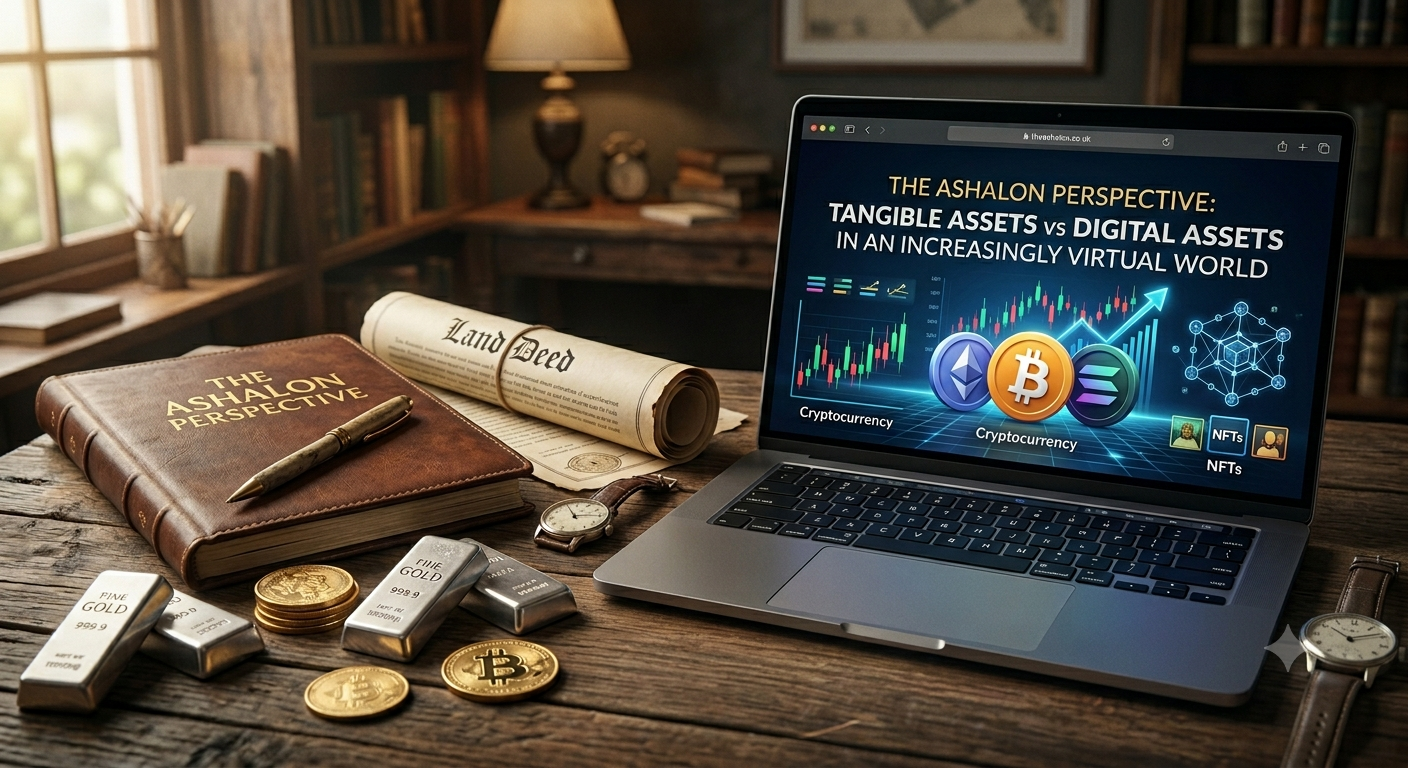
The Ashalon Perspective: Tangible Assets vs Digital Assets in an Increasingly Virtual World
The world is becoming increasingly digital. Money is becoming digital. Entertainment is becoming digital. Even identity itself is becoming digital through social media profiles, cloud storage and virtual communities. At The Ashalon, we recognise the incredible opportunities created by technology, but we also believe that something important risks being lost along the way. The Ashalon was founded on a simple principle: ownership matters, history matters and tangible assets matter.
Over the last decade, digital assets have become a major part of modern culture. Cryptocurrencies have created entirely new financial ecosystems. NFTs promised digital ownership through blockchain technology. Online gaming worlds such as EVE Online, Counter-Strike and RuneScape have generated virtual economies worth millions. Digital Pokémon cards and virtual collectibles now trade globally without ever existing in physical form. For many people, these assets represent the future.
There is no denying the advantages of digital assets. They can be transferred instantly across borders. They can be stored without requiring physical space. They can be traded twenty-four hours a day from almost anywhere in the world. For a generation raised online, digital ownership feels natural and convenient. The growth of blockchain technology has also introduced entirely new ways of proving ownership and scarcity.
However, digital assets come with risks that are often overlooked. A cryptocurrency wallet can be lost. A gaming platform can shut down. An online account can be hacked or suspended. An NFT marketplace can disappear. Entire digital ecosystems depend on technology, electricity, internet access and the survival of the companies operating them. Ownership often exists only as long as the platform itself survives.
At The Ashalon, we believe tangible assets offer something fundamentally different. A rare gemstone does not require a password. An ancient coin does not need a server. A historical document does not depend on software updates. A tangible asset can be held, examined, inherited and appreciated without requiring access to a digital network. It exists independently of technology.
This philosophy is reflected throughout The Ashalon Estate. Whether it is The Ashalon Alexandrite sourced from Russia, The Ashalon Emerald mined in Rajasthan, or ancient numismatic acquisitions, each asset represents a physical connection to history. These assets carry stories that extend far beyond market value. They have survived political change, economic crises and technological revolutions. Their existence is not dependent upon a platform remaining online.
One of the greatest strengths of tangible assets is their ability to preserve family history. A gemstone can be passed between generations. A historical document can tell a story about where a family came from. An old photograph can connect grandchildren to grandparents they never met. Physical objects often become vessels for memory. They carry emotional value that cannot always be measured financially.
Many families already possess legacy assets without realising it. Old military uniforms, NHS uniforms, handwritten letters, recipe books, address books and family photographs often hold enormous historical significance. At The Ashalon, we encourage people to preserve these items. Not because they will necessarily increase in value, but because they preserve identity. Once these items are lost, the stories attached to them can disappear forever.
Digital collecting continues to grow rapidly. Virtual Pokémon cards, gaming skins and blockchain collectibles have attracted passionate communities. Some digital assets may continue to hold significant value in the future. The Ashalon does not oppose digital ownership. Instead, we believe that digital assets should complement, not replace, tangible ownership. A balanced approach allows people to benefit from innovation while still preserving physical history.
The distinction becomes even more important when considering inheritance. Physical assets are often easier to understand and appreciate across generations. A grandparent can hand down a coin, a gemstone or a historical document directly. The asset can be displayed, studied and enjoyed immediately. By contrast, digital assets may require technical knowledge, passwords and specialised platforms to access.
The Ashalon was created because we believe society is entering an age where tangible assets will become increasingly meaningful. As technology advances, genuine physical scarcity becomes more valuable. Rare gemstones, numismatics, historical documents and heritage assets represent ownership that exists outside the digital ecosystem. They offer permanence in a world increasingly defined by constant change.
The future will undoubtedly contain both digital assets and tangible assets. Cryptocurrencies, blockchain technology and virtual ownership will continue evolving. Yet The Ashalon remains firmly committed to preserving ownership, culture and tangible wealth through physical assets. We believe future generations deserve more than digital accounts and forgotten passwords. They deserve objects that tell stories, preserve history and connect them to those who came before.
That is why The Ashalon continues to focus on rare gemstones, numismatics, historical documents and tangible heritage assets. Not because we reject technology, but because we believe the physical world still matters. In an age of virtual ownership, tangible assets remain one of the most powerful ways to preserve legacy.
Freedom, Assets and Control.
The Ashalon Alexander III Tetradrachm — The First Coin Acquisition of The Ashalon Collection
The first coin acquisition of The Ashalon collection, this ancient Alexander III Tetradrachm represents over two thousand years of preserved history, craftsmanship, and civilisation. Featuring classical Greek imagery and silver composition, the coin symbolises tangible ownership, legacy, and the enduring value of rare historical assets in the modern world.
The Beginning of The Ashalon Numismatic Collection
Every historic collection begins with a single object. For The Ashalon, the first coin acquisition came through one of the most recognisable and historically significant silver coins ever produced: the Alexander III Tetradrachm.
This ancient silver coin became the first numismatic acquisition within The Ashalon collection and established the foundation for The Ashalon’s long-term focus on rare historical assets, tangible ownership, and heritage preservation.
The Alexander III Tetradrachm represents more than ancient currency. It represents civilisation, conquest, leadership, mythology, trade, and the enduring power of physical assets throughout human history. More than two thousand years after its creation, the coin continues to survive as a tangible link to one of the most influential figures in recorded history: Alexander the Great.
For The Ashalon, this acquisition symbolised the beginning of a larger vision — a collection built around rare tangible assets that preserve history, identity, and legacy in an increasingly digital world.
Who Was Alexander III?
Alexander III of Macedon, commonly known as Alexander the Great, was one of history’s most influential military leaders and rulers. Born in 356 BC, Alexander created one of the largest empires of the ancient world before the age of thirty.
His conquests stretched across:
Greece
Egypt
Persia
Mesopotamia
parts of India
Central Asia
Alexander’s influence permanently changed ancient civilisation through military expansion, trade, language, art, and cultural exchange.
Even centuries after his death, Alexander remains one of the most studied historical figures in:
military history
political history
numismatics
archaeology
classical studies
The Alexander III Tetradrachm became one of the most recognisable coin types associated with his empire and its successors.
What Is a Tetradrachm?
A tetradrachm was a large silver coin used throughout the ancient Greek world. The word itself translates roughly to “four drachms,” representing its monetary denomination within ancient economies.
Ancient tetradrachms functioned as:
trade currency
military payment
stores of wealth
symbols of political authority
The Alexander III Tetradrachm became especially important because it circulated across a massive geographic area spanning multiple ancient civilisations.
These coins travelled through:
trade routes
armies
marketplaces
royal treasuries
Mediterranean ports
Today, surviving tetradrachms are highly sought after by collectors of:
ancient coins
Greek numismatics
historical silver coins
investment-grade collectibles
museum-quality antiquities
The Design of the Alexander III Tetradrachm
The Alexander III Tetradrachm is instantly recognisable within the numismatic world due to its iconic imagery and artistic craftsmanship.
Most examples feature:
Heracles (Hercules) wearing a lion skin on the obverse
Zeus seated on a throne holding an eagle on the reverse
The imagery represented:
divine authority
military power
strength
legitimacy
rulership
The artistic quality of these ancient silver coins remains extraordinary even by modern standards.
The detailed portraiture, symbolic imagery, and silver composition helped establish the tetradrachm as one of the most enduring coin types in ancient history.
For The Ashalon, this symbolism aligns naturally with the philosophy surrounding heritage assets and the preservation of historical identity.
Why Ancient Coins Matter
Ancient coins are among the most accessible surviving objects from ancient civilisations. Unlike statues, temples, or monuments, coins were designed to move through everyday life.
An ancient coin may have passed through:
soldiers
merchants
rulers
traders
marketplaces
ancient cities now lost to time
Every surviving tetradrachm represents a physical witness to history.
The Ashalon believes that this physical connection to the past gives numismatic assets unique cultural and emotional value beyond simple monetary worth.
In a modern world increasingly dominated by digital systems and intangible ownership, ancient coins remain:
physical
historical
portable
globally recognised
culturally significant
The Alexander III Tetradrachm perfectly embodies these principles.
The Ashalon Philosophy and Tangible Assets
The Ashalon was created around a simple belief: physical assets still matter.
Rare gemstones, historical documents, numismatics, and heritage collectibles provide permanence and continuity in ways that temporary digital trends often cannot.
The acquisition of the Alexander III Tetradrachm established the beginning of The Ashalon numismatic collection and reinforced the company’s broader mission surrounding:
legacy preservation
historical ownership
heritage culture
collector assets
tangible value
The Ashalon sees numismatics not merely as investment objects, but as fragments of civilisation preserved through time.
Ancient coins represent:
craftsmanship
economic history
political systems
empire
mythology
survival
These are qualities that cannot be replicated artificially.
Numismatics in the Modern World
The global numismatic market continues to attract collectors, historians, investors, and institutions interested in rare and historically important coinage.
Collectors pursue ancient coins for many reasons:
historical fascination
artistic appreciation
scarcity
silver and gold content
portfolio diversification
cultural significance
Ancient Greek silver coins remain particularly respected due to their:
historical importance
recognisable designs
worldwide collector demand
limited surviving supply
The Alexander III Tetradrachm remains one of the most iconic entry points into ancient numismatics.
For many collectors, acquiring a tetradrachm represents ownership of a genuine artefact connected directly to the ancient world.
The Survival of Ancient Silver
One of the most remarkable aspects of ancient silver coins is their survival across millennia.
This tetradrachm survived:
changing empires
invasions
trade routes
environmental exposure
political collapse
centuries of human history
Its continued existence demonstrates the durability of physical precious metal assets and historical artefacts.
Unlike digital files, platforms, or temporary systems, ancient silver continues to endure physically through time.
The Ashalon believes this permanence gives historical assets unique meaning in the modern era.
The survival of ancient coinage reminds collectors that tangible objects can outlast entire civilisations.
Why The Ashalon Chose the Alexander III Tetradrachm
The Alexander III Tetradrachm was selected as the first coin acquisition because it reflects many of the core values behind The Ashalon itself:
legacy
endurance
historical significance
rarity
cultural influence
tangible ownership
The coin bridges ancient history with modern collector culture.
It also introduces an educational dimension to The Ashalon collection. Numismatics allows collectors and enthusiasts to engage directly with:
archaeology
history
economics
mythology
political systems
ancient trade
The Ashalon aims to preserve and showcase these connections through carefully selected acquisitions and educational content.
The Importance of Historical Context
One of the defining qualities of numismatic collecting is historical context.
A coin is never simply metal.
It carries:
political meaning
artistic symbolism
economic function
historical narrative
The Alexander III Tetradrachm exists within one of the most important periods of ancient history.
Alexander’s empire accelerated:
Hellenistic culture
cross-cultural trade
artistic exchange
military innovation
economic integration
Coins like the tetradrachm became instruments of that expansion.
Today, they remain some of the clearest surviving objects connected directly to that era.
Ancient Coins as Heritage Assets
The Ashalon classifies important numismatic acquisitions as heritage assets.
Heritage assets preserve:
historical memory
cultural continuity
craftsmanship
civilisation
identity
Unlike disposable consumer goods, ancient coins possess:
scarcity
authenticity
historical provenance
educational value
These qualities make numismatics one of the strongest categories within tangible collecting culture.
As interest grows in:
alternative assets
historical ownership
collectible investments
physical stores of value
Ancient coins continue attracting new generations of collectors worldwide.
The Growth of The Ashalon Collection
The acquisition of the Alexander III Tetradrachm marked the beginning of The Ashalon’s numismatic journey.
Future acquisitions within The Ashalon collection may include:
ancient Roman coinage
medieval silver coins
historic British currency
rare banknotes
historical documents
gemstone-linked heritage assets
The long-term vision of The Ashalon is to create a carefully curated collection centred around meaningful physical objects connected to:
history
rarity
craftsmanship
cultural legacy
The tetradrachm remains one of the foundational pieces within that vision.
Physical Ownership in a Digital Era
As modern life becomes increasingly digitised, many collectors are returning to physical assets with historical and cultural significance.
Ancient coins provide:
physical ownership
portability
historical permanence
collectible scarcity
The Ashalon believes that future generations may increasingly value objects with authentic historical continuity rather than purely digital representations of ownership.
The Alexander III Tetradrachm represents this philosophy perfectly.
Created more than two thousand years ago, the coin continues to survive physically in the present day while carrying the memory of an ancient civilisation.
The Ashalon Legacy
The Ashalon continues building a collection based around the preservation of:
gemstones
numismatics
historical documents
heritage assets
collector culture
Each acquisition is selected not only for rarity or value, but for story, symbolism, and historical significance.
The Alexander III Tetradrachm will remain one of the defining acquisitions within The Ashalon collection because it marked the beginning of The Ashalon’s journey into numismatics and historical preservation.
It stands as a reminder that history is not abstract.
History survives physically through objects.
And through preservation, those objects continue carrying human stories across centuries.
Discover The Ashalon
The Ashalon is a UK legacy asset agency specialising in rare gemstones, numismatics, historical documents, and heritage-inspired tangible assets for collectors, investors, and modern independent thinkers.
Explore TheAshalon.co.uk to discover rare historical assets, collector gemstones, ancient coinage, and the growing philosophy behind The Ashalon collection.
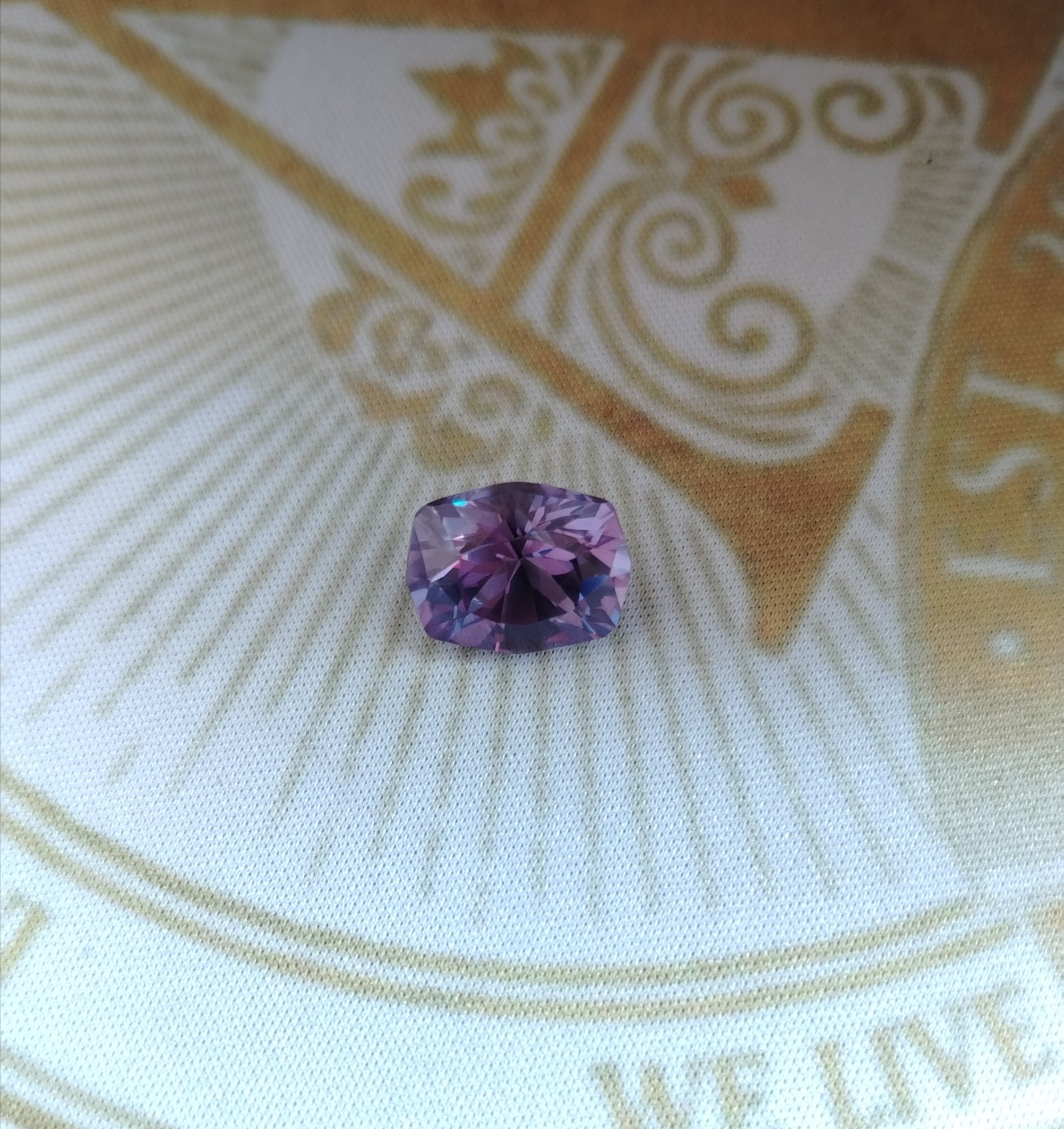
The Ashalon Alexandrite — The First Acquired Piece of the Collection
A signature gemstone of The Ashalon, this violet Alexandrite reflects rarity, transformation, and timeless ownership. Displaying rich purple tones with remarkable brilliance, the stone represents the pursuit of legacy through tangible assets. Sourced for collectors and modern independent thinkers, this Alexandrite embodies heritage, exclusivity, and the enduring beauty of rare gemstones in an increasingly digital world.It All Begins Here
The Beginning of The Ashalon Alexandrite Collection
Every collection has a beginning. For The Ashalon, that beginning came through Alexandrite — one of the world’s rarest and most mysterious gemstones. Acquired from Russia, with parts of its history unknown, this gemstone became the first official Alexandrite piece within The Ashalon collection and remains one of the most symbolic assets acquired by The Ashalon to date.
The Ashalon was founded around the idea that tangible assets still matter in a rapidly digital world. Rare gemstones, numismatics, historical documents, and heritage items hold stories, permanence, and identity that cannot be replicated through temporary digital systems. The acquisition of this Alexandrite marked not only the beginning of a gemstone collection, but the beginning of a philosophy centred around ownership, rarity, and legacy.
What Makes Alexandrite So Rare?
Alexandrite is considered one of the rarest collector gemstones in the world. Originally discovered in Russia during the 19th century, Alexandrite became famous due to its remarkable colour-changing properties. Under different lighting conditions, Alexandrite can display tones ranging from green and blue to violet, purple, and red.
This natural optical phenomenon has made Alexandrite one of the most sought-after gemstones for collectors, investors, and luxury jewellery enthusiasts worldwide.
The Ashalon Alexandrite displays deep violet and purple characteristics with exceptional brilliance. Its cushion-style cut allows light to reflect intensely through the gemstone, creating a striking visual presence that aligns perfectly with The Ashalon identity and aesthetic.
Because natural Alexandrite deposits are extremely limited, authentic stones remain highly desirable within the global gemstone market. Russian Alexandrite, in particular, carries historical prestige due to the gemstone’s original discovery within the Russian Empire.
The Ashalon and the Philosophy of Tangible Assets
The acquisition of this Alexandrite gemstone represents more than luxury. It represents a belief that physical assets continue to hold importance in modern society.
The Ashalon focuses on preserving legacy through tangible assets. As technology evolves and increasingly moves ownership into digital systems, physical objects such as rare gemstones, historical banknotes, numismatics, and documents become symbols of permanence and individuality.
Alexandrite reflects this philosophy perfectly. Rare, difficult to source, and impossible to mass produce naturally, the gemstone stands apart from disposable modern consumer culture.
For collectors and modern independent thinkers, gemstones like Alexandrite represent:
rarity
scarcity
craftsmanship
heritage
historical continuity
portable wealth
tangible ownership
The Ashalon believes these principles will become increasingly important over time.
The Origins of The Ashalon Alexandrite
While the exact historical pathway of this Alexandrite remains partially unknown, the gemstone is believed to have originated from Russia, where the world’s first Alexandrite discoveries took place during the 1830s within the Ural Mountains.
Russian Alexandrite remains legendary among gemstone collectors due to its rarity and historical significance. Stones from this region are associated with old imperial Russia, aristocratic jewellery collections, and the early fascination surrounding colour-changing gemstones.
The uncertainty surrounding parts of this Alexandrite’s journey adds further intrigue to the piece. Many historical gemstones pass through decades of private ownership, estate collections, traders, and collectors before resurfacing again within modern collections.
The Ashalon views these unknown pathways not as imperfections, but as part of the gemstone’s living history.
Alexandrite as a Collector Gemstone
Collector-grade Alexandrite continues to attract strong interest worldwide. Due to its rarity, many natural Alexandrite gemstones increase in desirability over time, especially stones displaying strong colour change and high clarity.
The gemstone is often associated with:
transformation
rarity
duality
resilience
exclusivity
These symbolic characteristics have helped Alexandrite maintain legendary status within gemstone culture.
The Ashalon selected Alexandrite as its signature gemstone because it reflects the broader philosophy of the company itself: rare, adaptive, independent, and enduring.
Unlike mass-market luxury goods, Alexandrite remains niche and difficult to access. Many people will never encounter a natural Alexandrite in person during their lifetime.
This exclusivity aligns naturally with The Ashalon approach to legacy assets and collector culture.
Why Rare Gemstones Still Matter
In an increasingly digital economy, physical assets continue to provide cultural and emotional value that digital ownership cannot fully replace.
Rare gemstones remain globally recognised tangible assets with:
physical permanence
historical continuity
collectible appeal
luxury status
portable value
The Ashalon believes that future collectors will increasingly value authentic physical assets connected to history, rarity, and craftsmanship.
Alexandrite represents one of the strongest examples of this principle. It is not simply a gemstone; it is a geological rarity formed naturally over millions of years.
No algorithm, platform, or digital trend can reproduce that naturally occurring rarity.
The Future of The Ashalon Collection
The Alexandrite acquisition marked the first official gemstone within The Ashalon collection, establishing the foundation for future acquisitions involving:
Colombian emeralds
numismatic assets
historical documents
heritage collectibles
The Ashalon continues to explore rare and meaningful tangible assets that align with its long-term philosophy surrounding ownership, legacy, and heritage preservation.
As the collection expands, this first Alexandrite will remain one of the defining pieces within The Ashalon story — not only because of its rarity, but because it symbolised the beginning of a larger vision.
Discover The Ashalon
The Ashalon is a UK legacy asset agency specialising in rare gemstones, numismatics, historical documents, and heritage-inspired tangible assets for collectors, entrepreneurs, and modern independent thinkers.
Discover more at TheAshalon.co.uk and explore the growing collection of rare gemstones and legacy assets curated by The Ashalon.