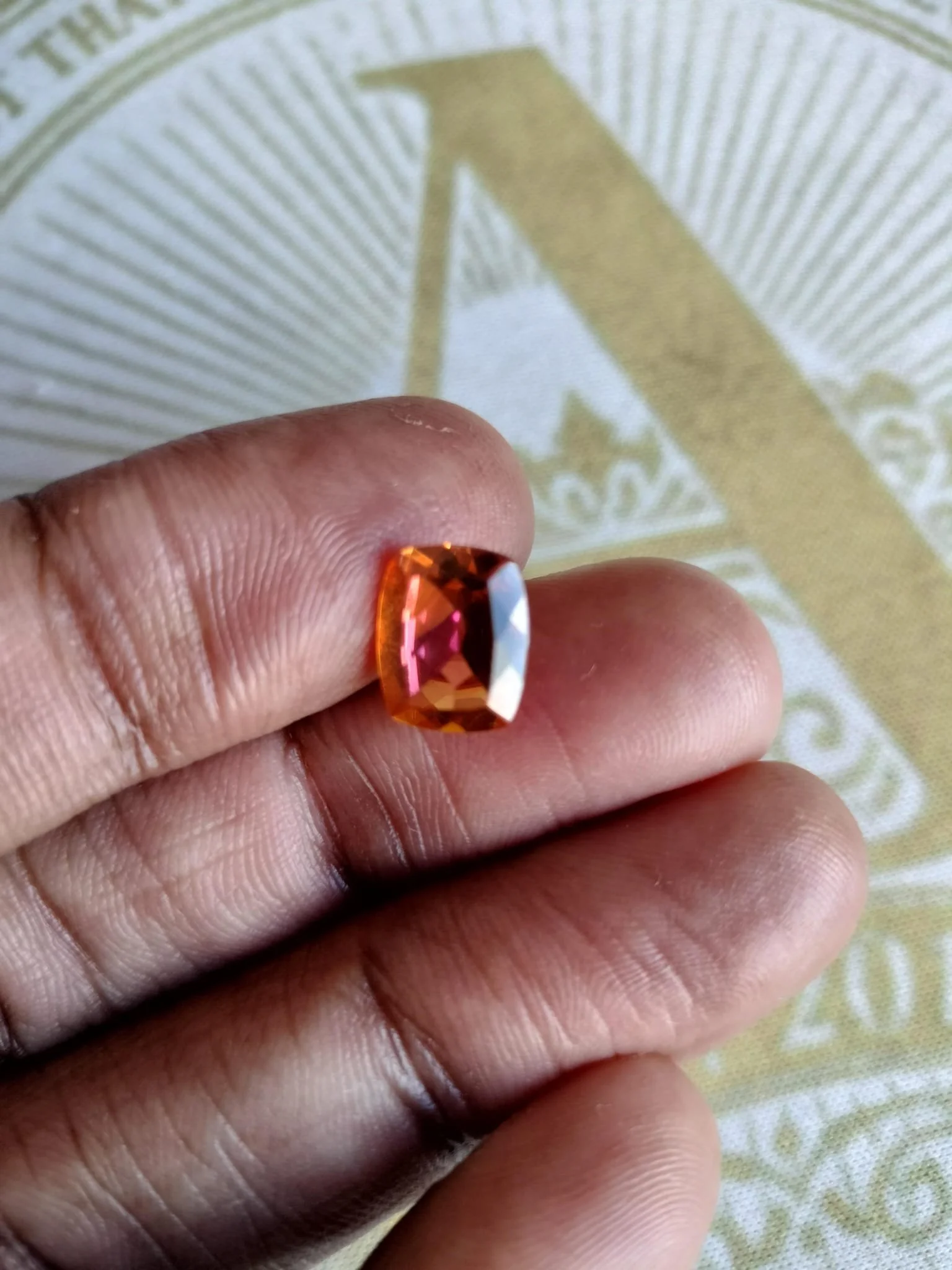
Why You Should Think Twice Before Selling Your Padparadscha Quartz
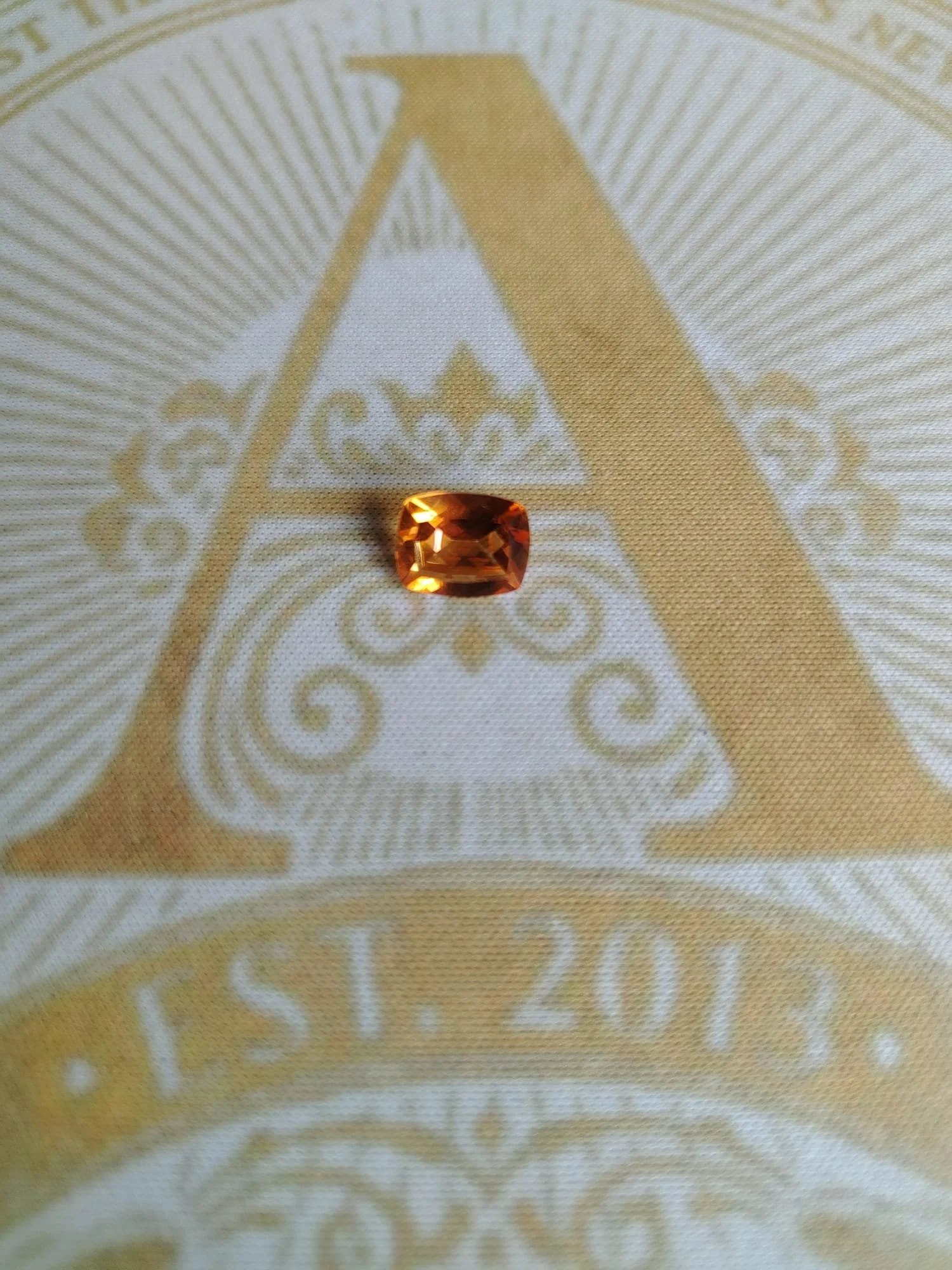
Why You Should Think Twice Before Selling Your Padparadscha Quartz
A stone of colour, character and permanence
There are gemstones that impress us with their brilliance, and there are stones that quietly hold our attention. They do not necessarily possess the highest price, the greatest size or the most famous name. Their value lies somewhere more elusive in their colour, their individuality, their origin and, sometimes, in the story that brought them into our hands. Padparadscha is a word surrounded by romance. Traditionally, padparadscha refers to an exceptionally rare pinkish-orange variety of sapphire. The name comes from the Sinhalese language and is associated with the delicate colour of the lotus blossom. The finest examples occupy an enchanting territory between pink and orange neither entirely one nor the other, but a subtle meeting of both. GIA describes this distinctive colour as one of the most rare and collectible expressions of sapphire.
Yet the fascination with this colour extends beyond sapphire itself. A quartz displaying this extraordinary lotus-like palette can possess a character of its own: warm, delicate and almost luminous, with shades reminiscent of a sunset caught inside crystal. And when such a stone originates in Brazil, it carries another layer of interest; a connection to one of the world’s great mineral-producing landscapes. The Brazilian connection Brazil has long held a remarkable place in the world of minerals and crystals. Its geological diversity has produced extraordinary quantities and varieties of quartz, with important deposits historically documented in states including Minas Gerais, Goiás and Bahia. Brazilian quartz has been collected, traded and exported internationally for generations. The story of Brazilian quartz is therefore not simply the story of a mineral. It is a story of geology, landscape and time. Deep beneath the Brazilian earth, mineral-rich fluids moved through fractures and cavities, creating the conditions in which crystals could form. Some deposits produced enormous crystals; others yielded smaller specimens prized for their clarity, colour or unusual internal characteristics. Historical geological studies have documented the extraordinary scale and diversity of Brazil’s quartz deposits.
Every crystal that emerges from such an environment is, in a very literal sense, a product of geological history. And that is one of the first reasons to hesitate before selling one. Not everything valuable has a price
The modern gemstone market naturally encourages us to ask one question:
“What is it worth?”
But collectors eventually learn to ask another:
“What makes it worth keeping?”
These are not the same question. A stone can have a perfectly respectable market value and still be far more valuable to its owner. Equally, a beautiful specimen may not command an extraordinary financial price while remaining irreplaceable as a personal object. This distinction matters particularly with unusual stones. A commercial gemstone is generally evaluated according to familiar criteria — colour, clarity, cut, size, treatment, provenance and market demand. But a collector may see something else: an unusual combination of characteristics that makes a particular specimen memorable.
Your Brazilian padparadscha-coloured quartz may be one of those stones. Its attraction is not simply that it is quartz. It is the particular colour, the origin, the individuality of the crystal and the circumstances in which it came to you. The danger of selling the irreplaceable Money is replaceable. A particular stone is not. If you sell a gemstone because you need the money, the decision may be perfectly rational. But if you are considering selling it simply because you have been offered a price, it is worth pausing.
Ask yourself:
If I sell this stone today, how likely am I to find exactly the same one again?
The answer is usually: very unlikely.
You might find another Brazilian quartz. You might even find another stone with a similar pink-and-orange colour. But the precise combination of colour, shape, inclusions, transparency, size, origin and character will belong to that particular specimen alone. This is one of the great pleasures of collecting. A collection is not simply an accumulation of objects. It is an accumulation of individuality. A stone carries its own history Gemstones have an unusual relationship with time.
A piece of jewellery may have been made decades ago. A mineral specimen may have travelled across continents. A crystal may have remained underground for geological periods before finally being discovered. By the time it reaches a collector, it has already lived several lives. The Brazilian landscape gave it its geological beginning. The person who discovered it gave it another chapter.The person who acquired it gave it another. And eventually, it becomes part of the story of its owner.
That is why certain gemstones become heirlooms. Not because somebody decided they would be valuable in the future, but because somebody decided they were worth keeping. The sentimental value is sometimes the greatest value There is another category of value that no laboratory can measure. Sentiment.
If your stone was given to you as a gift, its significance changes completely. It is no longer simply a Brazilian quartz specimen. It becomes a physical reminder of a person, a moment and a relationship. Years from now, the financial value of the stone may have changed. Markets rise and fall. Fashion changes. Collectors change their preferences.
But the story of receiving it remains. This is perhaps the strongest argument for keeping a special gemstone. You can sell an object. You cannot sell the memory attached to it and buy it back later.
Keep the stone, and let time work on your behalf There is also something quietly satisfying about refusing to sell immediately.
A collector does not always need to know what an object will be worth in ten or twenty years. Sometimes it is enough to know that it is unusual, beautiful and difficult to replace. Keep the stone properly documented. Record its Brazilian provenance if it is known. Photograph it under natural light. Keep any original packaging, invoices, certificates or
information accompanying the specimen. If its identity or characteristics are uncertain, an independent gemological assessment can provide useful documentation. Then put it somewhere safe. Let the stone remain what it is. There is no requirement to turn every beautiful object into a transaction. The Ashalon perspective At The Ashalon, we believe that collecting is not simply about possession. It is about preservation.
The most interesting pieces are often those that invite us to stop and look twice; objects with character, provenance and a story that extends beyond their immediate market value. A Brazilian padparadscha-coloured quartz belongs beautifully within that philosophy. Its appeal lies in its unusual colour, its connection to Brazil s extraordinary mineral heritage and, perhaps most importantly, in the personal meaning that surrounds it. So before accepting an offer, pause. Hold the stone in your hand. Look at its colour. Consider where it came from. Consider how long it existed before it reached you. And consider why you wanted it in the first place. If the answer is simply that somebody offered you money, perhaps it is worth waiting. Because some stones are meant to be traded. Others are meant to be kept. And occasionally, the wisest thing a collector can do is simply close the box, put the stone
back inside and say:
“Not this one.”