The Ashalon Perspective: Tangible Assets vs Digital Assets in an Increasingly Virtual World
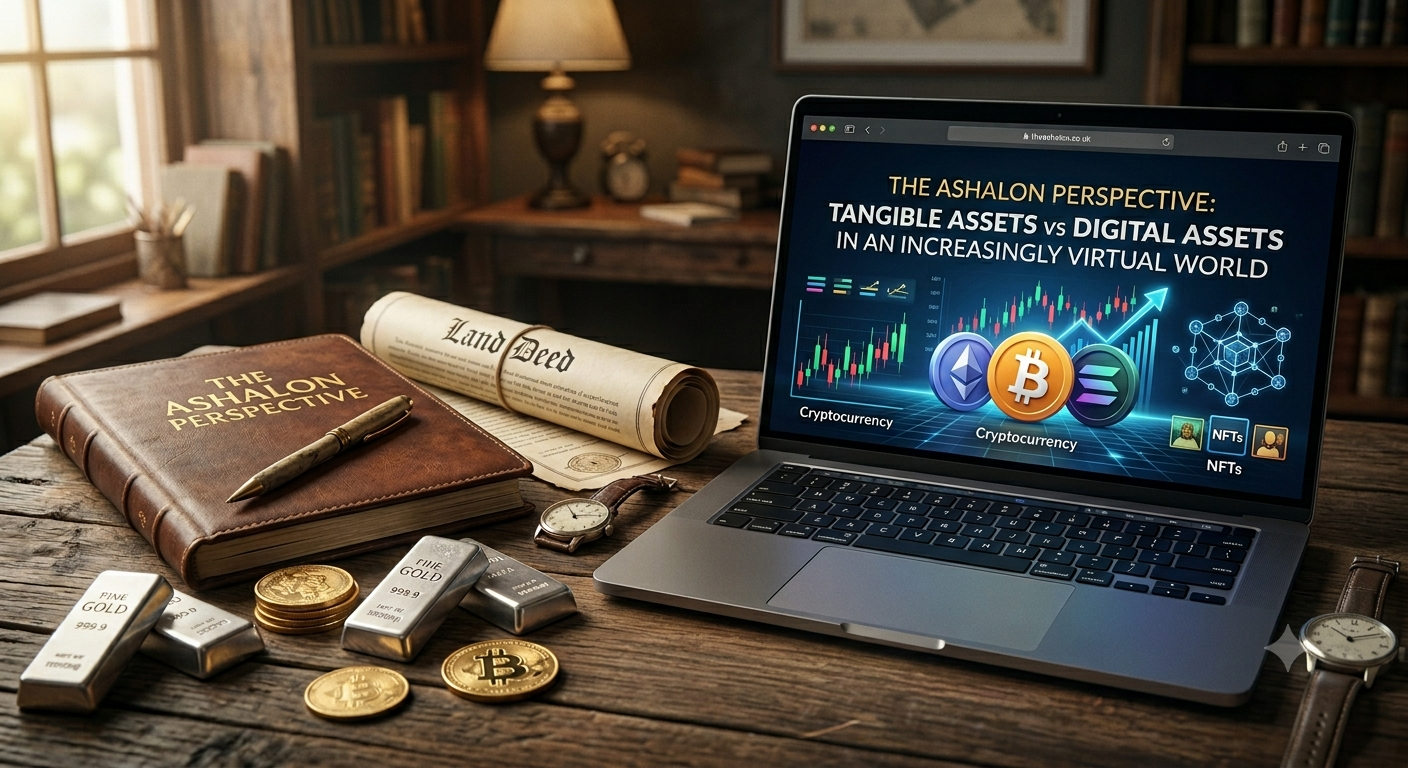
The world is becoming increasingly digital. Money is becoming digital. Entertainment is becoming digital. Even identity itself is becoming digital through social media profiles, cloud storage and virtual communities. At The Ashalon, we recognise the incredible opportunities created by technology, but we also believe that something important risks being lost along the way. The Ashalon was founded on a simple principle: ownership matters, history matters and tangible assets matter.
Over the last decade, digital assets have become a major part of modern culture. Cryptocurrencies have created entirely new financial ecosystems. NFTs promised digital ownership through blockchain technology. Online gaming worlds such as EVE Online, Counter-Strike and RuneScape have generated virtual economies worth millions. Digital Pokémon cards and virtual collectibles now trade globally without ever existing in physical form. For many people, these assets represent the future.
There is no denying the advantages of digital assets. They can be transferred instantly across borders. They can be stored without requiring physical space. They can be traded twenty-four hours a day from almost anywhere in the world. For a generation raised online, digital ownership feels natural and convenient. The growth of blockchain technology has also introduced entirely new ways of proving ownership and scarcity.
However, digital assets come with risks that are often overlooked. A cryptocurrency wallet can be lost. A gaming platform can shut down. An online account can be hacked or suspended. An NFT marketplace can disappear. Entire digital ecosystems depend on technology, electricity, internet access and the survival of the companies operating them. Ownership often exists only as long as the platform itself survives.
At The Ashalon, we believe tangible assets offer something fundamentally different. A rare gemstone does not require a password. An ancient coin does not need a server. A historical document does not depend on software updates. A tangible asset can be held, examined, inherited and appreciated without requiring access to a digital network. It exists independently of technology.
This philosophy is reflected throughout The Ashalon Estate. Whether it is The Ashalon Alexandrite sourced from Russia, The Ashalon Emerald mined in Rajasthan, or ancient numismatic acquisitions, each asset represents a physical connection to history. These assets carry stories that extend far beyond market value. They have survived political change, economic crises and technological revolutions. Their existence is not dependent upon a platform remaining online.
One of the greatest strengths of tangible assets is their ability to preserve family history. A gemstone can be passed between generations. A historical document can tell a story about where a family came from. An old photograph can connect grandchildren to grandparents they never met. Physical objects often become vessels for memory. They carry emotional value that cannot always be measured financially.
Many families already possess legacy assets without realising it. Old military uniforms, NHS uniforms, handwritten letters, recipe books, address books and family photographs often hold enormous historical significance. At The Ashalon, we encourage people to preserve these items. Not because they will necessarily increase in value, but because they preserve identity. Once these items are lost, the stories attached to them can disappear forever.
Digital collecting continues to grow rapidly. Virtual Pokémon cards, gaming skins and blockchain collectibles have attracted passionate communities. Some digital assets may continue to hold significant value in the future. The Ashalon does not oppose digital ownership. Instead, we believe that digital assets should complement, not replace, tangible ownership. A balanced approach allows people to benefit from innovation while still preserving physical history.
The distinction becomes even more important when considering inheritance. Physical assets are often easier to understand and appreciate across generations. A grandparent can hand down a coin, a gemstone or a historical document directly. The asset can be displayed, studied and enjoyed immediately. By contrast, digital assets may require technical knowledge, passwords and specialised platforms to access.
The Ashalon was created because we believe society is entering an age where tangible assets will become increasingly meaningful. As technology advances, genuine physical scarcity becomes more valuable. Rare gemstones, numismatics, historical documents and heritage assets represent ownership that exists outside the digital ecosystem. They offer permanence in a world increasingly defined by constant change.
The future will undoubtedly contain both digital assets and tangible assets. Cryptocurrencies, blockchain technology and virtual ownership will continue evolving. Yet The Ashalon remains firmly committed to preserving ownership, culture and tangible wealth through physical assets. We believe future generations deserve more than digital accounts and forgotten passwords. They deserve objects that tell stories, preserve history and connect them to those who came before.
That is why The Ashalon continues to focus on rare gemstones, numismatics, historical documents and tangible heritage assets. Not because we reject technology, but because we believe the physical world still matters. In an age of virtual ownership, tangible assets remain one of the most powerful ways to preserve legacy.
Freedom, Assets and Control.