The Ashalon: What the 11,000-Carat Ruby Discovery Means for the Future of Gem Collecting
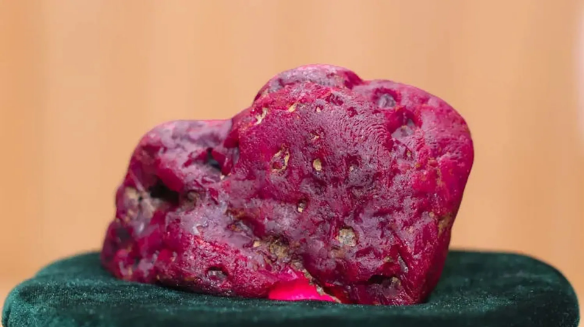
11,000 Carat Ruby found in Myanmar, now the second-largest ruby ever found in by weight.
Every so often, a gemstone emerges that reminds the world why geology continues to surprise humanity. These discoveries are exceptionally rare, not simply because of their size, but because they represent millions of years of natural history condensed into a single object. When news broke of an extraordinary 11,000-carat ruby discovered in Myanmar's legendary Mogok region, gemologists, auction houses and collectors immediately recognised that this was far more than another mining story. It was a reminder that the Earth still has the ability to produce wonders that challenge our understanding of rarity. Reports indicate the ruby weighs approximately 2.2 kilograms and is among the largest rubies ever documented from Myanmar.
At The Ashalon, discoveries like this are important because they reinforce one of our central beliefs: tangible heritage assets continue to hold cultural significance in an increasingly digital world. Whether a gemstone ultimately enters a museum, a scientific institution or a private collection, its value extends well beyond commerce. It becomes part of human history. It inspires research, conversation and appreciation for the natural processes that created it.
Why the World Pays Attention to Giant Gemstones
Most rubies purchased for jewellery weigh less than two carats. Stones exceeding five carats with exceptional colour and clarity are already considered extremely rare. When discoveries are measured not in carats but in thousands of carats, they belong to an entirely different category of geological importance. Fine gem-quality ruby material represents only a tiny fraction of mined rough, making exceptional discoveries genuinely uncommon.
Large crystals provide scientists with opportunities to study mineral formation, crystal growth and geological environments over immense periods of time. They also excite collectors because they demonstrate the extraordinary diversity of nature. A gemstone of this scale is unlikely ever to be cut entirely into jewellery. Instead, its importance lies in its existence as a complete specimen.
Mogok: The Valley That Built Ruby History
Myanmar's Mogok Valley has long occupied a special place within gemology. For centuries it has produced some of the world's most celebrated rubies, renowned for their rich colour and exceptional quality. The region has supplied royal collections, museums and some of history's finest jewellery houses.
The newly reported 11,000-carat ruby continues that remarkable legacy. Although not the largest ruby ever found in Myanmar by weight, specialists have noted that its reported colour and overall quality may make it one of the most significant discoveries in recent decades.
For collectors, provenance matters. A gemstone's origin becomes part of its story, and Mogok remains one of the most respected geographical names in the coloured gemstone world.
Size Alone Does Not Determine Value
One of the biggest misconceptions among new collectors is that larger automatically means more valuable.
Gemology is far more nuanced.
Professionals evaluate rubies using multiple characteristics, including colour, clarity, transparency, treatment, origin and cutting potential. A smaller ruby with exceptional colour may command a higher price per carat than a much larger stone of lower quality. Industry experts consistently note that fine-quality rubies above three to five carats become dramatically rarer, which is why outstanding examples achieve exceptional prices.
This is an important lesson for anyone entering gemstone collecting.
The Ashalon encourages collectors to study quality before size.
Why Discoveries Like This Matter
Spectacular gemstone discoveries often create renewed public interest in collecting.
When a giant ruby captures international headlines, people naturally begin asking questions:
What makes a ruby valuable?
How are gemstones formed?
Why are some mines famous?
What creates different colours?
How rare are untreated stones?
These questions encourage education, and education strengthens collecting.
The Ashalon believes that every major gemstone discovery helps introduce new audiences to the fascinating world of mineralogy and tangible heritage assets.
The Science Behind Ruby
Ruby belongs to the mineral species corundum, one of the hardest naturally occurring minerals on Earth. Its famous red colour is produced by trace amounts of chromium replacing aluminium within the crystal structure during formation.
Over millions of years, immense heat and pressure transform ordinary minerals into extraordinary crystals. Every natural ruby therefore represents an almost unimaginable geological timeline.
Collectors are not simply purchasing colour.
They are preserving a natural process that unfolded long before human civilisation existed.
Why Museums and Private Collections Both Matter
When exceptional gemstones are discovered, discussion often turns towards where they should ultimately reside.
Museums offer educational value by allowing the public to experience remarkable specimens firsthand.
Private collectors frequently contribute through conservation, research and long-term preservation.
Historically, both institutions have played important roles in protecting significant gemstones.
The Ashalon believes these roles are complementary rather than competitive.
A responsibly preserved gemstone benefits future generations regardless of whether it is displayed publicly or maintained within a carefully documented private collection.
The Emotional Power of Natural Gemstones
Digital technology has transformed many aspects of modern life.
Music streams from cloud services.
Books exist on tablets.
Games increasingly exist only as downloadable licences.
Yet gemstones remain refreshingly unchanged.
A ruby discovered today is appreciated for exactly the same reasons as one admired hundreds of years ago.
Its beauty depends upon nature rather than software.
Its rarity cannot be manufactured.
Its history exists independently of technology.
For The Ashalon, this enduring quality explains why gemstones continue to fascinate collectors across generations.
Lessons for New Collectors
The discovery of an extraordinary ruby should inspire curiosity rather than unrealistic expectations.
Not every ruby becomes museum-worthy.
Not every large crystal becomes exceptionally valuable.
Successful collecting begins with knowledge.
The Ashalon encourages collectors to learn about origin, treatment, certification and quality before making purchasing decisions.
Building a thoughtful collection almost always proves more rewarding than simply pursuing size.
The Role of Provenance
One reason remarkable gemstones attract attention is their documented history.
Knowing where a gemstone originated, how it was recovered and how ownership has passed between custodians enhances both historical understanding and collector confidence.
This principle extends across every category The Ashalon specialises in.
Whether preserving gemstones, historical documents or numismatics, provenance remains one of the most important elements of responsible collecting.
History should travel alongside the object.
Why The Ashalon Watches Discoveries Like This
The Ashalon was founded to celebrate tangible heritage.
Stories like the 11,000-carat ruby reinforce why that mission remains relevant.
Every extraordinary discovery reminds us that nature continues producing objects worthy of preservation.
Some will become museum exhibits.
Some will become scientific specimens.
Some may enter private collections.
All contribute to humanity's shared appreciation of geological history.
For collectors, these moments serve as inspiration to look beyond short-term trends and focus instead on objects with lasting cultural significance.
Looking Ahead
No one can predict precisely how the gem market will evolve over the coming decades.
Demand will fluctuate.
Mining conditions will change.
New discoveries will emerge.
Yet one constant is likely to remain.
Natural gemstones continue to captivate because they cannot be replicated by history alone. Every ruby carries a unique geological story that stretches back millions of years.
That enduring connection between nature, history and craftsmanship is why The Ashalon believes gemstones will remain among the world's most fascinating tangible heritage assets.
Conclusion
The reported discovery of the 11,000-carat ruby is significant not simply because of its immense size, but because it reminds collectors why natural gemstones continue to inspire awe. It highlights the importance of geology, provenance, rarity and scientific study while encouraging a new generation to appreciate coloured gemstones beyond their commercial value.
At The Ashalon, we see discoveries like this as milestones in the continuing story of human fascination with the natural world. Whether a collector owns a one-carat ruby or simply enjoys learning about remarkable finds, every journey begins with curiosity. That curiosity, supported by education and responsible collecting, is what ultimately preserves the world's tangible heritage.
Freedom. Assets. Control.