The Beauty of Handmade Jewellery: Why Personal Design Matters in a World of Mass Production | The Ashalon
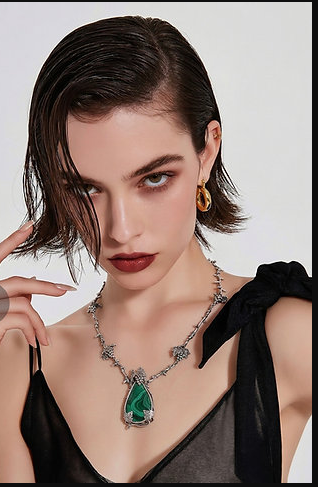
The Grape Vine Sterling silver 925 accompanied malachite
Introduction: Jewellery Should Mean Something
There is a difference between owning jewellery and owning a piece of jewellery that means something to you. The distinction can appear subtle at first, but it becomes increasingly important in a world where almost everything can be reproduced, copied, generated and manufactured at extraordinary speed. The Ashalon believes that tangible objects become more interesting when they carry a human story, and handmade jewellery provides one of the clearest examples of this principle. A ring, pendant or necklace can be beautiful because of its materials, but it can become truly significant because of the person who designed it, the person who made it and the reason it exists.
This is one of the reasons The Ashalon is interested in the work of Alfonso Scoppetta Jewelry, a London-based jewellery business presenting itself as “The jewelry tailor.” Its philosophy centres on personalised jewellery and the idea of expressing emotions through individually considered pieces. The company's website describes its work as high-quality handmade jewellery and offers custom designs alongside collections, repairs, restorations and antique and vintage reproductions. (Alfonso Scoppetta Je)
For The Ashalon, that approach represents something much bigger than a shopping preference. It represents a different relationship with ownership. In an increasingly digital economy, consumers are surrounded by products that can be ordered with a few clicks, delivered rapidly and replaced just as easily. Handmade jewellery pushes against that culture by asking us to slow down and consider what we actually want to own. And that is where personal design becomes powerful. A piece made specifically for you does not have to be the most expensive object in your jewellery box. It does not have to contain the largest gemstone or the highest quantity of precious metal. Its importance can come from the fact that somebody thought about the object before it existed.
That is the beauty of handmade jewellery.
The Ashalon and the Return of the Tangible
The Ashalon has built its philosophy around a simple idea: Freedom, Assets and Control. At the centre of that philosophy is the belief that tangible possessions can have a different relationship with us from purely digital experiences. A physical gemstone can be held. A historical document can be preserved. A coin can be passed from one generation to another. Jewellery can be worn by one person, gifted to another and eventually become part of a family story.
This does not mean that every physical object is automatically valuable.
The Ashalon is not arguing that buying anything tangible makes somebody an investor. That would be an irresponsible way to approach collecting. Instead, the argument is that objects can possess different forms of value, and financial value is only one of them. A handmade ring may have material value because of its gold or silver. It may have artistic value because of its design. It may have craftsmanship value because of the skill required to produce it. It may have sentimental value because it was commissioned for a particular person. It may eventually develop historical value because it survives long after the circumstances in which it was created have disappeared.
That combination is fascinating.
The Ashalon believes this is precisely why collectors should pay attention to craftsmanship rather than simply chasing the next fashionable object.
Alfonso Scoppetta: The Jewellery Tailor
Alfonso Scoppetta Jewelry describes itself as “The jewelry tailor.” The phrase is particularly appropriate because tailoring is fundamentally about creating something around an individual rather than asking an individual to conform to something already produced. (Alfonso Scoppetta Je)
A tailored suit is different from something pulled from a rack, a tailored piece considers the person wearing it and Jewellery can work in exactly the same way.
According to Alfonso Scoppetta Jewelry's website, the business focuses on expressing customers' emotions through personalised jewellery and describes its philosophy as bringing emotions to life rather than simply selling jewellery. (Alfonso Scoppetta Je) That distinction is important because it changes the conversation from merchandise to meaning.
The question becomes less, “What jewellery do you want to buy?”
It becomes, “What do you want your jewellery to represent?”
That could mean a ring connected to a relationship. It could be a pendant inspired by an individual's interests. It could be a piece designed around an existing stone. It could be the transformation of an old family jewel into something that can actually be worn again. Alfonso Scoppetta Jewelry specifically offers services involving jewellery repairs, restoration and alterations, including the reimagining of old jewels into something new. (Alfonso Scoppetta Je) This is particularly interesting from The Ashalon's perspective because it demonstrates that legacy does not necessarily mean leaving an object untouched.
Sometimes preservation means giving an object another life.
The Beauty of Seeing How Something Is Made
One of the most compelling aspects of modern craftsmanship is the opportunity to see the process. For decades, consumers have become increasingly separated from production. We see the finished product, the packaging and the advertising, but rarely the hands responsible for making the object. A handmade jeweller can reverse that relationship. The process becomes part of the story. When you can see a design develop, understand the materials involved and appreciate the work required to produce the finished piece, the object can become more meaningful. The final ring is no longer simply a ring. It is the conclusion of a creative process.
This matters enormously to The Ashalon.
The Ashalon believes that provenance should not only mean a receipt, certificate or ownership record. Provenance can also include the story of creation. Who made it? Why was it made? What inspired it? What materials were used? Who commissioned it? Who eventually owned it? Those questions can become increasingly important as an object ages. The process itself becomes historical evidence.
Alfonso Scoppetta Jewelry's website gives visitors access to different aspects of its work, including handmade collections, custom designs and a workshop section. (Alfonso Scoppetta Je) That visibility helps make the craftsmanship part of the experience rather than hiding it behind the finished object.
For a collector, that is valuable, you are not simply buying the result and you are discovering the journey.
Handmade Jewellery Versus Mass Production
There is nothing inherently wrong with mass-produced jewellery. Mass production has made jewellery accessible to millions of people. It allows designs to be produced consistently, distributed internationally and sold at different price points. There is a place for that market but handmade jewellery offers something different. The difference is not necessarily that handmade is automatically better. Instead, the difference is that handmade production can create a closer relationship between maker, design and wearer. A mass-produced necklace may exist in thousands of examples and a handmade piece may exist in a much smaller number. That scarcity can be attractive, but The Ashalon believes collectors should be careful about reducing handmade jewellery to a scarcity calculation. The purpose of buying something personal should not be to immediately ask how quickly it can be resold.
There is another question worth asking: What does this mean to me? That question is increasingly important in the world of collecting.
“Made Once and Once Only”
There is something almost romantic about the idea of a piece being made once and once only. It creates a mental separation between a piece of jewellery and an ordinary commodity. Instead of imagining a production line, imagine a maker sitting down with a concept, selecting materials and working through the design until the object becomes real. The Ashalon sees this philosophy as particularly relevant to modern collectors.
A one-off piece can become a marker of a moment.
Someone may commission a ring after building a business. Someone else may buy a pendant after travelling somewhere important. Another person may transform an inherited jewel into something completely new. A collector might discover a handmade object that perfectly captures their personality. The value is partly in the fact that it belongs to that particular story. It does not need to be replicated, It does not need to be reproduced for everyone and Its purpose is to exist for someone.
That is a powerful concept in a world increasingly dominated by algorithms and templates.
Personal Design Is Personal History
Jewellery has always had a relationship with memory. Engagement rings commemorate relationships. Wedding bands represent commitments. Family jewellery can carry generations of history. Pendants can commemorate people who have died. Watches can become gifts marking milestones. Even relatively inexpensive pieces can acquire enormous emotional significance. The Ashalon believes this is where the concept of a legacy asset becomes interesting. A legacy asset does not have to be worth thousands of pounds and It can be an object that someone believes is worth preserving. Imagine a mother passing a handmade necklace to her daughter. The necklace may not become dramatically more valuable in financial terms. But the daughter knows that her mother selected it, wore it and eventually decided to pass it down. That history changes the object, It becomes more than jewellery and It becomes evidence of a relationship.
The Jewellery Maker as an Artist
One of the biggest mistakes consumers can make is thinking about jewellery exclusively through its raw materials.
Gold is valuable, Silver is valuable and Gemstones can be valuable.
But the material does not explain the entire object. A gemstone still needs to be cut. A metal still needs to be formed. A setting still needs to be designed. Proportions matter. Texture matters. Balance matters. Wearability matters. The maker becomes part of the equation. This is why The Ashalon believes jewellery makers deserve to be viewed not merely as retailers but as craftspeople and, in many cases, artists.
Alfonso Scoppetta Jewelry's collections demonstrate this range through designs including pendants, rings, coral pieces, Liberty-style jewellery and other handmade designs. The company's online collection includes pieces at a variety of price points, showing that handmade jewellery does not necessarily require entering the world of extremely high-value luxury jewellery. (Alfonso Scoppetta Je)
That is an important point.
Craftsmanship does not have to be inaccessible.
Hatton Garden and the Importance of Place
Location also matters.
Alfonso Scoppetta Jewelry lists its address at 29 Hatton Garden, London EC1N 8DA, with visits available by appointment. (Alfonso Scoppetta Je)
Hatton Garden is not simply another London postcode. It has become internationally associated with the jewellery trade and with generations of jewellery businesses, craftspeople and specialists. The concentration of expertise gives the area a particular cultural importance for anyone interested in jewellery.
For The Ashalon, this reinforces another important principle. Objects have places. A coin can be associated with a particular country, monarch or mint. A gemstone can be connected to a particular geological region. A historical document can be connected to a particular institution. A handmade piece of jewellery can be connected to a particular workshop or jewellery district. That information can become part of provenance and provenance is one of the foundations of collecting.
The Importance of Craftsmanship in a Digital World
The digital transformation of society is not slowing down.
People increasingly communicate digitally. Money increasingly exists electronically. Entertainment is increasingly streamed. Photographs increasingly live on servers rather than in albums. Businesses increasingly operate through digital platforms. That does not make physical objects irrelevant. In fact, it may make them more interesting and when almost everything becomes intangible, the things we can physically hold can acquire a different emotional quality. This is one of The Ashalon's central arguments. The future does not necessarily belong exclusively to digital assets. It may belong to the combination of digital convenience and tangible ownership.
A digital photograph can preserve an image, but a physical photograph can become an heirloom. A digital message can preserve words, but a handwritten letter carries the physical evidence of its creator. A digital certificate can document ownership, but the object itself remains something that can be held.
Jewellery sits firmly within this world. You wear it, you touch it and you see it. It becomes part of your physical identity.
Why The Process Matters to Collectors
Collectors often talk about condition, rarity, provenance and authenticity.
Those things matter.
But the creative process can also be important.
Imagine two pieces that appear visually similar.
One was produced anonymously in enormous quantities.
The other was designed by a named maker, handmade in a workshop and created specifically for one individual.
They may contain similar materials.
Yet the stories are completely different.
The second piece has a documented creative narrative.
That narrative can become increasingly meaningful as time passes.
The Ashalon believes collectors should therefore consider documenting the creation of their personal jewellery. Keep photographs. Keep receipts. Record the maker's name. Preserve the original correspondence. Write down why the piece was commissioned.
These seemingly small details can become important decades later.
A future family member may want to know the story.
Jewellery as a Legacy Asset
The Ashalon's concept of a legacy asset is ultimately about preservation.
The company encourages people to think beyond today's consumption and consider what they want to leave behind. (Alfonso Scoppetta Je)
That does not mean every possession needs to become a museum object.
It means becoming more intentional about ownership.
If you buy a piece of jewellery simply because it is fashionable, there is nothing wrong with that.
But if you buy something because you believe it represents you, the object can have a much longer life.
That is where handmade jewellery becomes particularly compelling.
A personal piece can become associated with an individual.
That individual can become associated with a family.
The family can then associate the object with its history.
Suddenly a piece of jewellery has travelled through generations without needing to be redesigned, remarketed or reinvented.
It simply survived.
Reimagining Old Jewellery
One of the most interesting services offered by Alfonso Scoppetta Jewelry is the ability to reimagine existing jewellery. The company states that it can work with old jewels to create something new, alongside repair, restoration and alteration services. (Alfonso Scoppetta Je)
This is a fascinating alternative to simply throwing something away.
Perhaps the necklace is old-fashioned.
Perhaps the ring no longer fits.
Perhaps the original owner has died.
Perhaps the jewellery has been sitting inside a drawer for twenty years.
Its story does not necessarily have to end there.
A skilled jeweller can potentially give it another chapter.
For The Ashalon, this is almost the definition of tangible legacy.
You do not necessarily preserve history by refusing to change anything.
Sometimes you preserve history by carrying its most important elements forward.
The Difference Between Ownership and Consumption
Modern consumer culture encourages replacement.
The phone is replaced.
The television is replaced.
The clothes are replaced.
The furniture is replaced.
The software is updated.
The next product arrives.
Jewellery can operate differently.
A well-made piece can remain relevant for decades.
Its owner changes.
Its environment changes.
Its fashion context changes.
But the physical object remains.
This gives jewellery an unusual relationship with time.
The Ashalon believes this is one of the reasons people should reconsider how they think about their possessions.
Ownership can be an active choice.
Instead of asking, “What can I buy?”
Ask:
“What would I still want to own twenty years from now?”
That is a much harder question.
It is also a much more interesting one.
Do Not Buy Jewellery Just Because It Might Become Valuable
There is an important warning here.
The Ashalon does not believe people should purchase handmade jewellery solely because they expect it to appreciate financially.
That is speculation.
The market for jewellery can be unpredictable. Materials, design trends, maker reputation, provenance, condition and demand can all influence resale value.
A piece being handmade does not guarantee financial appreciation.
A unique design does not automatically become an investment.
Scarcity alone does not create a market.
The smarter approach is to buy something because you actually want to own it.
If it later becomes more valuable, that is an additional benefit.
But the original reason for ownership should be stronger than the hope of flipping it.
This is especially important in the modern collecting culture where social media can turn almost anything into an apparent investment opportunity.
The Ashalon would rather see someone buy one beautiful object they genuinely love than ten objects they never wanted simply because somebody told them they might increase in value.
The Emotional Economics of Jewellery
There is an interesting contradiction in collecting.
Collectors often want objective information.
What is it worth?
How rare is it?
Who made it?
What is the provenance?
What is the condition?
But the reason they collect is often deeply subjective.
They simply love it.
That tension is not a weakness.
It is part of what makes collecting fascinating.
A coin can have a market price and sentimental value.
A gemstone can have a wholesale value and emotional significance.
A watch can have a resale price and represent a major achievement.
A handmade ring can have precious-metal value and represent a relationship.
The Ashalon believes the strongest collections often contain both sides.
They have objects with measurable characteristics and stories that cannot easily be measured.
Why Personal Design Could Become More Important
As technology makes customisation easier, consumers may increasingly expect products to reflect their identities.
But there is a difference between selecting a colour from a dropdown menu and actually commissioning something with a human maker.
Personal design is about conversation.
It is about interpretation.
You explain what you want.
The designer listens.
Ideas change.
The proportions change.
The materials change.
The final object emerges.
That process is inherently human.
Alfonso Scoppetta Jewelry positions its custom design offering around creating jewellery for individual customers, alongside its existing collections. (Alfonso Scoppetta Je)
For The Ashalon, that model represents an important future for jewellery.
Not necessarily more jewellery.
Better reasons for owning jewellery.
The One-Off Philosophy
There is something particularly compelling about a piece that feels impossible to replace.
If something is mass produced, losing it can be frustrating.
If something was created specifically for you, losing it can feel completely different.
The object has an identity.
It has a story.
It has a maker.
It has a reason for existing.
That is why the idea of creating something once and once only has such emotional power.
It tells the owner that this object does not need to compete with thousands of identical examples.
It is allowed to simply be itself.
The Ashalon believes this philosophy is particularly relevant to collectors who are becoming tired of the constant pressure to acquire the next object, the next trend and the next potential investment.
Sometimes the greatest luxury is knowing that you do not need another version.
You have yours.
From Jewellery to Personal Museum
This concept connects directly to The Ashalon's wider interest in museum collections.
A museum is not simply a room full of expensive objects.
A meaningful collection tells a story.
The same principle applies to an individual's home.
A jewellery box can become a miniature archive.
A watch can represent a career milestone.
A coin can represent a fascination with history.
A gemstone can represent a journey.
A necklace can represent a family member.
A handmade piece can represent a particular moment in someone's life.
Over time, those objects become a personal museum.
The monetary value might be modest.
The historical and emotional value might be enormous.
That is the kind of collecting culture The Ashalon wants to encourage.
The Ashalon's View: Buy for the Story First
If there is one lesson The Ashalon takes from the work of Alfonso Scoppetta, it is that jewellery should not be reduced to a commodity.
Buy something because you love it.
Buy something because it represents you.
Buy something because the maker's work speaks to you.
Buy something because you want to remember a particular moment.
Buy something because you can imagine somebody in your family wearing it twenty years from now.
And if you happen to discover that the piece becomes financially valuable later, enjoy that too.
But do not make resale the entire purpose.
The world does not need every possession turned into a spreadsheet.
Some things are meant to be enjoyed.
The Future of Handmade Jewellery
The future of jewellery is unlikely to be exclusively handmade or exclusively mass produced.
Both models will continue to exist.
But there may be increasing appreciation for the things that cannot be perfectly replicated.
Human imperfection.
Craftsmanship.
Individual design.
Provenance.
Story.
Personality.
Those characteristics are increasingly difficult to reproduce at scale.
Technology can generate images of jewellery in seconds.
Manufacturing technology can reproduce designs with extraordinary precision.
Artificial intelligence can suggest aesthetics.
But there remains something fundamentally different about sitting down with a human maker and saying:
“I want something that is mine.”
That sentence is where personal design begins.
Why Alfonso Scoppetta Matters to The Ashalon
The Ashalon's interest in Alfonso Scoppetta Jewelry is therefore not simply about a particular jeweller or a particular collection.
It is about the philosophy behind handmade ownership.
Alfonso Scoppetta Jewelry presents a model built around handmade jewellery, personalisation, custom design, restoration and the reimagining of existing pieces. Its website also identifies its London location in Hatton Garden, a district strongly associated with jewellery craftsmanship and trade. (Alfonso Scoppetta Je)
That combination makes the work particularly relevant to The Ashalon's philosophy of tangible heritage.
A piece of jewellery does not need to sit inside a museum to become part of history.
It can begin in a workshop.
It can be worn to dinner.
It can travel across countries.
It can sit inside a jewellery box.
It can be photographed.
It can be handed down.
And eventually, somebody might ask:
“Where did this come from?”
That is when the story begins.
Conclusion: Make Something Worth Keeping
The modern world has made buying incredibly easy.
The harder task is deciding what is actually worth keeping.
That is where handmade jewellery offers an alternative.
A handmade piece asks us to slow down. It encourages us to think about design, craftsmanship and individuality. It creates a relationship between maker and owner that can be difficult to reproduce through anonymous mass production.
For The Ashalon, that relationship is central to the future of tangible ownership.
The company's philosophy of Freedom, Assets and Control is ultimately about encouraging people to think differently about what they own. (Alfonso Scoppetta Je) Jewellery fits naturally into that philosophy because it can combine material, artistic, emotional and historical value within one physical object.
Alfonso Scoppetta's approach demonstrates how personal jewellery can become more than decoration. Through handmade work, custom design, restoration and reproduction, an existing object can be preserved, transformed or given a completely new identity. (Alfonso Scoppetta Je)
And perhaps that is the real beauty of handmade jewellery.
It does not need to be made for everybody.
It needs to be made for you.
The idea of creating a piece once and once only captures something that modern consumer culture sometimes forgets: not everything needs to be reproduced. Some objects are special precisely because they are individual.
One maker, One design, One story, One owner and, potentially, one legacy.
The Ashalon believes that the future of collecting will not simply be about acquiring more things. It will be about becoming more selective about the things we choose to preserve. A handmade piece of jewellery can be one of those things. Not because somebody promises that it will make you rich, not because an algorithm says it is trending and not because you can immediately flip it but because you looked at it and thought: “That belongs to me.” And decades later, somebody else may look at it and say:
“That belonged to them.”
That is when jewellery becomes history. That is when craftsmanship becomes legacy and that is where The Ashalon sees the real value of tangible ownership.
Source / Reference
This article is based primarily on Alfonso Scoppetta Jewelry's official website, including its descriptions of handmade jewellery, personalised design, custom designs, restoration, repairs, antique and vintage reproductions, collections and Hatton Garden location. (Alfonso Scoppetta Je)
Official website: Alfonso Scoppetta Jewelry