 Image 1 of 4
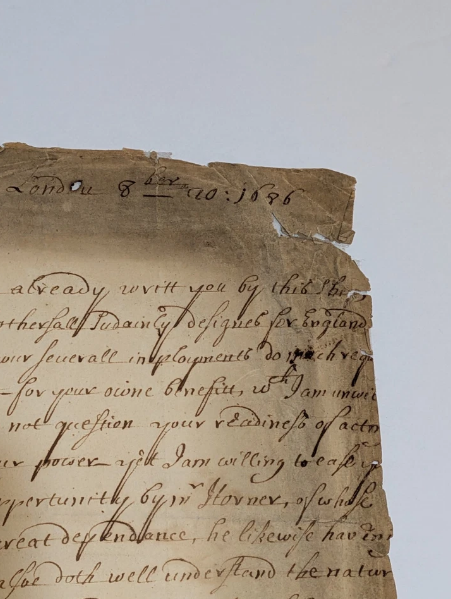 Image 2 of 4
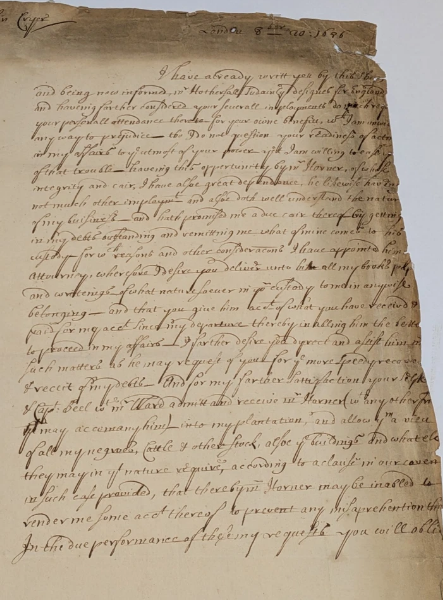 Image 3 of 4
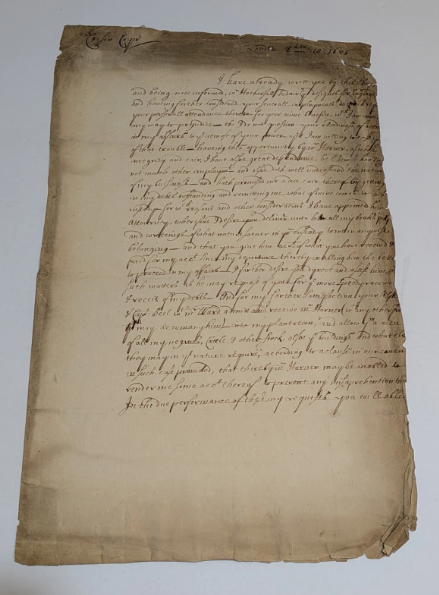 Image 4 of 4
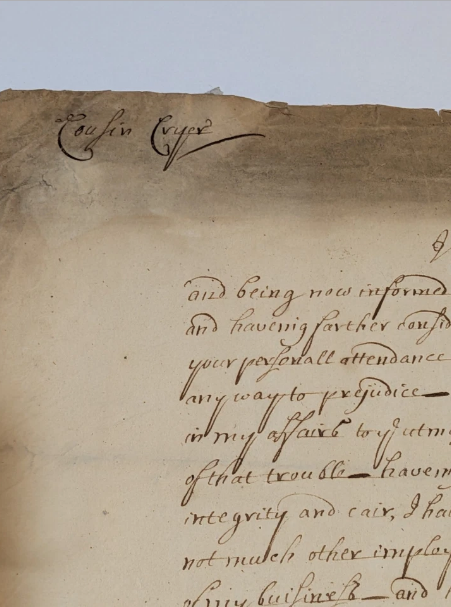
An exceptional and highly desirable original handwritten business letter dating to 1686, offering a rare glimpse into the commercial and estate affairs that connected London with the expanding colonial world during the late Stuart period.
Written just two years before the Glorious Revolution of 1688, this authentic manuscript documents matters relating to estate administration, goods, trade, and plantation management, reflecting the complex networks of wealth, land ownership, and overseas enterprise that shaped the English Atlantic economy in the seventeenth century.
Original colonial-era business correspondence of this age is increasingly scarce, particularly examples that illuminate the practical realities of managing property, inventories, shipments, and plantation interests across great distances. Such documents were the lifeblood of merchants, landowners, investors, and colonial administrators, providing direct evidence of how Britain's growing overseas interests were organized and controlled.
Original handwritten manuscript dated 1686
Created during the reign of King James II
Relates to estate affairs, goods, commerce, and plantation management
Direct connection to London's role as the financial and commercial center of the English colonial world
Contemporary ink manuscript on period paper
Over 338 years old
Valuable primary-source material for collectors, historians, genealogists, and researchers
This document survives from an era when England's overseas colonies were rapidly expanding and fortunes were being built through landholdings, agriculture, shipping, and trade. Letters such as this were essential instruments of business, carrying instructions, reports, accounts, and decisions between owners, agents, merchants, and colonial representatives.
Today, it stands as a tangible artifact from the formative years of the British Empire and the development of the Atlantic trading system.
Presented in antique condition consistent with its considerable age. Expected signs of handling, storage, and historical use are present. Please review all photographs carefully as they form an important part of the description and condition assessment.
A remarkable acquisition for collectors of:
Colonial America
British Empire and Atlantic history
Early trade and commerce
Plantation and estate records
17th-century manuscripts
Genealogy and archival research
Investment-grade historical documents
Original colonial business correspondence from the 1600s is increasingly difficult to obtain. This manuscript represents a genuine survivor from one of the most transformative periods in English and colonial history—a rare opportunity to own an authentic document that has endured for more than three centuries.
An exceptional and highly desirable original handwritten business letter dating to 1686, offering a rare glimpse into the commercial and estate affairs that connected London with the expanding colonial world during the late Stuart period.
Written just two years before the Glorious Revolution of 1688, this authentic manuscript documents matters relating to estate administration, goods, trade, and plantation management, reflecting the complex networks of wealth, land ownership, and overseas enterprise that shaped the English Atlantic economy in the seventeenth century.
Original colonial-era business correspondence of this age is increasingly scarce, particularly examples that illuminate the practical realities of managing property, inventories, shipments, and plantation interests across great distances. Such documents were the lifeblood of merchants, landowners, investors, and colonial administrators, providing direct evidence of how Britain's growing overseas interests were organized and controlled.
Original handwritten manuscript dated 1686
Created during the reign of King James II
Relates to estate affairs, goods, commerce, and plantation management
Direct connection to London's role as the financial and commercial center of the English colonial world
Contemporary ink manuscript on period paper
Over 338 years old
Valuable primary-source material for collectors, historians, genealogists, and researchers
This document survives from an era when England's overseas colonies were rapidly expanding and fortunes were being built through landholdings, agriculture, shipping, and trade. Letters such as this were essential instruments of business, carrying instructions, reports, accounts, and decisions between owners, agents, merchants, and colonial representatives.
Today, it stands as a tangible artifact from the formative years of the British Empire and the development of the Atlantic trading system.
Presented in antique condition consistent with its considerable age. Expected signs of handling, storage, and historical use are present. Please review all photographs carefully as they form an important part of the description and condition assessment.
A remarkable acquisition for collectors of:
Colonial America
British Empire and Atlantic history
Early trade and commerce
Plantation and estate records
17th-century manuscripts
Genealogy and archival research
Investment-grade historical documents
Original colonial business correspondence from the 1600s is increasingly difficult to obtain. This manuscript represents a genuine survivor from one of the most transformative periods in English and colonial history—a rare opportunity to own an authentic document that has endured for more than three centuries.